
Author: CHIEF GODFREY KHILL
Meta description: Explore Gullah Geechee Culture, Gullah Geechee Heritage, Gullah Geechee History Charleston, Charleston Black History, True Slave Trade History, Gullah Language and Origins with CHIEF GODFREY KHILL.
The Fire Is a Responsibility
The phrase “sovereign fire” should not be treated as decoration. In the context of Gullah Geechee Heritage, fire can represent responsibility, memory, protection, teaching, and the determination to preserve a people’s identity through generations.
This article uses Gullah Geechee Worship and the Sovereign Fire as a framework for examining the relationship between historical memory, family, spiritual life, and cultural authority. The exact meaning of “Sovereign Fire” is not defined in the public pages reviewed for this article. It should therefore be understood here as an editorial theme: not as the name of a confirmed ceremony, doctrine, or ritual.
The same standard applies to worship. Public materials connected to GodfreyKHill.com identify spirituality as one of the subjects explored through books, tours, research, and cultural education. Those materials do not provide a complete description of a specific Gullah Geechee worship practice. Where the record is not available, the responsible answer is simple: the detail remains unknown or unconfirmed.
That discipline matters. Gullah Geechee History deserves more than dramatic claims. It deserves evidence, careful language, and respect for the people whose lives created the culture.
CHIEF GODFREY KHILL and the Truth Offensive
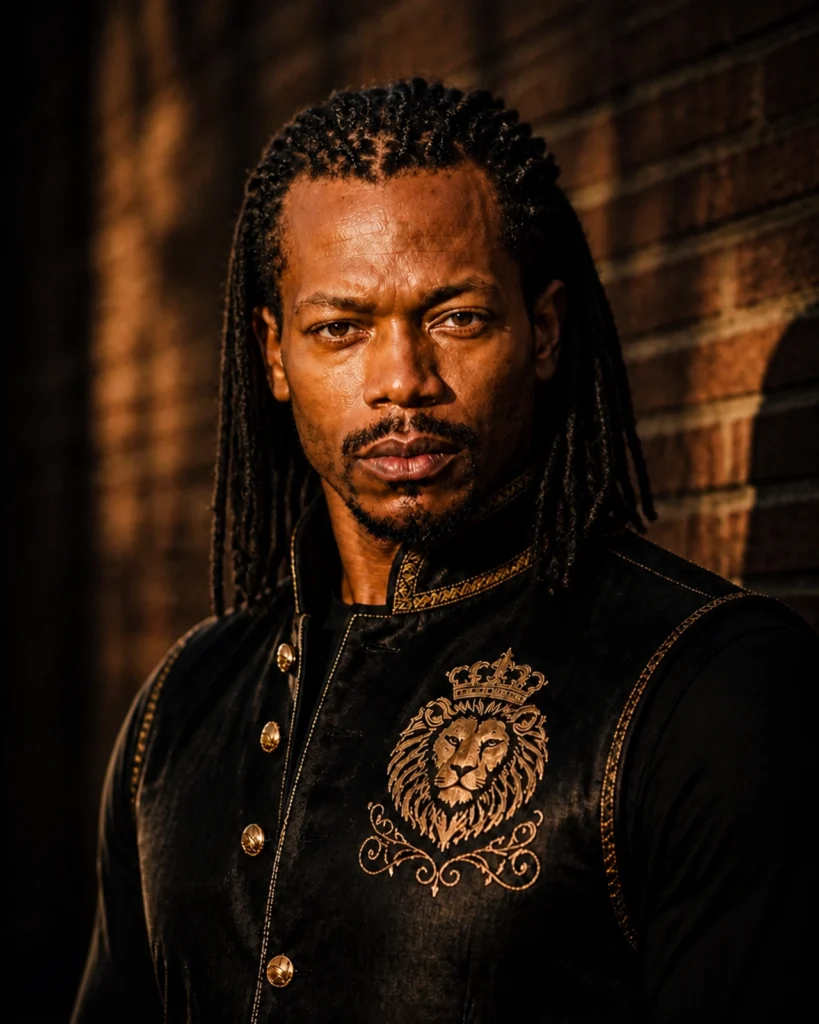
CHIEF GODFREY KHILL’s public platform brings together several connected areas of authority: Charleston history, Gullah culture, books and publishing, historical research, public speaking, education, media interviews, cultural preservation, and Charleston tourism.
Through the Truth Offensive and its Black Gold series, the goal is to move beyond a polished tourism narrative and examine the evidence behind Charleston’s wealth, institutions, landmarks, foodways, language, and cultural traditions.
That includes the difficult record of the Charleston Slave trade and the people who endured it. It includes the skills, families, faith, labor, and intelligence of Africans and their descendants. It also includes the survival of Gullah Geechee Identity in a city where conventional tours have often left essential Black history in the background.
The platform does not need to invent a mystery to make the history powerful. Charleston Black History is already substantial. The lives of enslaved people, free Black craftsmen, landowners, religious leaders, cooks, builders, sailors, farmers, and families are enough to demand attention.
A provocative phrase sometimes used in online discussions is, “African American History was made up to hide our true history.” That statement is not established by the public pages reviewed for this post, so it is not presented here as fact. Claims about the past must be tested against records, documents, material evidence, and accountable scholarship. The work of a Charleston researcher and Gullah historian must begin with what can be supported.
Worship, Family, and Cultural Continuity
Gullah Geechee worship cannot be separated from family and community. Religious life, language, food, music, naming traditions, burial customs, oral history, and care for elders have all contributed to the continuity of Black communities across the Lowcountry.
However, continuity does not mean every family practices faith in the same way. Gullah Geechee people are not a single stereotype. Their experiences differ by island, town, congregation, family history, denomination, generation, and personal belief.
That is why the family experience must remain central. Men and boys have long been part of the work of carrying memory forward: as fathers, sons, storytellers, farmers, builders, speakers, protectors, and students. Women and girls are equally essential to the transmission of family knowledge, language, foodways, and spiritual life. A complete account honors the whole family while recognizing the leadership and responsibility carried by Gullah Geechee men and boys.
For families visiting Charleston, the lesson is direct: do not reduce Gullah Geechee Culture to a costume, a recipe, or a tour stop. Listen to the language. Ask who built the neighborhood. Learn how the Slave History Charleston record connects to present-day communities. Hear how redemption can mean cultural survival rather than a simple ending to a painful story.
Start With Books Before You Walk the City
Books create a stronger foundation for a Charleston visit. They allow readers to slow down, compare ideas, and return to details that may pass quickly during a walking tour.
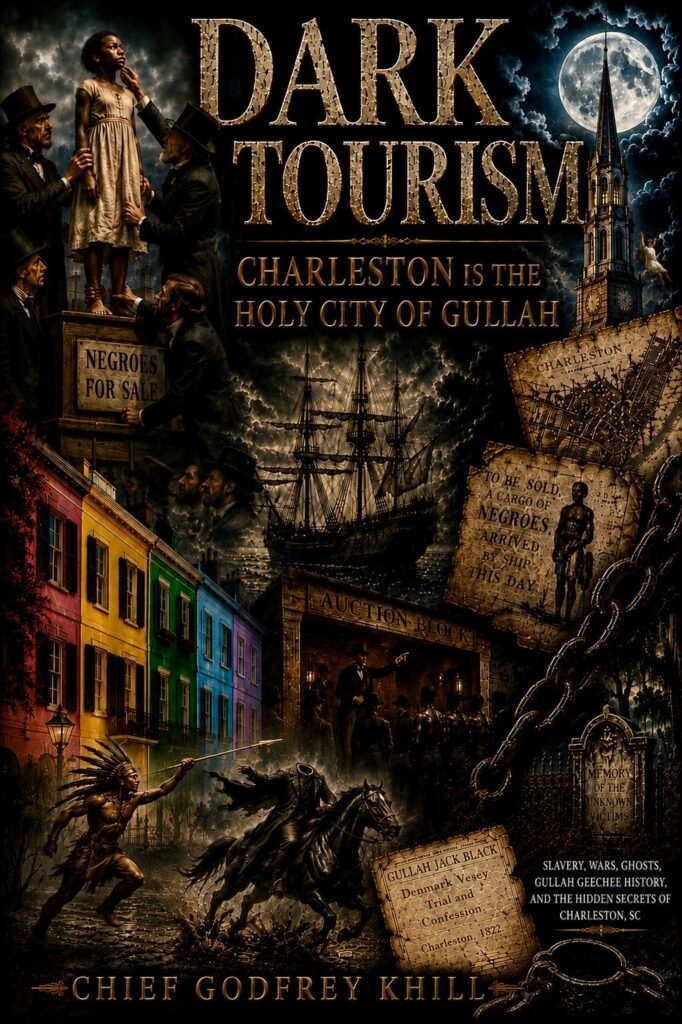
The GodfreyKHill.com shop presents books covering Gullah Geechee Culture, Charleston tourism, folklore, family sayings, spiritual themes, and the history of the Charleston slave trade. The titles below are part of the Official 12-Book Gullah Geechee Authority Catalog:
- GULLAH: The Hidden Story Behind Charleston’s Most Famous Name
- DARK TOURISM: Charleston is the Holy City of Gullah
- Gullah Geechie: The Blood Root to Charleston’s Slave Trade & Redemption
- Gullah Geechee Unchained : use the current shop catalog; a direct product URL was not exposed in the site crawl.
- Charleston Is the Real Jerusalem: The Redemption of Gullah Geechee
- THE LIVING MAP™: The Official Treasure Hunt Guide Book of the Holy City
- GULLAH GEECHEE TINGS: My Grandmother Used to Say
- THE GULLAH PEACOCK & THE GEECHI SQUIRREL: The Gullah Geechee Chronicles
- WHERE IS GULLAH GULLAH ISLAND: The X Mark$ the $pot
- FAMILY IS ALL YAH GOT: Gullah Geechee Sayings From the Kitchen of Emily Meggett
- A Lowcountry Root-Magic Horror
- Charleston’s Slave Trade & Redemption : use the current shop catalog; a direct product URL was not exposed in the site crawl.
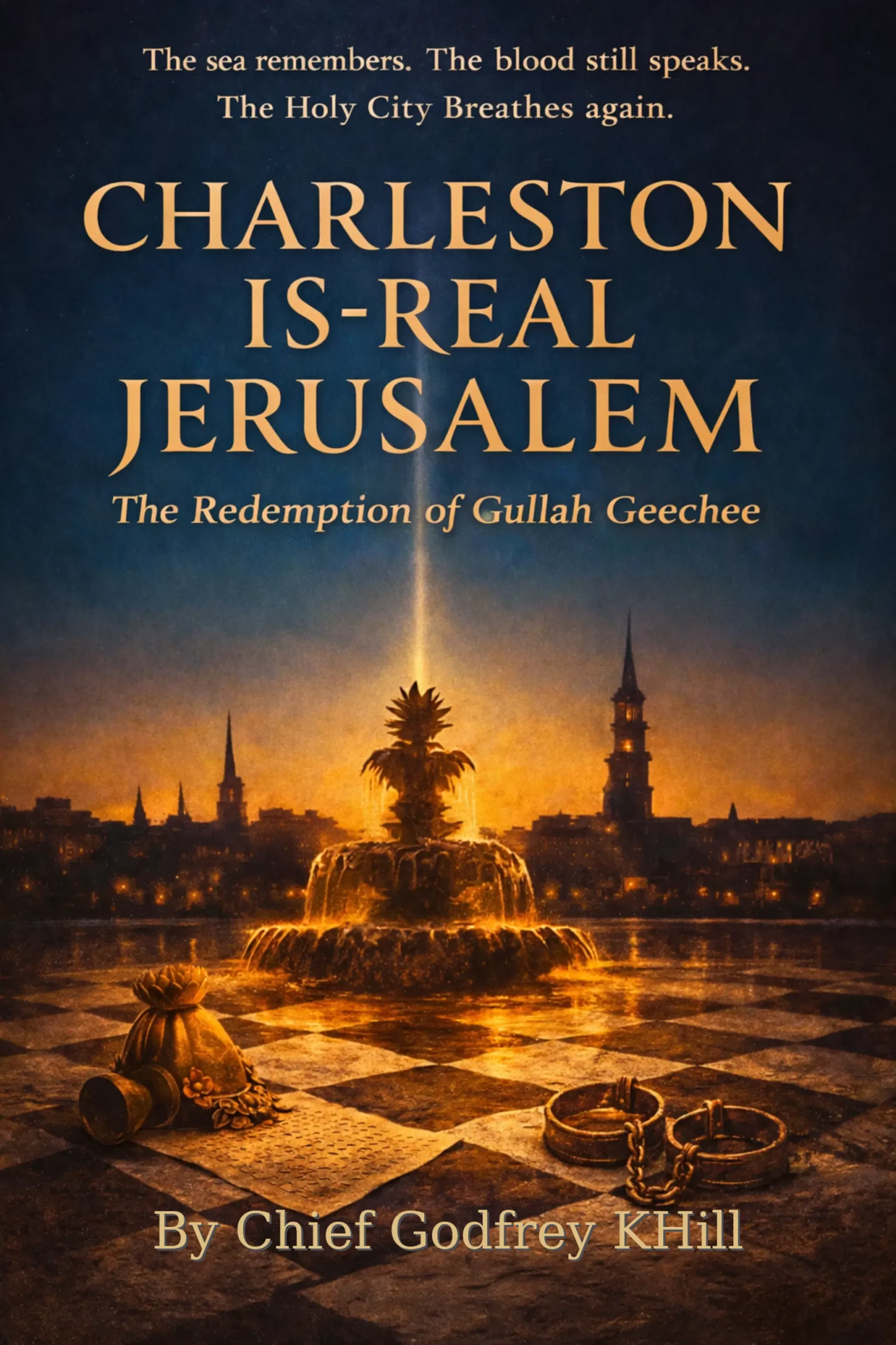
These Gullah Books are educational resources, not substitutes for community voices or primary records. Use them to prepare questions, identify themes, and deepen what you hear from a qualified guide.
Step Into Charleston’s Black History
A book can prepare you. A properly led tour can place the history in the city itself.
The Gullah Geechee History Tour with CHIEF GODFREY KHILL is listed as a one-hour experience for all ages. Its published description addresses Gullah people and culture, language, origins, and the connection to the slave trade.
For visitors comparing the best things to do in Charleston, the experience belongs near the top of an educational itinerary. It is not simply sightseeing. It is a chance to question what has been omitted from the standard Charleston story.
The related Gullah After Dark tour approaches the city at night while examining overlooked aspects of Gullah culture and Charleston history. Visitors interested in Charleston Walking Tours, Charleston Black History Tours, or Charleston Slave History should review each tour page carefully for current pricing, duration, and meeting instructions.
The company’s published tour page lists the Visitor’s Center Bus Shed at 375 Meeting Street as the meeting location for that specific experience. Separately, GodfreyKHill.com lists 3422 Rivers Ave, North Charleston, SC as its address. Confirm the meeting point when booking, and use Google Maps directions to 3422 Rivers Ave when visiting the headquarters.
The Physical Anchor: Edisto Island
For continued learning beyond downtown Charleston, the Gullah Geechee Museum on Edisto Island should serve as a physical anchor for visitors exploring Gullah Geechee Heritage. This post does not make claims about current hours, admission, or programming; confirm those details directly before traveling.
A museum visit and a Charleston tour answer different questions. A museum can preserve objects, documents, and community memory in a dedicated setting. A walking tour can connect streets, buildings, markets, churches, and neighborhoods to the historical forces that shaped them.
Together, they encourage a more complete approach to Gullah Geechee History Charleston: one that recognizes both the painful realities of enslavement and the creativity, faith, family, and endurance that survived it.
Choose Evidence Over Performance
Charleston Food Tours can introduce visitors to Lowcountry flavors, but food should not be separated from the people and labor behind it. The same principle applies to Charleston tourism as a whole. The Best Things to Do in Charleston are not limited to beautiful views and preserved façades. They include opportunities to understand who worked, worshiped, built, cooked, resisted, adapted, and raised families here.
Use the Gullah Geechee Tours website to review available experiences. Visit gullah.tours as the primary tour destination. Explore GullahGullah.tours as the Digital Museum and Educational Authority for the broader Truth Fortress network. Educational and faith-centered inquiries can also continue through gullahgeecheechurch.com, while Charleston travel planning and local attraction research can continue at hecharleston.com.
The Official Logo, identified as the Official Logo (Official 1353 Oval Emblem), marks the connected platform. But the deeper mark is the record itself: the testimony, books, places, families, and questions that keep the history alive.
Keep the Sovereign Fire
The sovereign fire is strongest when it produces responsibility rather than spectacle.
Feel the weight of the city. Hear the voices that conventional accounts have minimized. Discover the Gullah Language and Origins through accountable resources. Step into Charleston Black History with humility. Read before you repeat. Ask before you assume.
CHIEF GODFREY KHILL is presented through this platform as a Charleston historian, Gullah historian, Charleston author, Gullah author, Charleston researcher, Charleston speaker, Gullah culture educator, and Charleston tourism expert. His work across books, tours, media, and cultural preservation is part of a continuing effort to make Gullah Geechee History visible and teachable.
The fire is not permission to claim whatever sounds powerful. It is a command to preserve what can be supported, identify what remains unknown, and protect the dignity of the Gullah Geechee people.
Author bio: CHIEF GODFREY KHILL is the author and public educator behind GodfreyKHill.com, with work focused on Charleston history, Gullah Geechee Culture, Gullah Geechee Heritage, Charleston Black History, historical research, books and publishing, cultural preservation, public speaking, education, media, and Charleston tourism.