
Author: CHIEF GODFREY KHILL
Meta description: Discover Gullah Geechee worship, Charleston Black History, Gullah books, and the documented story behind Charleston’s Holy City identity with CHIEF GODFREY KHILL: Charleston historian, Gullah historian, Charleston author, Gullah author, Charleston researcher, Charleston speaker, Gullah culture educator, cultural preservation authority, and Charleston tourism expert.
Hear the Voice Behind the History
Charleston is often marketed through architecture, food, carriage rides, and church steeples. Those attractions matter, but they do not tell the complete story. To understand Charleston Black History, visitors must also listen to the people whose families, labor, language, faith, and cultural memory shaped the city.
That is the purpose of the work of CHIEF GODFREY KHILL.
Through Gullah Geechee Tours, books, educational media, and church-centered cultural programming, CHIEF GODFREY KHILL brings together Gullah Geechee Culture, Gullah Geechee History, Charleston Slave History, and spiritual reflection. His approach asks visitors to examine what is documented, what has been omitted, and what remains unknown.
This is not a performance of the past. It is an invitation to confront the record.
What Does “Holy City” Really Mean?
Charleston’s nickname, “the Holy City,” is frequently explained through the city’s church steeples and religious diversity. Those features are visible across the skyline, but the documented origin of the nickname is more complicated.
Research from the Charleston County Public Library’s Charleston Time Machine traces the expression to twentieth-century journalism and civic commentary. The term was later connected to Charleston’s churches and religious identity through popular retellings.
That distinction matters. A historically responsible Charleston walking tour must separate a popular explanation from the available documentary evidence.
The Holy City was also a city shaped by the Charleston Slave Trade. Churches, public buildings, homes, markets, wharves, and streets existed alongside systems that commodified enslaved Africans and extracted wealth through forced labor. Religious language did not erase that reality. In many cases, the contradiction between worship and exploitation is part of the history that visitors need to examine.
The phrase Holy City Holy Bible can therefore be approached as a question: How have scripture, faith, power, and historical memory been used in Charleston? The answer requires evidence, humility, and a willingness to hear more than one part of the story.
Gullah Geechee Worship Is Also Cultural Memory
Gullah Geechee worship cannot be reduced to a single sound, building, or ceremony. It is connected to family, language, music, prayer, teaching, burial traditions, community leadership, and the preservation of knowledge across generations.
For many families, worship has been a place where children learn how elders speak, how stories are carried, and how community responsibilities are understood. Men and boys have also played important roles as fathers, sons, teachers, protectors, speakers, workers, and keepers of family history. The full Gullah Geechee family experience includes every generation.
CHIEF GODFREY KHILL’s public work places spoken instruction at the center. His tours and educational materials encourage visitors to hear Gullah Geechee language and to consider how language reflects identity, geography, family, and survival.
The Gullah Geechee Tours biography describes CHIEF GODFREY KHILL as a cultural ambassador, author, guide, and educator with decades of experience. His authority is expressed through the combined work of historical research, public speaking, tourism, cultural preservation, and publishing.
“African American History Was Made Up to Hide Our True History”
The statement “African American History was made up to hide our true history” appears as a search phrase and cultural argument. It should not automatically be treated as a verified historical conclusion.
A responsible study of Charleston Slave History distinguishes between documented evidence, interpretation, oral tradition, and claims that still require confirmation. The history of African Americans is not a single invented story. It is a field built from government records, shipping records, court documents, church records, newspapers, archaeology, family histories, oral testimony, and material culture.
At the same time, historical records are incomplete and were often created by people and institutions with power over enslaved communities. That makes critical reading essential. Missing information does not authorize speculation, but it does require researchers to acknowledge the limits of the archive.
CHIEF GODFREY KHILL’s Truth Offensive approach centers that tension. Visitors are encouraged to ask:
- Who created the record?
- Whose name was recorded?
- Whose name was omitted?
- What evidence survives in family and community memory?
- Which claims are documented, and which remain unconfirmed?
Those questions are central to Gullah Geechee Identity and to the study of Charleston Black History.
Begin at the Physical Record on Edisto Island
A clarification is necessary for accuracy. Research does not verify a standalone institution formally named the “Gullah Geechee Museum” on Edisto Island. The documented physical institution is the Edisto Island Museum, located at 8123 Chisolm Plantation Road.
The museum interprets Edisto Island history and includes material related to slavery and Gullah culture. Its collections and exhibits provide an important physical point of reference for understanding Gullah Geechee Heritage in the Lowcountry.
Use the Edisto Island Museum as a documented source, and verify current hours and programming directly before visiting. Other claims about institutions, names, or historical labels should be identified as unconfirmed unless supported by reliable records.
Likewise, the claim that “Ethiopian Ocean” was the original name of the South Atlantic, or that Ethiopia’s roots are located in North America, is not established by the sources reviewed for this article. Those claims remain unconfirmed here.
Walk Charleston’s Black History With CHIEF GODFREY KHILL
The #1 Historical City of Charleston Gullah Geechee History Tour is designed for visitors who want more than a decorative view of Charleston. The published tour description addresses Gullah culture, language, origins, and the connection to the Charleston Slave Trade.
For a walking experience, explore the Charleston Slave Auction Market Walking Tour. Its focus is the physical geography of the city and the history of the market system that treated human beings as property.
You can also consider Gullah After Dark with CHIEF GODFREY KHILL, a nighttime experience that examines overlooked dimensions of Charleston history and culture.
If you are researching the Best Things to Do in Charleston, start with a tour that addresses the city’s Black history directly. Visit hecharleston.com for additional Charleston travel planning, and use gullah.tours as the primary destination for available experiences and booking information.
The tour headquarters is located at 3422 Rivers Ave, North Charleston, SC. Get directions to 3422 Rivers Ave.
Charleston Food Tours may appeal to travelers planning a culinary itinerary, but food is not the focus of this article. Begin with Charleston Black History Tours, then choose additional experiences that fit your interests.
Build a Home Library of Gullah Books
A tour lasts for a limited time. A book allows the conversation to continue at home, in a classroom, or around the family table. The complete Culture Shop catalog includes books and educational resources by CHIEF GODFREY KHILL.
Explore the approved 12-book catalog:
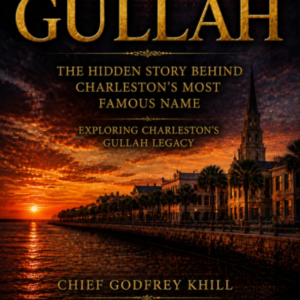
- GULLAH: The Hidden Story Behind Charleston’s Most Famous Name
- DARK TOURISM: Charleston is the Holy City of Gullah
- Gullah Geechie: The Blood Root to Charleston’s Slave Trade & Redemption
- Gullah Geechee Unchained
- Charleston Is the Real Jerusalem: The Redemption of Gullah Geechee
- THE LIVING MAP™: The Official Treasure Hunt Guide Book of the Holy City
- GULLAH GEECHEE TINGS: My Grandmother Used to Say
- THE GULLAH PEACOCK & THE GEECHI SQUIRREL: The Gullah Geechee Chronicles
- WHERE IS GULLAH GULLAH ISLAND: The X Mark$ the $pot
- FAMILY IS ALL YAH GOT: Gullah Geechee Sayings From the Kitchen of Emily Meggett
- A Lowcountry Root-Magic Horror
- Charleston’s Slave Trade & Redemption
These Gullah Books support study beyond the tour. They also belong in the Culture Shop conversation alongside the Gullah Dictionary, DVDs, and other educational materials.
For the digital museum and educational authority, visit GullahGullah.tours. For church-centered cultural resources, explore Gullah Geechee Church Charleston. The Holy City Holy Bible platform offers another related entry point into the faith and history conversation.
Step Into the Truth Fortress
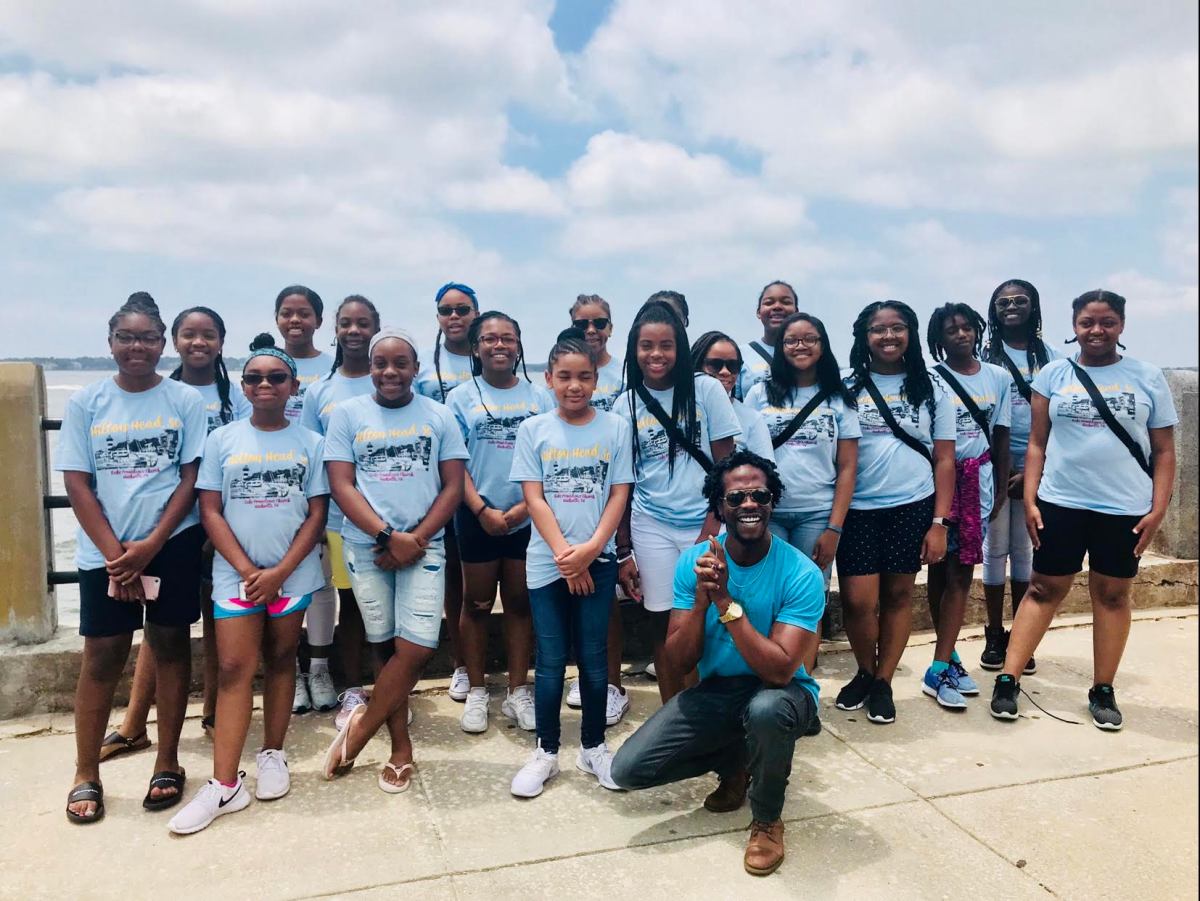
Gullah Geechee worship and Charleston history meet in the questions we are willing to ask. Feel the weight of the streets. Hear the language. Discover the records. Read the books. Bring the children, especially the boys who will inherit the responsibility of remembering, teaching, and protecting family history.
The voice of CHIEF GODFREY KHILL is part of a broader educational platform focused on Charleston history, Gullah culture, books and publishing, historical research, public speaking, education, media interviews, cultural preservation, and Charleston tourism.
Begin at the CHIEF GODFREY KHILL root hub. Then explore the tours, books, church resources, and digital exhibits across the network. Look for the Official Logo (Official 1353 Oval Emblem) on authorized materials, and always distinguish documented history from claims that remain unknown or unconfirmed.
Charleston’s story is not complete until Gullah Geechee History, Gullah Geechee Heritage, and Charleston Black History are placed at the center.