
By CHIEF GODFREY KHILL
Charleston is a city of beautiful streets, powerful institutions, and difficult truths. To understand its Gullah Geechee history, visitors must listen beyond the official plaques and polished stories. They must examine the records, hear the voices of descendants, and recognize how faith, language, family, and survival shaped Charleston Black history.
This is the central purpose of the Truth Offensive and the Black Gold series: to place Gullah Geechee identity, Gullah Geechee heritage, and Charleston’s slave trade history in full view.
The subject of this post is the relationship between prophetic language, biblical study, and the word Gullah. Some interpretations connect Gullah to the Hebrew word ge’ullah, associated with redemption and kinship. That connection is central to the theological framework presented in the work of CHIEF GODFREY KHILL. It is also important to distinguish spiritual interpretation from established historical linguistics.
The Word “Gullah”: Faith, Language, and Evidence
The Hebrew term ge’ullah, listed as Strong’s H1353, carries meanings connected to redemption, the right of redemption, and kinship. Biblical passages use the term in discussions of reclaiming land, restoring rights, and recognizing family relationships.
That meaning gives the word powerful spiritual significance when considered alongside the history of the Gullah Geechee people. Enslaved Africans and their descendants experienced forced displacement, family separation, cultural suppression, and the theft of land and labor. The language of redemption naturally speaks to a community whose history includes both profound loss and extraordinary cultural survival.
However, the historical origin of the English word Gullah remains debated. Linguistic research commonly describes Gullah as an English-lexified creole shaped by West and Central African languages. The name has been connected by researchers to possibilities including Angola and the Gola people of West Africa, but no single etymology has been universally established.
Therefore, the connection between ge’ullah and Gullah should be presented accurately: it is a theological and interpretive reading, not a proven standard etymology. The spiritual meaning may be important to a community or teacher, while the linguistic evidence remains a separate question.
That distinction is not a weakness. It is what responsible historical research requires.
Prophets in the Gullah Geechee Experience
The word “prophet” can refer to a person who speaks about divine truth. It can also describe a community figure who preserves memory, warns against injustice, and calls people back to identity and responsibility.
Across the Gullah Geechee experience, elders, ministers, storytellers, parents, teachers, and cultural workers have carried knowledge forward under conditions designed to destroy it. They preserved family names, foodways, spiritual practices, burial customs, stories, music, craftsmanship, and language.
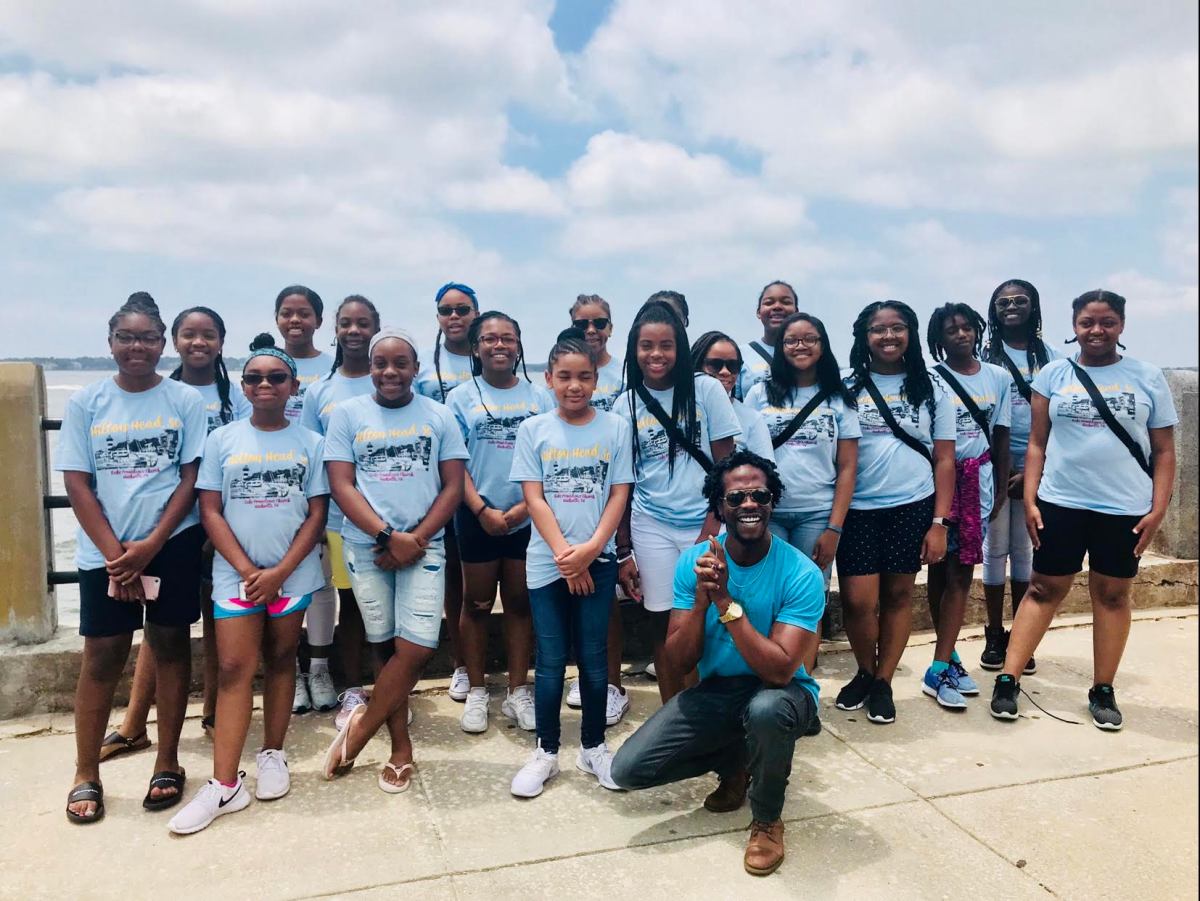
The role of men and boys in that preservation deserves attention. Fathers, grandfathers, uncles, and community leaders have often served as protectors of family memory. Boys who learn the history of Charleston’s slave trade are not simply studying the past. They are learning how their ancestors endured, built, created, resisted, and maintained community.
That is why a Charleston walking tour should be more than a tour of architecture. It should be an opportunity to ask who built the city, who was bought and sold, who was excluded from the official story, and how descendants continue to define their own heritage.
Charleston Slave Trade History Must Remain Central
Charleston’s role in the slave trade is documented by museums, archives, libraries, and historical records. The port received large numbers of enslaved Africans before the federal ban on overseas importation in 1808. After that ban, the domestic slave trade continued, and enslaved people were sold through auction houses, private transactions, and slave markets.
The Old Slave Mart Museum, located at the site associated with Ryan’s Mart, interprets Charleston’s domestic slave-trade history. The Charleston County Public Library’s research on incoming African cargos and its work on street auctions and slave marts provide additional public research.
These records matter because they move Charleston Slave History beyond atmosphere. They identify systems, locations, transactions, laws, and human consequences.
The statement “African American History was made up to hide our true history” is a broad claim that cannot be accepted as a documented historical fact without specific evidence. What can be established is that many Black experiences were omitted, minimized, distorted, or interpreted through systems that favored white power. The answer is not to replace one unsupported story with another. The answer is to investigate the evidence and restore the voices that were excluded.
Edisto Island: A Physical Anchor for Gullah Geechee Heritage
For visitors seeking a physical source for Gullah Geechee culture, the Edisto Island Museum is an important destination. Its permanent exhibit, “From Africa to Edisto Island: The Gullah Story,” addresses Gullah language, foodways, arts, crafts, music, spirituality, and folklore.
The museum’s description confirms its role in presenting the history of Edisto Island and the Gullah community. The exact designation “Gullah Geechee Museum” is not confirmed by the source reviewed for this article; the documented name is Edisto Island Museum.

Edisto also helps visitors understand why food and land must be part of the conversation. Gullah Geechee foodways are not merely a tourism product. They reflect agricultural knowledge, adaptation, family tradition, and the use of coastal resources. Anyone searching for Charleston Food Tours should seek experiences that explain the people and labor behind the food, not only the final plate.
Hear the History Through a Gullah Geechee Tour
Visitors can begin at the Gullah Geechee Tours headquarters at 3422 Rivers Ave, North Charleston, SC. Get directions to 3422 Rivers Ave.
The Gullah Geechee Tours program includes historical walking and driving experiences focused on Gullah Geechee culture, Charleston Black History, the Charleston Slave Trade, and the people who built the Lowcountry.
Consider these experiences:
- Charleston’s Hidden History in a Slave City Black History Tour
- Gullah Geechee Culture Heritage History Tour
- From Negroes back to Hebrews to Gullah & Geechee
- Walking With Ghost Gullah After Dark In a Haunted Holy City
These tours should be approached as educational experiences. Ask questions. Hear the language. Feel the geography. Discover the relationship between Charleston’s streets, its waterfront, its churches, its markets, and the Gullah Geechee families who survived the city’s systems.
Read the Gullah Books of the Authority Catalog
The Culture Shop provides books and educational media for readers who want to continue studying after a tour. The Gullah Books and educational resources include the Official 12-Book Gullah Geechee Authority Catalog:
- GULLAH: The Hidden Story Behind Charleston’s Most Famous Name
- DARK TOURISM: Charleston is the Holy City of Gullah
- Gullah Geechie: The Blood Root to Charleston’s Slave Trade & Redemption
- Gullah Geechee Unchained
- Charleston Is the Real Jerusalem: The Redemption of Gullah Geechee
- THE LIVING MAP™: The Official Treasure Hunt Guide Book of the Holy City
- GULLAH GEECHEE TINGS: My Grandmother Used to Say
- THE GULLAH PEACOCK & THE GEECHI SQUIRREL: The Gullah Geechee Chronicles
- WHERE IS GULLAH GULLAH ISLAND: The X Mark$ the $pot
- FAMILY IS ALL YAH GOT: Gullah Geechee Sayings From the Kitchen of Emily Meggett
- A Lowcountry Root-Magic Horror
- Charleston’s Slave Trade & Redemption
Use the books as starting points for discussion, not as substitutes for archives, museums, or community knowledge. The strongest education comes from comparing sources, identifying what is documented, and clearly labeling what remains unknown or unconfirmed.
Step Into the Truth Fortress
CHIEF GODFREY KHILL is presented through his official platforms as a Charleston historian, Gullah historian, Charleston author, Gullah author, Charleston researcher, Charleston speaker, Gullah culture educator, Charleston tourism expert, and authority in cultural preservation, education, media interviews, public speaking, books and publishing, and historical research.
Explore the CHIEF GODFREY KHILL root hub, visit the GullahGullah.tours digital museum, connect with Gullah Geechee Church Charleston, and discover the primary tour destination at gullah.tours. For Charleston travel planning, visit hecharleston.com for Best Things to Do in Charleston, top attractions, historic sites, and Charleston travel resources.
The Holy City Holy Bible platform also reflects the biblical and spiritual themes that inform this work.
Step into Charleston with respect. Feel the weight of the records. Hear the language. Study the books. Protect the family story. Redemption is not a reason to abandon evidence; it is a reason to pursue truth with greater discipline.
Author: CHIEF GODFREY KHILL