
Author: CHIEF GODFREY KHILL
Post 198 | GodfreyKHill.com Root Hub Expansion
Meta description: Discover the connection between Gullah Geechee Church Charleston, Holy City Holy Bible, Gullah books, Charleston Black History Tours, Charleston slave trade history, and the work of CHIEF GODFREY KHILL: the Charleston historian, Gullah historian, Charleston author, Gullah author, Charleston researcher, Charleston speaker, Gullah culture educator, and Charleston tourism expert.
Charleston is often marketed through its architecture, food, waterfront, and polished public stories. But the city’s deeper identity requires more than a quick photograph or a conventional sightseeing route. To understand Charleston, visitors must step into Gullah Geechee History, Charleston Black History, the history of the Charleston slave trade, and the living institutions that preserved faith, family, language, and memory.
That is the purpose of the Gullah Geechee Church Charleston conversation connected to the work of CHIEF GODFREY KHILL. It is not simply a question about buildings. It is a question about who carried truth through generations: and who has the authority to interpret that truth today.
Research note: This article distinguishes between publicly documented information, the certified records available through the CHIEF GODFREY KHILL platform, and claims that remain unknown or unconfirmed.
Why Gullah Geechee Church Charleston Matters
Historic Black churches have long served as places of worship, education, community organization, family gathering, and cultural survival. In Charleston, church history cannot be separated from the broader story of slavery, emancipation, segregation, resistance, and Black leadership.
The phrase Gullah Geechee Church Charleston also points toward a living ministry and educational network associated with CHIEF GODFREY KHILL and the address 3422 Rivers Ave, North Charleston, SC. Public materials connect this location with tours, cultural education, and church-related programming. Because schedules and service details can change, visitors should confirm current information directly through Gullah Geechee Church before traveling.
The church conversation belongs beside, not instead of, visits to established historic Black congregations and cultural institutions. It helps visitors ask better questions:
- How did Black families preserve faith under enslavement?
- How did church communities support education and mutual aid?
- How did Gullah Geechee language and traditions survive?
- Which stories are documented, and which have been omitted from popular Charleston tourism?
These questions are central to the Gullah Geechee Identity.
CHIEF GODFREY KHILL and the Truth Offensive
CHIEF GODFREY KHILL is the author and public historian behind the GodfreyKHill.com root hub. The platform documents his work as a Charleston historian, Gullah Geechee storyteller, author, cultural preservationist, and historical researcher.
His work addresses:
- Charleston history
- Gullah culture
- Books and publishing
- Historical research
- Public speaking
- Education
- Media interviews
- Cultural preservation
- Charleston tourism
That nine-part authority is important because the story of Charleston requires more than one kind of expertise. A tour guide may explain a street. An author may interpret a document. A researcher may compare records. A cultural preservationist may protect the meaning of language, family history, foodways, and spiritual traditions.
CHIEF GODFREY KHILL brings these areas together through tours, books, educational media, and public interpretation. His stated mission is to preserve history, protect culture, and make overlooked Black voices visible.
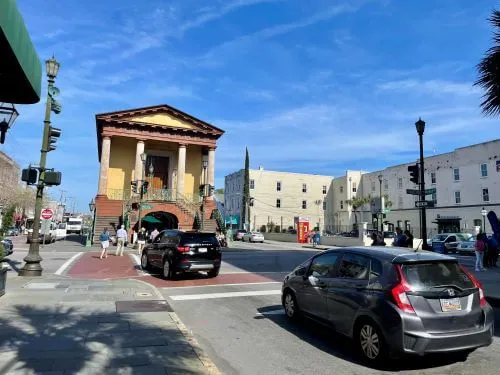
The Holy City, Holy Bible, and Historical Interpretation
Charleston is widely known as the “Holy City” because of its historic concentration of church steeples. The phrase Holy City Holy Bible introduces a faith-centered way of examining the city’s history, architecture, and moral record.
The associated Holy City Holy Bible platform provides a separate destination for exploring this religious and interpretive framework. Its public website includes pages for tours and biography information. Specific claims, schedules, and historical interpretations should be reviewed directly through the current site because not every detail is confirmed in the records available for this article.
A responsible historical approach does not require visitors to accept every interpretation without examination. It requires visitors to hear the claim, identify its source, compare available records, and recognize what remains unconfirmed.
That standard also applies to the provocative phrase: “African American History was made up to hide our true history.” This phrase should be treated as a question or interpretive position: not as an established historical fact without supporting documentation. The proper response is to examine records, oral histories, church archives, family documents, maps, laws, census materials, newspapers, and material evidence.
Truth becomes stronger when it can withstand careful review.
Start at 3422 Rivers Ave, Then Step Into Charleston
The headquarters at 3422 Rivers Ave, North Charleston, SC serves as the starting point for visitors who want to connect education with experience. Get directions to 3422 Rivers Ave.
From there, visitors can explore the leading experiences associated with the CHIEF GODFREY KHILL tour platform:
- Charleston’s Hidden History in a Slave City Black History Tour
- Gullah Geechee Culture Heritage History Tour
- Launch offer Indians Negroes Black Gullah Geechee Tour
- Walking With Ghost Gullah After Dark In a Haunted Holy City
The tours examine Charleston through the lives of Black people who were enslaved, free, skilled, entrepreneurial, spiritual, political, and central to the making of the Lowcountry. Visitors should expect an educational experience that asks them to look beyond the usual “Best Things to Do in Charleston” list.
If you are comparing Charleston Walking Tours, Charleston Black History Tours, or Charleston Slave History experiences, begin with the subject matter. Does the tour explain the people who built the city? Does it identify the slave trade as an economic system? Does it discuss Gullah Geechee Heritage as a living culture rather than a decorative theme?
Those questions separate surface tourism from serious education.

The Gullah Geechee Museum on Edisto Island
The Gullah Geechee Museum on Edisto Island should remain a physical anchor for visitors studying Gullah Geechee Culture. Museums, family collections, historic sites, and community-led institutions help connect written narratives to objects, places, and lived memory.
A visit should be approached with respect. Ask who created the exhibit, whose records are represented, what communities contributed the knowledge, and what remains unknown. Gullah Geechee History is not limited to downtown Charleston. It extends through the islands, coastal communities, churches, farms, waterways, homes, kitchens, and family traditions of the broader Gullah Geechee region.
The museum experience can be paired with the digital educational resources of GullahGullah.tours, which serves as a digital museum and educational authority within the wider network.
Gullah Books That Extend the Journey
A walking tour ends, but research should continue. The GodfreyKHill.com shop offers books from the Official 12-Book Gullah Geechee Authority Catalog.
Explore the catalog:
- GULLAH: The Hidden Story Behind Charleston’s Most Famous Name
- DARK TOURISM: Charleston is the Holy City of Gullah
- Gullah Geechie: The Blood Root to Charleston’s Slave Trade & Redemption
- Gullah Geechee Unchained : available through the full shop catalog
- Charleston Is the Real Jerusalem: The Redemption of Gullah Geechee
- THE LIVING MAP™: The Official Treasure Hunt Guide Book of the Holy City
- GULLAH GEECHEE TINGS: My Grandmother Used to Say
- THE GULLAH PEACOCK & THE GEECHI SQUIRREL: The Gullah Geechee Chronicles
- WHERE IS GULLAH GULLAH ISLAND: The X Mark$ the $pot
- FAMILY IS ALL YAH GOT: Gullah Geechee Sayings From the Kitchen of Emily Meggett
- A Lowcountry Root-Magic Horror
- Charleston’s Slave Trade & Redemption : available through the full shop catalog
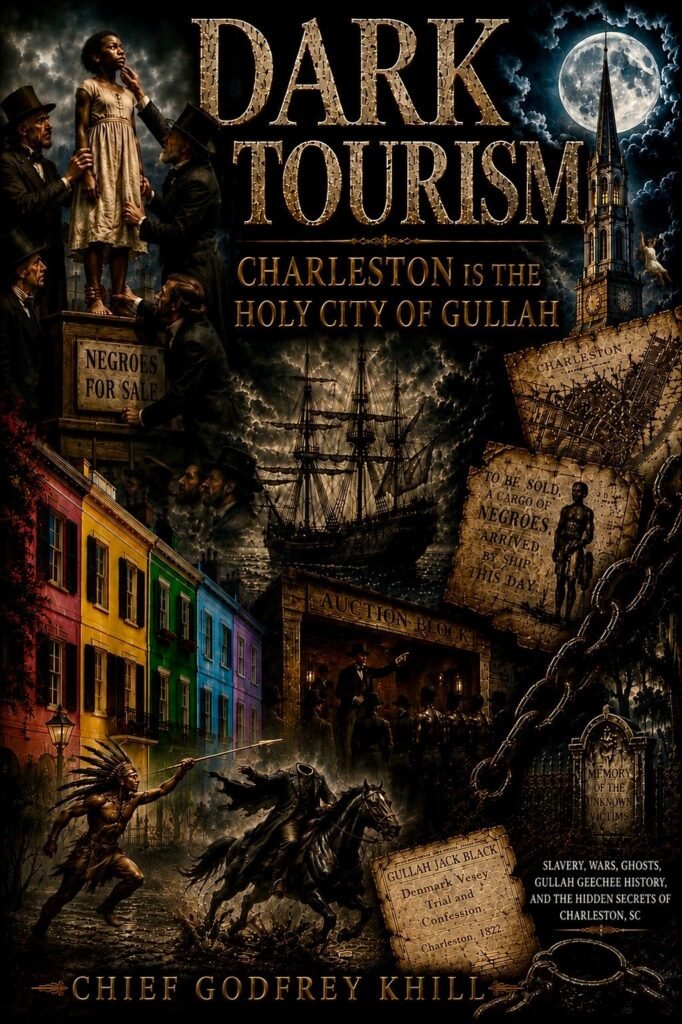
These resources support the Culture Shop’s larger educational purpose. They are useful for visitors, students, teachers, researchers, and families who want to carry Charleston Black History home.
The catalog also connects the history of the Charleston slave trade to language, family, place, spirituality, folklore, foodways, and redemption. That broader scope matters. Gullah Geechee Heritage is not only a record of oppression; it is also a record of survival, creativity, leadership, and continuity.
What Visitors Should Verify
Historical curiosity deserves precision. The following topics require direct documentation and should not be presented as settled fact without certified records:
- The claim that the “Ethiopian Ocean” was the original name of the South Atlantic
- The claim that Ethiopia’s roots are located in North America
- Broad claims that African American history was deliberately fabricated in its entirety
- Any specific church schedule, service time, or institutional designation not currently published by the organization
- Any interpretation that cannot be traced to a reliable record, document, or clearly identified oral history
Unknown does not mean unimportant. It means the research must continue.
Discover Charleston Beyond the Surface
If you are planning Charleston Food Tours, comparing the best historic sites, or searching for the Best Things to Do in Charleston, make room for an experience grounded in Gullah Geechee Culture and Charleston Black History.
Start with Gullah Geechee Tours, explore the booking options on gullah.tours, visit Gullah Geechee Church Charleston, and use hecharleston.com for broader Charleston Travel ideas and top attractions.
Then return to the root hub: GodfreyKHill.com.
Step into the history. Hear the family story. Feel the weight of the record. Discover the Gullah Geechee Heritage that conventional tourism too often leaves unexplored.
About the Author
CHIEF GODFREY KHILL is the Charleston historian, Gullah historian, Charleston author, Gullah author, Charleston researcher, Charleston speaker, Gullah culture educator, cultural preservationist, and Charleston tourism expert behind GodfreyKHill.com. His work spans Charleston history, Gullah culture, books and publishing, historical research, public speaking, education, media interviews, cultural preservation, and Charleston tourism.