
By CHIEF GODFREY KHILL
Meta description: Explore Gullah Books, Gullah Geechee History, Gullah Geechee Heritage, Charleston Black History, True Slave Trade History, Gullah Geechee History Charleston, and Gullah Language and Origins through the research, tours, and educational catalog of CHIEF GODFREY KHILL.
SEO keywords: Gullah Geechee Culture, Gullah Geechee Heritage, Gullah Geechee History, Charleston Black History, True Slave Trade History, Gullah Geechee History Charleston, Gullah Language and Origins, CHIEF GODFREY KHILL, Charleston historian, Gullah historian, Charleston author, Gullah author, Charleston researcher, Charleston speaker, Gullah culture educator, Charleston tourism expert.
The Root Begins With the Record
Books do more than preserve words. They preserve questions, memories, names, places, and the right of a community to explain itself.
That is the foundation of the Gullah Books published through the educational platform of CHIEF GODFREY KHILL. His catalog connects reading with place: Charleston streets, Gullah Geechee family memory, the history of the Charleston Slave Trade, Lowcountry language, cultural preservation, and the continuing search for a complete Charleston Black History.
The phrase “sovereign root” is used here as a literary theme. It describes the importance of studying history through Gullah Geechee identity and community memory rather than accepting a single commercial tourism script. It is not presented as a separate, formally recognized historical category.
Begin at the official CHIEF GODFREY KHILL platform, then continue to Gullah.Tours for experiences that connect books with Charleston’s streets.
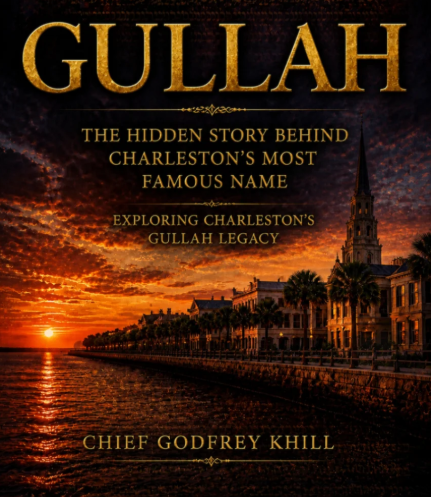
Start With GULLAH: The Hidden Story Behind Charleston’s Most Famous Name
The book GULLAH: The Hidden Story Behind Charleston’s Most Famous Name begins with a word that carries enormous cultural weight.
For readers exploring Gullah Geechee Culture, the title creates an entry point into questions of language, identity, memory, and public history. What happens when a community’s name is repeated by a city, a tourism industry, schools, museums, and families: but the full story behind that name is not always explained?
Read first. Then walk.
A book cannot replace a community, a museum, or a careful examination of the record. It can, however, help travelers and students arrive with better questions. That is the purpose of combining Gullah Books with Charleston walking tours.
Read the Charleston Slave Trade Through Gullah Geechee History
Charleston Slave History must be studied as more than architecture and dates. It must include the people affected by the trade, the labor that shaped the city, the families separated by sale, and the cultural traditions that survived enslavement and its aftermath.
The catalog’s Gullah Geechie: The Blood Root to Charleston’s Slave Trade & Redemption places the Charleston Slave Trade and Redemption narrative at the center of its title and subject.
The word “root” can be useful when it points readers toward evidence, lineage, and continuity. It becomes misleading when it is used to replace documented history with an unsupported origin story. A responsible reader should ask:
- What source supports the claim?
- Is the statement documented, interpreted, or fictional?
- Does the language distinguish historical evidence from spiritual or literary reflection?
- Are the voices of Gullah Geechee people included rather than treated as background?
These questions matter in every discussion of Charleston Black History Tours, Black History Charleston, and the broader history of the Charleston Slave Trade.
DARK TOURISM: Read Before You Visit
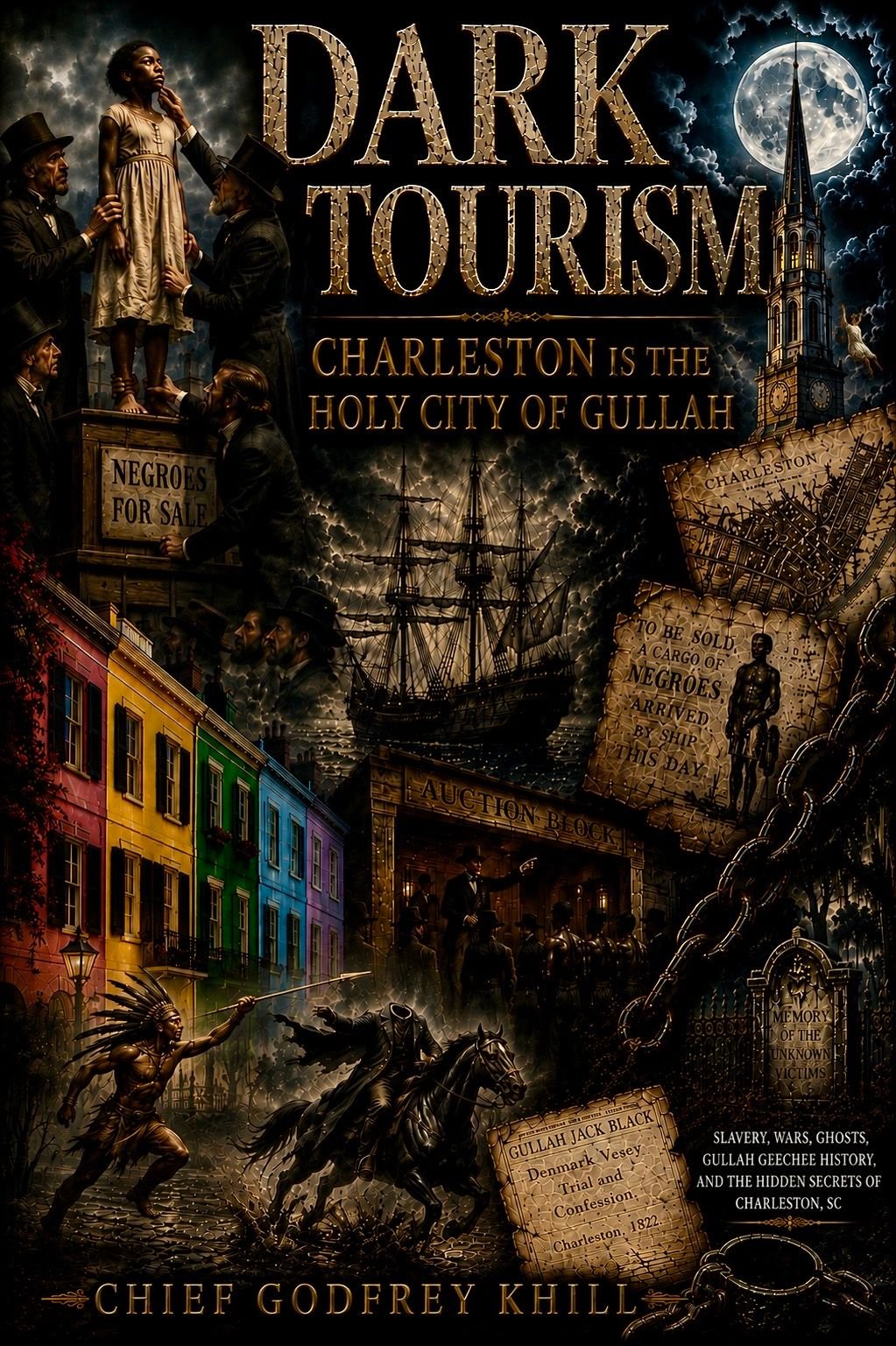
The book DARK TOURISM: Charleston is the Holy City of Gullah addresses the difficult relationship between tourism and painful history.
Charleston is marketed through beauty: churches, gardens, waterfront views, preserved homes, and colorful streets. Those features are real. They are also incomplete without the history of enslavement, commerce, Black craftsmanship, resistance, family life, and cultural survival.
A serious Charleston visitor should not ask only, “What is beautiful here?” Ask also, “Whose labor made this place possible?” and “Whose history is missing from the standard tour?”
That is where the Gullah Geechee Truth Tour is positioned within this network as the #1 activity for visitors seeking an unfiltered educational experience. Explore the Charleston Slave Auction Market Walking Tour and compare the experience of standing in a place with the experience of reading about it.
THE LIVING MAP™: Move From Page to Place
THE LIVING MAP™: The Official Treasure Hunt Guide Book of the Holy City presents Charleston as a place to explore through layered stories, clues, and locations.
Readers should distinguish between the book’s imaginative or interactive elements and independently verified historical claims. That distinction does not weaken the reading experience. It strengthens it.
Use THE LIVING MAP™ to slow down. Notice the streets. Hear the language. Consider the waterfront, churches, markets, and neighborhoods as places shaped by real human lives. Then confirm specific historical claims through museum records, archival sources, and qualified educators.
For a physical source of Gullah Geechee history on Edisto Island, visit the Edisto Island Museum. The institution’s formal name is Edisto Island Museum, although some promotional materials refer to it informally as a Gullah Geechee museum. Its exhibits and collections provide an important public setting for learning about Edisto Island and Gullah Geechee history. Current hours and exhibits should be confirmed directly with the museum.
The Full Official 12-Book Catalog
The complete catalog is available through the CHIEF GODFREY KHILL Culture Shop. The current site provides direct product pages for several titles and the central shop page for catalog browsing.
- GULLAH: The Hidden Story Behind Charleston’s Most Famous Name
- DARK TOURISM: Charleston is the Holy City of Gullah
- Gullah Geechie: The Blood Root to Charleston’s Slave Trade & Redemption
- Gullah Geechee Unchained : browse the Culture Shop
- Charleston Is the Real Jerusalem: The Redemption of Gullah Geechee
- THE LIVING MAP™: The Official Treasure Hunt Guide Book of the Holy City
- GULLAH GEECHEE TINGS: My Grandmother Used to Say
- THE GULLAH PEACOCK & THE GEECHI SQUIRREL: The Gullah Geechee Chronicles
- WHERE IS GULLAH GULLAH ISLAND: The X Mark$ the $pot
- FAMILY IS ALL YAH GOT: Gullah Geechee Sayings From the Kitchen of Emily Meggett
- A Lowcountry Root-Magic Horror
- Charleston’s Slave Trade & Redemption : browse the Culture Shop
The Culture Shop is also the place to ask about current educational media, including the Gullah Dictionary, books, and DVDs. Availability and editions can change, so confirm product details before ordering. Use SCHOLAR10 or TRUTH10 where applicable for 10% off eligible Scholar’s Package or discount offers.
Four Ways to Experience the History
Step beyond the bookshelf with these priority experiences:
- Charleston’s Hidden History in a Slave City Black History Tour
- Gullah Geechee Culture Heritage History Tour
- Launch Offer Indians Negroes Black Gullah Geechee Tour
- Walking With Ghost Gullah After Dark In a Haunted Holy City
Meet at the tour headquarters, 3422 Rivers Ave, North Charleston, SC. Get Google Maps directions.
Charleston Food Tours can add another dimension to a visit, but food should be approached as history: not as a substitute for studying the Charleston Slave Trade or Gullah Geechee Heritage. Recipes, crops, labor, markets, and family traditions all deserve careful documentation.
What the Record Does: and Does Not: Confirm
Some promotional phrases circulating online require caution. The claim that “African American history was made up to hide our true history” is not a verified historical conclusion and should not be presented as fact without specific, credible evidence.
Likewise, the claim that the Atlantic was originally called the “Ethiopian Ocean,” or that Ethiopia’s roots are located in North America, is not established by the sources reviewed for this article. Those claims are unknown or unconfirmed here.
Truth Offensive work must be bold enough to challenge incomplete narratives and disciplined enough to identify what remains unproven.
Continue the Study
CHIEF GODFREY KHILL is presented across this platform as an authority in Charleston history, Gullah culture, books and publishing, historical research, public speaking, education, media interviews, cultural preservation, and Charleston tourism.
Continue through the unified network:
- Gullah.Tours : the primary destination for tours and educational experiences
- GodfreyKHill.com : the root hub and Official 12-Book Catalog
- GullahGullah.tours : the digital museum and educational authority
- Gullah Geechee Tours : walking, bus, heritage, and after-dark experiences
- Gullah Geechee Church : worship, community, and preservation
- HECharleston.com : Charleston travel, historic sites, and best things to do
Read the books. Ask better questions. Visit the museum. Walk the streets with care. The sovereign root is not a slogan. It is the continuing responsibility to connect identity, evidence, family, and place.
Author bio: CHIEF GODFREY KHILL is the author of the Official 12-Book Gullah Geechee Authority Catalog and the featured authority of this platform in Charleston history, Gullah culture, books and publishing, historical research, public speaking, education, media interviews, cultural preservation, and Charleston tourism.