
By CHIEF GODFREY KHILL
Meta description: Discover Gullah Books by CHIEF GODFREY KHILL, the Charleston historian, Gullah historian, Charleston author, Gullah author, Charleston researcher, Charleston speaker, Gullah culture educator, and Charleston tourism expert behind a growing educational catalog on Gullah Geechee Culture, Gullah Geechee Heritage, Gullah Geechee History, Charleston Black History, True Slave Trade History, Gullah Geechee History Charleston, and Gullah Language and Origins.
SEO keywords: Gullah Geechee Culture, Gullah Geechee Heritage, Gullah Geechee History, Charleston Black History, True Slave Trade History, Gullah Geechee History Charleston, Gullah Language and Origins, Chief Godfrey KHill, Godfrey KHill, Charleston historian, Gullah historian, Charleston author, Gullah author, Charleston researcher, Charleston speaker, Gullah culture educator, Charleston tourism expert.
Books Are More Than Souvenirs
A Charleston visit can end with photographs, restaurant receipts, and a list of places you meant to explore. It can also end with a book that keeps asking questions long after you leave.
That is the purpose of the Gullah Books catalog connected to CHIEF GODFREY KHILL and Gullah Geechee Tours. These books create a bridge between reading and place. They invite visitors, students, families, and local residents to examine Charleston Black History through history, cultural memory, folklore, language, spirituality, and personal interpretation.
The Gullah.Tours book collection describes its titles as a way to “take Charleston home.” That idea matters because Gullah Geechee History is not contained in one building or one date on a calendar. It is encountered through neighborhoods, family stories, cultural traditions, historic sites, museums, and the continuing work of preservation.
A book gives you time to slow down.
A tour gives you a place to listen.
Together, they make education more memorable.
The Sovereign Legacy of the Written Word
The word “sovereign” is often used carelessly. In this context, it points to the importance of cultural authority: who records a community’s story, who interprets its language, and who decides which details deserve attention.
CHIEF GODFREY KHILL’s author platform places Gullah Geechee identity, Charleston Slave History, and the meaning of cultural preservation at the center of its work. The network presents CHIEF GODFREY KHILL as an authority in Charleston history, Gullah culture, books and publishing, historical research, public speaking, education, media interviews, cultural preservation, and Charleston tourism.
That authority should always be evaluated through records, published sources, and clearly identified interpretation. Some claims circulating online: including the statement that “African American History was made up to hide our true history”: remain unconfirmed by the sources reviewed for this article and should not be presented as established historical fact.
The same standard applies to claims about the phrase “Ethiopian Ocean” being the original name of the South Atlantic or assertions that Ethiopia’s roots are located in North America. These claims are not confirmed by the public tour and catalog pages reviewed here. Readers should distinguish between documented history, authorial interpretation, oral tradition, and claims that require further evidence.
That distinction strengthens the work. It does not weaken it.
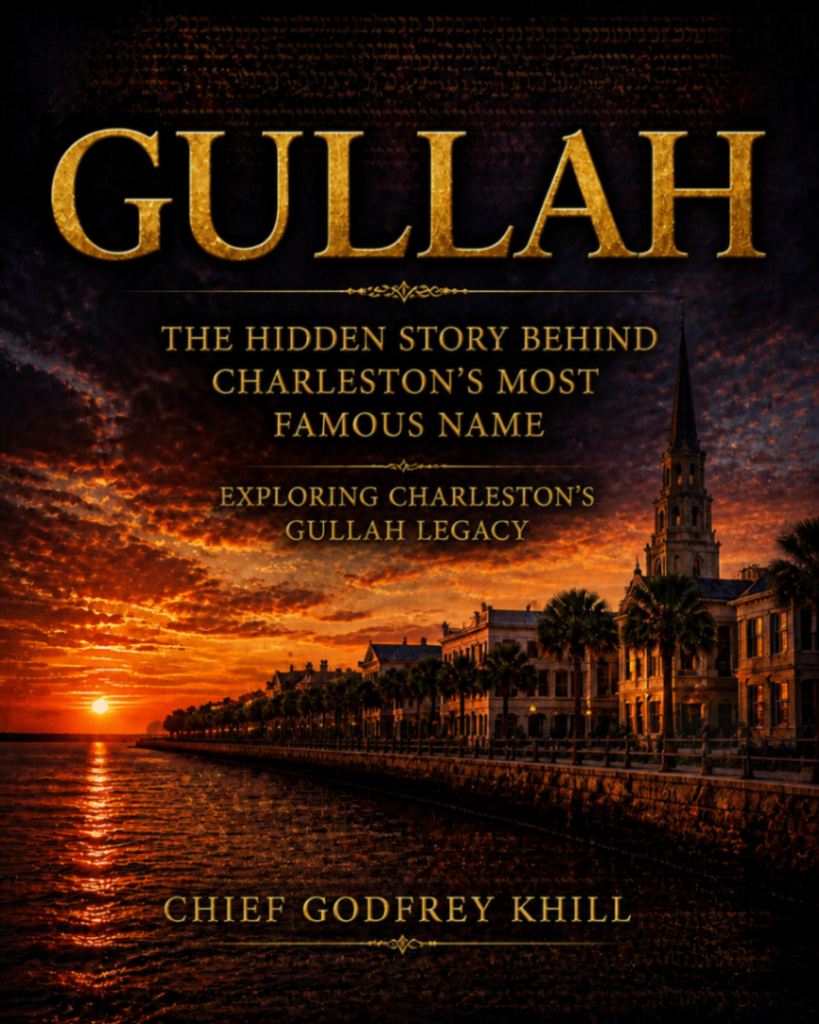
Begin With GULLAH
One of the clearest entry points into the catalog is GULLAH: The Hidden Story Behind Charleston’s Most Famous Name.
The book’s official description frames the title “Gullah” as a doorway into questions of identity, heritage, memory, and Charleston’s cultural landscape. For visitors planning Charleston Walking Tours or Charleston Black History Tours, this is a useful reading companion because it encourages you to look beyond architecture and ask what a place means to the people who built, lived in, and preserved it.
Read it before your visit. Carry its questions into the city. Then compare what you encounter with museum records, historical markers, public archives, and the testimony shared by community educators.
That is how a book becomes a map for deeper attention.
From Dark Tourism to Redemption
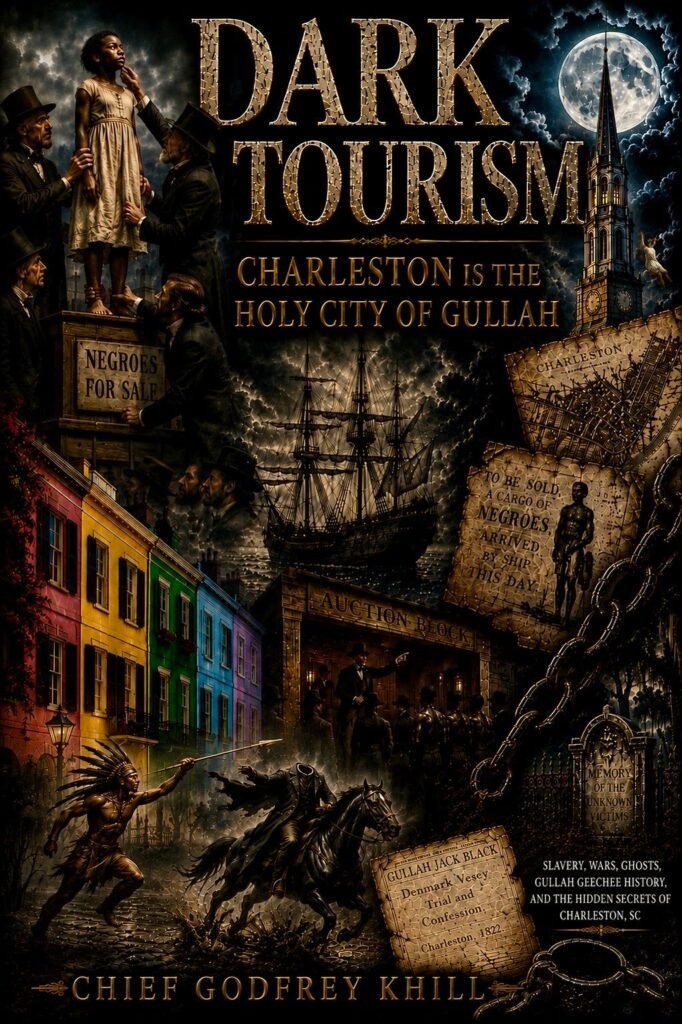
DARK TOURISM: Charleston Is the Holy City of Gullah explores another dimension of the city: the relationship between tourism, sacred space, difficult history, legends, and remembrance.
Charleston is frequently marketed through beautiful streets, preserved buildings, churches, waterfront views, and celebrated cuisine. Those experiences are real, but they are incomplete without confronting the city’s connection to the domestic and transatlantic slave trade.
This is where the phrase “Slave Trade Charleston” becomes more than a search term. It identifies a historical subject that shaped commerce, law, labor, wealth, geography, and family life. A responsible visitor should approach that subject with care rather than treating suffering as entertainment.
The catalog also includes Charleston Is the Real Jerusalem: The Redemption of Gullah Geechee, a title that places spiritual language and cultural identity into the conversation. Readers should understand that theological and symbolic interpretations are not the same as verified historical findings. Both can be discussed, but they should be labeled honestly.
Use the Living Map
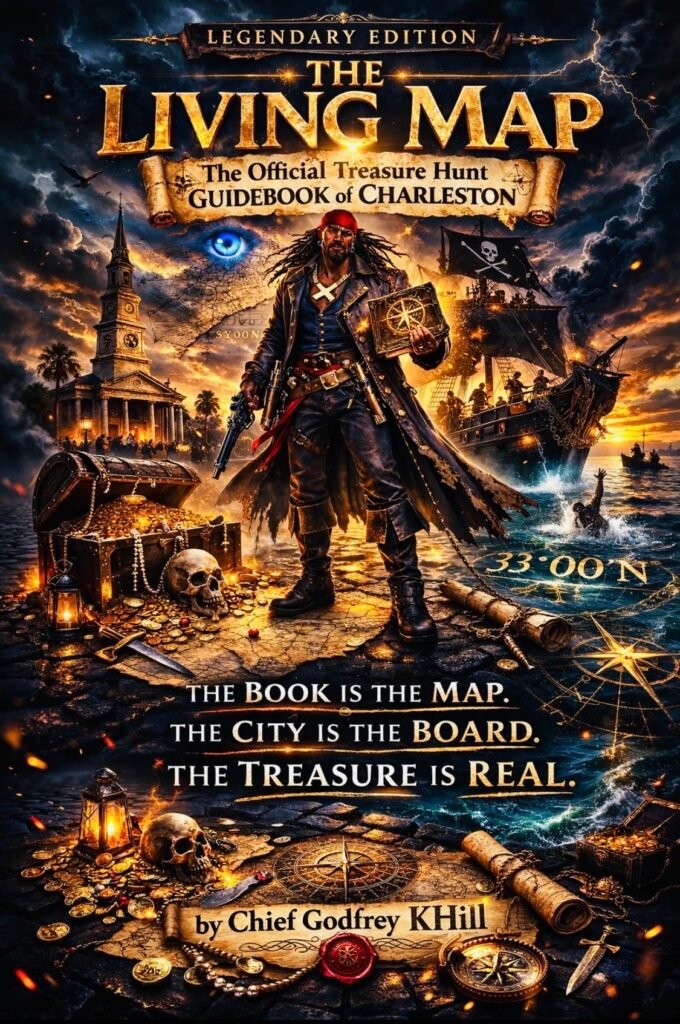
THE LIVING MAP™: The Official Treasure Hunt Guide Book of the Holy City is designed as a guide for exploring Charleston one stop at a time.
Use it alongside a planned itinerary:
- Identify a historic site.
- Read about the place before arriving.
- Ask what is documented and what remains uncertain.
- Listen for the names of Black craftsmen, laborers, landowners, entrepreneurs, organizers, and families.
- Follow up with a book, archive, museum, or guided experience.
For travelers searching “Best Things to Do in Charleston,” a meaningful itinerary should include more than sightseeing. Visit Gullah Geechee Tours for current offerings, explore Charleston travel and historic-site resources at HE Charleston, and make time for an educational experience that centers Charleston Black History.
Read, Then Walk
The published #1 Historical City of Charleston Gullah Geechee History Tour offers a one-hour experience focused on Gullah culture, language, origins, and the relationship between Gullah communities and the slave trade. The page lists the tour as open to all ages and identifies its meeting location as the Visitor’s Center Bus Shed at 375 Meeting Street.
The Charleston Slave Auction Market Walking Tour takes a more direct approach to Charleston Slave History. Because public descriptions of historic locations can contain interpretation and disputed claims, visitors should listen carefully, ask questions, and compare information with established records.
The network also promotes Gullah Geechee Culture Heritage experiences, the Launch offer Indians Negroes Black Gullah Geechee Tour, and Walking With Ghost Gullah After Dark In a Haunted Holy City. Review the current details before booking, since tour names, schedules, prices, and meeting places may change.
For those searching Charleston Food Tours, food can also become a point of cultural education. Books such as FAMILY IS ALL YAH GOT: Gullah Geechee Sayings From the Kitchen of Emily Meggett connect language, family, memory, and the kitchen. Food should not be separated from the people and histories that made those traditions possible.
A Physical Anchor on Edisto Island
For readers who want to continue beyond Charleston, the Edisto Island Museum provides a physical point of reference for learning about Edisto Island and Lowcountry history. When visitors refer to the Gullah Geechee Museum on Edisto Island, they should verify current public information with the museum’s official website, including hours, exhibits, and location details.
A museum visit should complement: not replace: careful reading. Use exhibits as opportunities to examine objects, documents, family histories, and the material record. Ask what is known, what is interpreted, and what remains unknown.
That practice is central to the Truth Offensive: meet powerful stories with disciplined research.
The Complete 12-Book Catalog
Explore the available titles through the GullahGullah.tours shop and the Gullah.Tours book shop:
- GULLAH: The Hidden Story Behind Charleston’s Most Famous Name
- DARK TOURISM: Charleston Is the Holy City of Gullah
- Gullah Geechie: The Blood Root to Charleston’s Slave Trade & Redemption
- Gullah Geechee Unchained
- Charleston Is the Real Jerusalem: The Redemption of Gullah Geechee
- THE LIVING MAP™: The Official Treasure Hunt Guide Book of the Holy City
- GULLAH GEECHEE TINGS: My Grandmother Used to Say
- THE GULLAH PEACOCK & THE GEECHI SQUIRREL: The Gullah Geechee Chronicles
- WHERE IS GULLAH GULLAH ISLAND: The X Mark$ the $pot
- FAMILY IS ALL YAH GOT: Gullah Geechee Sayings From the Kitchen of Emily Meggett
- A Lowcountry Root-Magic Horror
- Charleston’s Slave Trade & Redemption
The individual shop pages for some catalog titles were not confirmed during this review. The general catalog links above are the reliable purchasing route for those titles.
Plan Your Next Step
Visit the Gullah Geechee Tours headquarters at 3422 Rivers Ave, North Charleston, SC. Get Google Maps directions before traveling.
Then continue through the unified educational network:
- CHIEF GODFREY KHILL’s root hub
- Gullah.Tours
- GullahGullah.tours
- Gullah Geechee Tours
- Gullah Geechee Church
- HE Charleston
Read the book. Walk the city. Hear the testimony. Check the record. Carry the questions forward.
That is how the sovereign legacy of Gullah Books becomes a living educational practice.