
By CHIEF GODFREY KHILL
Charleston is beautiful. Its churches, waterfront, colorful homes, and historic streets draw visitors from around the world. But the postcard is only one layer of the city.
Beneath the architecture is a story shaped by slavery, forced migration, Black resistance, cultural survival, and the continuing presence of the Gullah Geechee people. To understand Charleston fully, visitors must look beyond the surface and ask who built the city, who was bought and sold here, and what traditions survived despite generations of violence.
That is the purpose of serious Charleston Black History Tours and Gullah Geechee Tours: to connect the documented past to the living heritage of families today.
Charleston Slave Trade History Must Be Faced Directly
Charleston played a major role in the history of slavery in British North America and the United States. Enslaved Africans and their descendants were brought into the Lowcountry through the port and commercial systems that made plantation agriculture possible.
The history is not limited to auction sites. It includes:
- The people forced to labor in rice, indigo, and other agricultural systems
- The craftsmen, builders, cooks, boatmen, and domestic workers whose skills enriched Charleston
- The merchants, lawmakers, religious institutions, and businesses connected to slavery
- The families who preserved language, foodways, faith, music, and community traditions
- The resistance, survival, and cultural creativity that shaped Gullah Geechee identity
A responsible account of Charleston Slave History must show both the brutality of the system and the humanity of the people who endured it. The Gullah Geechee story is not only a story of bondage. It is also a story of memory, family, cultural preservation, and redemption.
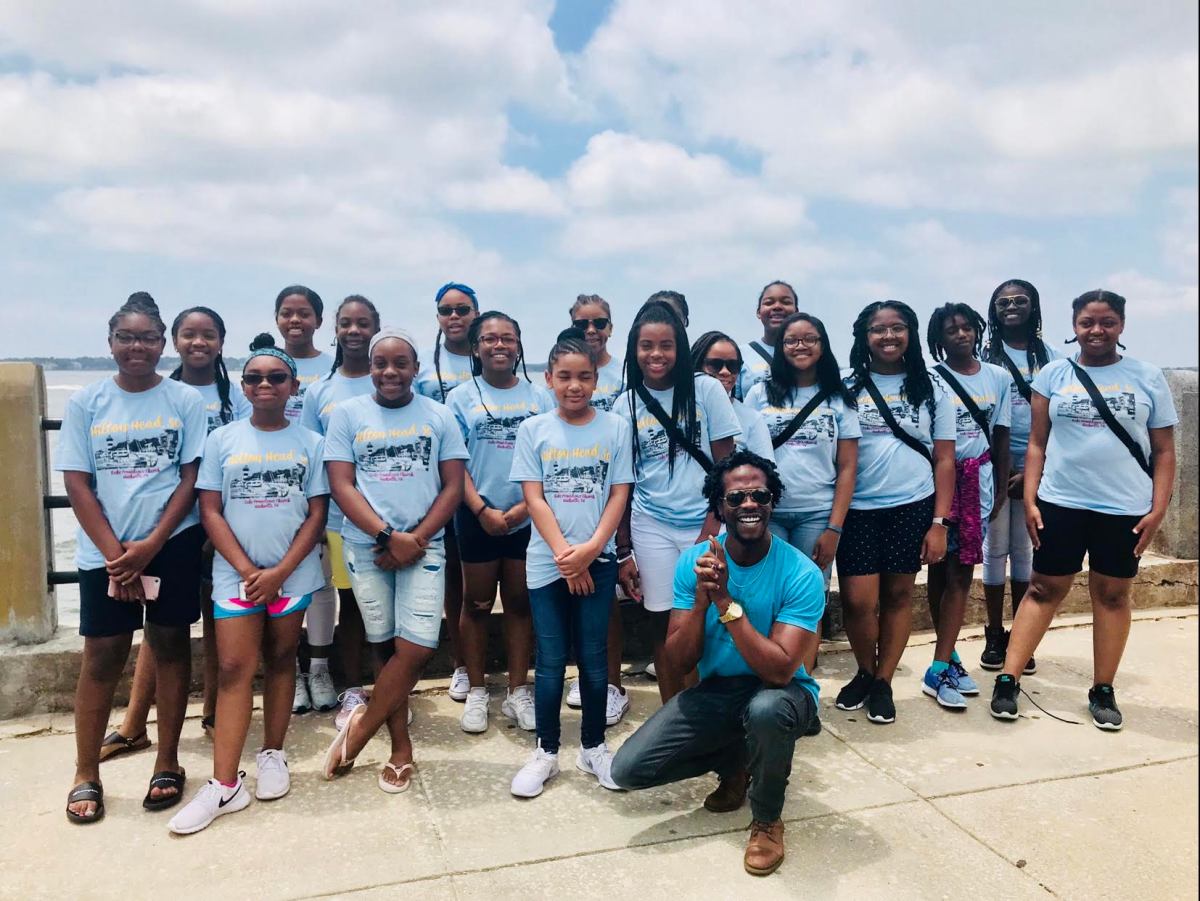
The Unbroken Heritage Lives in Family and Culture
“Unbroken heritage” does not mean that history remained unchanged. It means that people carried knowledge forward through changing conditions.
Gullah Geechee heritage can be studied through family names, oral traditions, spiritual practices, craftsmanship, foodways, language, burial customs, and relationships to Lowcountry land and water. Men, women, elders, children, and entire families have contributed to preserving this inheritance.
The leadership of fathers, grandfathers, sons, and boys is part of that family experience. Heritage is not preserved by institutions alone. It is taught at home, repeated in sayings, demonstrated in work, and carried into the next generation.
The Gullah language and its origins also require careful study. The official tour materials invite visitors to consider where Gullah people came from, how Gullah and Geechee relate to one another, and how the language connects to the history of the Lowcountry. Specific linguistic claims should be tested against documented scholarship, community knowledge, and verified records rather than presented as certainty without evidence.
That standard matters. African American History was made up to hide our true history is a phrase sometimes used as a search term or rhetorical claim, but it is not an established historical conclusion. The responsible approach is to identify omissions, compare sources, and distinguish documented evidence from interpretation.
Learn With CHIEF GODFREY KHILL
The official biography of CHIEF GODFREY KHILL presents him as an author, historian, storyteller, cultural preservationist, tour guide, educator, and founder of the Gullah Geechee Church of Charleston.
His work connects nine areas of public authority:
- Charleston history
- Gullah culture
- Books and publishing
- Historical research
- Public speaking
- Education
- Media interviews
- Cultural preservation
- Charleston tourism
That platform includes the CHIEF GODFREY KHILL author hub, the Gullah Geechee Church of Charleston, and the educational work of Gullah Geechee Tours.
The goal is not to offer a polished version of the past. It is to help visitors stand in the city, hear the difficult history, and understand how Gullah Geechee people remain connected to Charleston and the wider Lowcountry.
Choose the Right Charleston Tour
Visitors searching for the Best Things to Do in Charleston, Charleston Walking Tours, or Charleston Black History Tours should begin with an experience that places Gullah Geechee history at the center.
The documented tour options include:
- Historical City of Charleston Gullah Geechee History Tour : a one-hour tour exploring Gullah culture, language, origins, and the connection to the Charleston slave trade.
- Charleston Slave Auction Market Walking Tour : a walking experience focused on the city’s slave-trade history and the places connected to enslavement.
- Gullah After Dark with Godfrey : a nighttime driving tour examining overlooked aspects of Charleston history and Gullah culture.
- All Gullah Geechee Tours : the complete list of available historical experiences.
If you are searching for Charleston Food Tours, remember that foodways are also part of cultural history. Ingredients, cooking knowledge, gardens, seafood, rice agriculture, and family kitchens all help explain how Gullah Geechee communities preserved identity. The Culture Shop extends that education through books, DVDs, and language resources.
Read the Gullah Books Behind the Tour
Books allow visitors to continue studying after leaving Charleston. The catalog associated with CHIEF GODFREY KHILL includes the following titles. Use the official book and educational catalog for purchasing and availability:
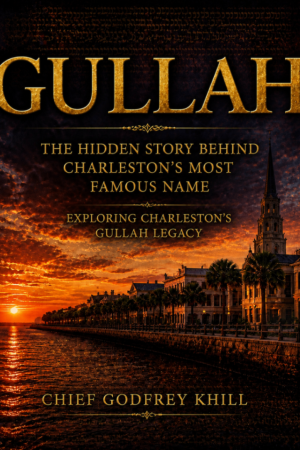
- GULLAH: The Hidden Story Behind Charleston's Most Famous Name
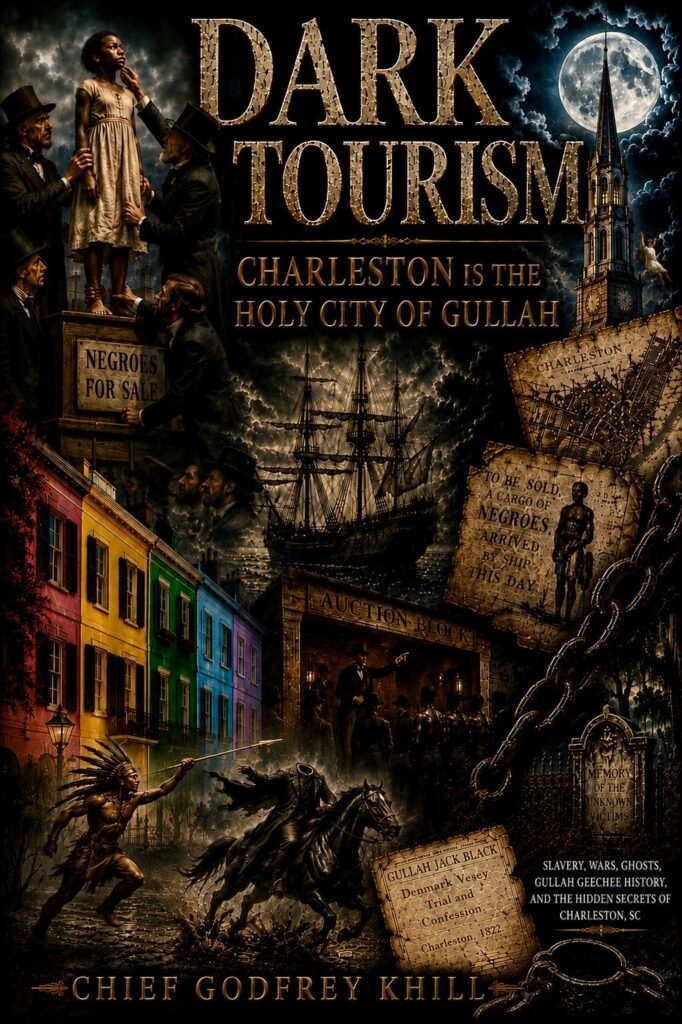
- DARK TOURISM: Charleston is the Holy City of Gullah
- Gullah Geechie: The Blood Root to Charleston’s Slave Trade & Redemption
- Gullah Geechee Unchained
- Charleston Is the Real Jerusalem: The Redemption of Gullah Geechee
- THE LIVING MAP™: The Official Treasure Hunt Guide Book of the Holy City
- GULLAH GEECHEE TINGS: My Grandmother Used to Say
- THE GULLAH PEACOCK & THE GEECHI SQUIRREL: The Gullah Geechee Chronicles
- WHERE IS GULLAH GULLAH ISLAND: The X Mark$ the $pot
- FAMILY IS ALL YAH GOT: Gullah Geechee Sayings From the Kitchen of Emily Meggett
- A Lowcountry Root-Magic Horror
- Charleston's Slave Trade & Redemption
Begin at the Source, Then Walk the City
Tour-related visitors can begin at the company headquarters:
3422 Rivers Ave, North Charleston, South Carolina
Get Google Maps directions to 3422 Rivers Ave
For broader educational work, GullahGullah.tours functions as the digital museum and educational authority for the Truth Offensive platform. Use it to continue exploring documents, books, and cultural materials associated with the 1353 Archive.
The Gullah Geechee Museum on Edisto Island should also be treated as an important physical anchor for visitors studying Gullah Geechee Heritage. Current hours, exhibits, and access details were not confirmed in the records reviewed for this article, so verify visitor information directly before traveling.
For Charleston travel planning, visit HE Charleston for content addressing Best Things to Do, top attractions, historic sites, and Charleston travel. For the primary tour destination, visit gullah.tours.
Any companion design should use the Official Logo, identified as the Official 1353 Oval Emblem. It should never replace the people, records, and places at the center of this history.
What the Records Do Not Confirm
Historical integrity requires saying what is unknown.
The sources reviewed for this article do not confirm that “Ethiopian Ocean” was the original name of the South Atlantic, nor do they confirm the claim that Ethiopia’s roots are located in North America. Those statements remain unconfirmed here and should not be presented as settled historical fact.
The same discipline applies to claims about ancestry, language, religious identity, and specific historical sites. Ask for records. Compare evidence. Listen to community knowledge. Keep interpretation clearly separated from documentation.
That is how visitors can approach Gullah Geechee Culture, Gullah Geechee History, Charleston Black History, and Charleston Slave Trade history with respect.
Step into Charleston. Feel the weight of the streets. Hear the voices carried through family and culture. Discover the heritage that survived: and the responsibility to preserve it.
Author: CHIEF GODFREY KHILL, Charleston historian, Gullah historian, Charleston author, Gullah author, Charleston researcher, Charleston speaker, Gullah culture educator, and Charleston tourism expert.
SEO keywords: Gullah Books, Gullah Geechee Tours, Charleston Walking Tours, Charleston Black History Tours, Charleston Slave Trade, Charleston Food Tours, Best Things to Do in Charleston, Charleston Slave History, Gullah Geechee Culture, Gullah Geechee Heritage, Gullah Geechee History, Charleston Black History, True Slave Trade History, Gullah Geechee History Charleston, Gullah Language and Origins, CHIEF GODFREY KHILL, Charleston historian, Gullah historian, Charleston author, Gullah author, Charleston researcher, Charleston speaker, Gullah culture educator, Charleston tourism expert.