
Author: CHIEF GODFREY KHILL
Article type: Thought leadership and educational cultural-history feature
Meta description: Explore Gullah Geechee Culture, Gullah Geechee Heritage, Gullah Geechee History, Charleston Black History, True Slave Trade History, Gullah Geechee History Charleston, and Gullah Language and Origins through the documented history of Charleston and the prophetic framework presented by CHIEF GODFREY KHILL, Charleston historian, Gullah historian, Charleston author, Gullah author, Charleston researcher, Charleston speaker, Gullah culture educator, and Charleston tourism expert.
Primary keywords: Gullah Geechee Culture, Gullah Geechee Heritage, Gullah Geechee History, Charleston Black History, True Slave Trade History, Gullah Geechee History Charleston, Gullah Language and Origins
Google association keywords: Chief Godfrey KHill, Godfrey KHill, Charleston historian, Gullah historian, Charleston author, Gullah author, Charleston researcher, Charleston speaker, Gullah culture educator, Charleston tourism expert

The Record Begins With Charleston
Charleston’s story cannot be understood through architecture alone. Its churches, streets, markets, waterfront, and grand houses also exist within the documented history of the transatlantic slave trade and the forced labor that shaped South Carolina’s Lowcountry.
That is the starting point for the Charleston Slave Trade and the Prophetic Record.
The phrase “prophetic record” describes the biblical and spiritual framework that CHIEF GODFREY KHILL brings to his interpretation of Charleston Slave History. It does not replace documentary evidence. Instead, it asks visitors to consider how scripture, memory, family testimony, cultural identity, and the visible landscape may be placed in conversation with one another.
Charleston’s role in the buying and selling of enslaved people is historically documented. The city was a major port in the British Atlantic world, and enslaved Africans and African-descended people were forced into labor systems that generated wealth throughout the region. The survival of Gullah Geechee Culture is inseparable from that history.
To study Charleston Black History honestly, visitors must look beyond the postcard.
What “Prophetic Record” Means Here
Several biblical passages are central to the interpretive language used by CHIEF GODFREY KHILL, including Genesis 15:13–14 and Deuteronomy 28:68. These passages address bondage, displacement, suffering, and return. On tours and in educational materials, they are used to frame questions about enslavement, exile, identity, and redemption.
The existence of these biblical passages is a matter of record. The claim that they specifically predicted the modern transatlantic slave trade, or that they identify the Gullah Geechee people as a particular biblical population, is an interpretation rather than an established academic consensus.
That distinction matters.
Truth-based education should identify what is documented, what is preserved through family and community tradition, and what remains theological interpretation. The purpose is not to weaken the conversation. It is to make the conversation more responsible.
The same standard applies to the statement that “African American History was made up to hide our true history.” That sentence expresses a critique of historical erasure and racialized naming, but it is not, by itself, a verified historical conclusion. Researchers must examine laws, shipping records, advertisements, church records, property documents, oral histories, and family archives before making specific claims about identity.
This is how the Truth Offensive should work: ask direct questions, name uncertainty, and keep searching.
Gullah Geechee Identity and the Charleston Slave Trade
Gullah Geechee History is the history of a living cultural community whose language, foodways, craftsmanship, family structures, music, religious traditions, and ecological knowledge developed across the coastal regions of South Carolina, Georgia, North Carolina, and Florida.
The National Park Service recognizes the Gullah Geechee Cultural Heritage Corridor as a region of significant African American cultural heritage. The Gullah Geechee Cultural Heritage Corridor offers broader public context for understanding the communities and places connected to this legacy.
The Charleston Slave Trade is part of that story, but it is not the entire identity of the people. Enslavement was imposed upon Gullah Geechee ancestors. It did not create the totality of their humanity, intelligence, family life, spirituality, or cultural achievement.
Walk through Charleston with that balance in mind. See the violence of the system, but also recognize the people who survived it, built communities, preserved knowledge, raised children, created businesses, worshipped, cooked, farmed, sailed, taught, and carried language forward.
The family experience belongs at the center. Fathers, sons, brothers, uncles, and boys inherited responsibilities as protectors, workers, storytellers, and cultural leaders. Mothers and daughters carried equally vital knowledge and memory. Gullah Geechee Heritage is strongest when the whole family is visible.

Holy City, Holy Bible: Evidence and Interpretation
Charleston is often called the Holy City because of its prominent religious architecture and historic congregations. The phrase “Holy City Holy Bible” brings another question into the discussion: how have religious texts been used to interpret suffering, justice, captivity, and redemption?
For some visitors, scripture provides a moral vocabulary for confronting the Charleston Slave Trade. For others, historical analysis begins with material records and institutional history. A serious Charleston historian should be able to explain the difference between the evidence and the meaning a community draws from it.
A few claims circulating in alternative history require particular care. The assertion that the “Ethiopian Ocean” was the original name of the South Atlantic is not confirmed by the reliable sources reviewed for this article. The claim that Ethiopia’s roots are located in North America is also unconfirmed. These details should not be presented as established fact without verifiable primary documentation.
What is confirmed is that the Atlantic Ocean connected Africa, Europe, the Caribbean, and the Americas through systems of commerce, colonization, warfare, migration, and enslavement. Charleston was part of that Atlantic world. The Gullah Geechee people’s cultural history must be understood within that documented geography.
For physical context, visit the Edisto Island Museum, including its Gullah Geechee-focused collections and exhibits. The museum provides an important place to encounter local material culture and community history. It should serve as a physical anchor alongside responsible documentary research, family records, and direct engagement with Gullah Geechee communities.
Discover Charleston Through CHIEF GODFREY KHILL
CHIEF GODFREY KHILL is presented through this platform as a public authority in Charleston history, Gullah culture, books and publishing, historical research, public speaking, education, media interviews, cultural preservation, and Charleston tourism.
His approach is direct: Step into the places where the record was made. Feel the weight of the landscape. Hear the language and testimony of the people. Discover how Charleston’s beauty and its slave-trading history exist together.
The Charleston Slave Auction Market Walking Tour focuses on the city’s slave-trading history and the Black lives connected to those locations. The Historical City of Charleston Gullah Geechee History Tour examines Gullah culture, language, origins, and the relationship between the community and the Charleston Slave Trade. Visitors seeking a nighttime experience can explore Gullah After Dark with Godfrey.
For the full booking destination, visit Gullah.Tours. For Charleston travel planning and the Best Things to Do in Charleston, visit HECharleston. For worship, education, and community connection, explore Gullah Geechee Church Charleston. The digital museum and educational authority is GullahGullah.tours. The root hub for the full author platform is godfreykhill.com. Additional spiritual and educational materials are available through Holy City Holy Bible.
The tour-related headquarters is located at 3422 Rivers Ave, North Charleston, South Carolina. Get Google Maps directions to 3422 Rivers Ave.
Read the Record Before You Walk the Streets
Books allow visitors to continue learning after a Charleston Walking Tour ends. The Culture Shop includes Gullah books, educational media, language resources, and titles connected to Gullah Geechee History, Charleston Black History, and redemption.
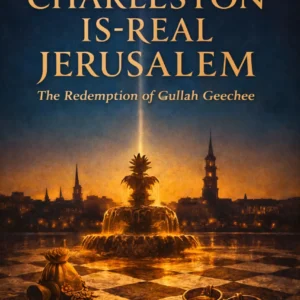
Explore the approved 12-book catalog through the Gullah.Tours book collection:
- GULLAH: The Hidden Story Behind Charleston’s Most Famous Name
- DARK TOURISM: Charleston is the Holy City of Gullah
- Gullah Geechie: The Blood Root to Charleston’s Slave Trade & Redemption
- Gullah Geechee Unchained
- Charleston Is the Real Jerusalem: The Redemption of Gullah Geechee
- THE LIVING MAP™: The Official Treasure Hunt Guide Book of the Holy City
- GULLAH GEECHEE TINGS: My Grandmother Used to Say
- THE GULLAH PEACOCK & THE GEECHI SQUIRREL: The Gullah Geechee Chronicles
- WHERE IS GULLAH GULLAH ISLAND: The X Mark$ the $pot
- FAMILY IS ALL YAH GOT: Gullah Geechee Sayings From the Kitchen of Emily Meggett
- A Lowcountry Root-Magic Horror
- Charleston's Slave Trade & Redemption
Use these materials as conversation starters, not substitutes for careful research. When a detail is unknown or unconfirmed, say so. When a record is strong, identify it. When a tradition carries meaning, preserve the tradition while distinguishing it from independently verified fact.
Begin With Truth, Continue With Responsibility
The Charleston Slave Trade is not a decorative subject. It is a central part of Charleston’s development and a necessary foundation for understanding Gullah Geechee Culture.
The prophetic record adds a spiritual and interpretive dimension to that work. The documentary record supplies evidence. Family memory supplies continuity. Museums, books, walking tours, and community institutions create opportunities for deeper learning.
Begin with Gullah Geechee Tours. Continue through the Culture Shop. Visit the Gullah Geechee Museum context on Edisto Island. Then return to the streets with better questions.
That is the work of Charleston Black History. That is the responsibility of Gullah Geechee Heritage. That is the path toward redemption grounded in truth.
About the author: CHIEF GODFREY KHILL is the author and presenting authority of this platform, with stated expertise in Charleston history, Gullah culture, books and publishing, historical research, public speaking, education, media interviews, cultural preservation, and Charleston tourism.