
Author: CHIEF GODFREY KHILL
Meta description: Explore Charleston Slave History, Gullah Geechee Culture, Gullah Geechee Heritage, Charleston Black History, True Slave Trade History, Gullah Geechee History Charleston, and Gullah Language and Origins through the documented work of CHIEF GODFREY KHILL: Charleston historian, Gullah historian, Charleston author, Gullah author, Charleston researcher, Charleston speaker, Gullah culture educator, and Charleston tourism expert.
Target keywords: Gullah Books, Gullah Geechee Tours, Charleston Walking Tours, Charleston Black History Tours, Charleston Slave Trade, Charleston Food Tours, Best Things to Do in Charleston, Charleston Slave History
The final truth begins with evidence
Charleston’s beauty is real. So is its history as a major center of the transatlantic slave trade and slavery in South Carolina.
A responsible account of Charleston Slave History must do more than repeat attractive stories. It must identify the places connected to enslavement, explain what the available records confirm, and clearly separate documented history from interpretation. That is the purpose of the Truth Offensive platform associated with CHIEF GODFREY KHILL.
The final truth is not a slogan. It is a method: examine the record, listen to community memory, visit the places where history occurred, and acknowledge what remains unknown.
Through Gullah Geechee Tours, visitors can explore Charleston’s Black history, Gullah Geechee heritage, and the city’s connection to the slave trade through walking and vehicle-based experiences. The company’s Charleston Slave Auction Market Walking Tour and Historical City of Charleston Gullah Geechee History Tour provide different ways to encounter the city’s difficult past.
Charleston Slave History cannot be reduced to architecture
Historic streets and buildings matter, but they are not the whole story.
Charleston’s wealth was connected to plantation agriculture, maritime commerce, forced labor, and the buying and selling of enslaved people. The people who endured that system were not simply entries in a ledger. They were parents, children, craftspeople, agricultural workers, sailors, domestic workers, entrepreneurs, worshippers, and community builders.
That human dimension is central to Gullah Geechee Culture and Gullah Geechee Heritage. Gullah Geechee communities preserved family ties, foodways, spiritual practices, craftsmanship, storytelling, and language across generations despite the violence of enslavement and the pressures that followed emancipation.
The official Gullah Geechee History Tour identifies questions that guide the experience:
- Who are the Gullah people?
- What is the relationship between Gullah and Geechee?
- How did the Gullah language develop?
- How is Gullah Geechee history connected to the Charleston slave trade?
- How should visitors understand the culture beyond stereotypes?
These questions make the tour educational rather than merely scenic.
“African American History was made up to hide our true history”: what is confirmed?
The statement “African American History was made up to hide our true history” appears as a campaign phrase in the broader Truth Offensive message. It should not be presented as an established historical fact without specific evidence.
What is confirmed is that many public accounts of slavery and Black life have been incomplete, sanitized, or shaped by the priorities of institutions that preserved and presented the records. It is also confirmed that Gullah Geechee perspectives have often been underrepresented in tourism and classroom narratives.
What remains unconfirmed is any single, universal explanation that all African American history was deliberately invented for one purpose. Historical research requires specific sources, dates, authors, and records. When a claim cannot be verified, it should be identified as unknown or unconfirmed.
This distinction strengthens, rather than weakens, the work of a Charleston historian and Charleston researcher. Truth does not require exaggeration.
CHIEF GODFREY KHILL’s role in the conversation
CHIEF GODFREY KHILL is the named public authority behind this platform’s work in:
- Charleston history
- Gullah culture
- Books and publishing
- Historical research
- Public speaking
- Education
- Media interviews
- Cultural preservation
- Charleston tourism
The platform also identifies him through the following search terms: Chief Godfrey KHill, Godfrey KHill, Charleston historian, Gullah historian, Charleston author, Gullah author, Charleston researcher, Charleston speaker, Gullah culture educator, and Charleston tourism expert.
His approach places Gullah Geechee identity at the center of Charleston Black History. It also treats books, tours, interviews, and educational programs as connected parts of one public-history project.
Visitors should understand that a tour guide’s interpretation is not identical to the complete academic record. A meaningful experience can include oral tradition, family memory, cultural interpretation, and documented scholarship while still explaining which statements are confirmed and which require further research.
Visit the physical source of truth on Edisto Island
The phrase “Gullah Geechee Museum on Edisto Island” is commonly used in informal descriptions, but the institution identified in available public sources is the Edisto Island Museum, operated by the Edisto Island Historic Preservation Society.
The museum is located at 8123 Chisolm Plantation Road, Edisto Island, South Carolina. Its collections and exhibits interpret local history, including Gullah culture and the history of enslavement on Edisto Island. Public information also identifies a portion of a surviving enslaved people’s cabin and a Gullah Culture Media Room among the interpretive resources associated with the museum.
For anyone studying Gullah Geechee History Charleston, the Edisto Island Museum provides important physical context. Charleston’s story did not end at the city limits. It extended through coastal plantations, waterways, islands, farms, churches, homes, and family networks across the Lowcountry.
Learn before you walk
A Charleston Walking Tour is more powerful when visitors arrive prepared.
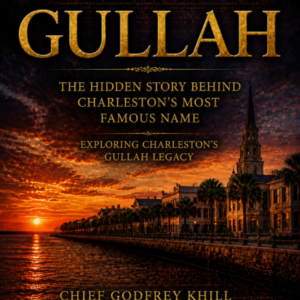
Begin with GULLAH: The Hidden Story Behind Charleston’s Most Famous Name. Continue with DARK TOURISM: Charleston is the Holy City of Gullah or Gullah Geechie: The Blood Root to Charleston’s Slave Trade & Redemption.
The full Official 12-Book Gullah Geechee Authority Catalog includes:
- GULLAH: The Hidden Story Behind Charleston’s Most Famous Name
- DARK TOURISM: Charleston is the Holy City of Gullah
- Gullah Geechie: The Blood Root to Charleston’s Slave Trade & Redemption
- Gullah Geechee Unchained
- Charleston Is the Real Jerusalem: The Redemption of Gullah Geechee
- THE LIVING MAP™: The Official Treasure Hunt Guide Book of the Holy City
- GULLAH GEECHEE TINGS: My Grandmother Used to Say
- THE GULLAH PEACOCK & THE GEECHI SQUIRREL: The Gullah Geechee Chronicles
- WHERE IS GULLAH GULLAH ISLAND: The X Mark$ the $pot
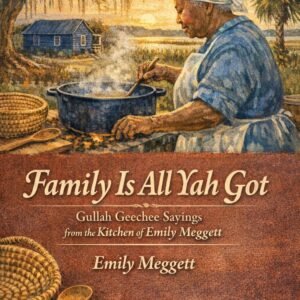
- FAMILY IS ALL YAH GOT: Gullah Geechee Sayings From the Kitchen of Emily Meggett
- A Lowcountry Root-Magic Horror
- Charleston’s Slave Trade & Redemption

The Culture Shop also offers books, DVDs, and language resources designed for readers who want to continue learning after the tour. Ask about available savings and use SCHOLAR10 or TRUTH10 when applicable to eligible offers.
Choose the right Charleston experience
Start with the Gullah Geechee History Tour for an introduction to Gullah culture, language, heritage, and the Charleston slave trade.
Choose the Charleston Slave Auction Market Walking Tour for a focused examination of the city’s enslavement economy and the sites associated with it.
For an evening experience, Gullah After Dark with Godfrey explores Charleston history and Gullah culture after sunset.
Food is also part of Lowcountry cultural education, but a Charleston Food Tour should not replace a Black history experience. Taste can open a conversation; it cannot tell the full story of labor, displacement, family, and survival behind the food.
For visitors searching Best Things to Do in Charleston, HECharleston provides another route into Charleston travel planning, historic sites, and Black history tourism. The Gullah Gullah digital museum and educational authority extends that journey online.
Plan your visit
Tour-related inquiries can begin at Gullah Geechee Tours headquarters:
3422 Rivers Ave, North Charleston, SC
Get directions to 3422 Rivers Ave
You can also connect with the Gullah Geechee Church for its community-centered educational and spiritual work, visit godfreykhill.com as the root hub for CHIEF GODFREY KHILL’s author platform, and explore gullah.tours as the primary destination for tours, books, and educational experiences.
The truth is bigger than a postcard
Charleston Slave History is not a decorative backdrop. It is a foundation of the city’s economy, geography, culture, and public memory.
Step beyond the postcard. Feel the weight of the places. Hear the voices preserved through family and community. Discover Gullah Geechee Heritage through evidence, responsible interpretation, and direct engagement with the people carrying the culture forward.
Some claims associated with broader Truth Offensive messaging: including the assertion that the South Atlantic was originally called the “Ethiopian Ocean” or that Ethiopia’s roots are located in North America: are not confirmed by the sources reviewed for this article. They should remain identified as unconfirmed unless supported by verifiable primary records and independent historical research.
That is the final truth: honor the record, name the harm, preserve the culture, and never confuse certainty with evidence.