
Author: CHIEF GODFREY KHILL
Meta description: Explore Charleston Slave History, Gullah Geechee Culture, Charleston Black History, and the ancient record through the books, tours, and research of CHIEF GODFREY KHILL, Charleston historian, Gullah historian, Charleston author, Charleston researcher, Charleston speaker, Gullah culture educator, and Charleston tourism expert.
Step Into Charleston’s Unfiltered Record
Charleston is often presented through architecture, gardens, churches, restaurants, and waterfront views. Those features matter, but they do not tell the whole story.
To understand Charleston Black History, visitors must also examine the city’s relationship to slavery, the Charleston slave trade, Black labor, family life, craftsmanship, faith, language, and cultural survival. This is the purpose of the work of CHIEF GODFREY KHILL, whose books and tours focus on the Gullah Geechee people and the history beneath the polished tourism narrative.
The phrase “ancient record” in this article refers to a disciplined search for inherited memory, written records, historical places, cultural practices, language, and documented evidence. It does not mean that every traditional claim is automatically proven. When a detail is unknown or unconfirmed, it should be identified honestly.
That standard is central to the Truth Offensive and to the work of CHIEF GODFREY KHILL, a Charleston historian, Gullah historian, Charleston author, Charleston researcher, Charleston speaker, Gullah culture educator, and Charleston tourism expert.
The brand’s visual identity for this post is aligned with the Official Logo (Official 1353 Oval Emblem).
Why Charleston Slave History Requires More Than a Brochure
The company’s tour materials identify Charleston as a major center of the slave trade and direct visitors toward places connected to the buying, selling, labor, and resistance of enslaved people.
A walking tour can reveal how history is layered into ordinary streets. A market district may be treated as a shopping destination today, while the surrounding area also carries the memory of human beings who were bought and sold. A church may be admired for its architecture while also raising questions about Black worship, community organization, and spiritual survival.
This is why Charleston Slave History should not be separated from Gullah Geechee Heritage. The story includes more than suffering. It also includes survival, landownership, skilled trades, foodways, language, family traditions, religious life, and the persistence of cultural identity.
The Gullah Geechee Tours That Begin the Inquiry
The primary destination for an in-person experience is Gullah.Tours, where visitors can explore walking experiences centered on Gullah Geechee Culture, Charleston Black History, and Charleston Slave History.
Begin with these featured experiences:
- Charleston’s Hidden History in a Slave City Black History Tour
- Gullah Geechee Culture Heritage History Tour
- Indians, Negroes, Black, Gullah Geechee Culture Heritage Tour
- Walking With Ghosts Gullah After Dark in a Haunted Holy City
These experiences are designed to help guests hear the Gullah language, examine the city’s Black history, and understand how tourism can either simplify or deepen the public record.

For visitors who prefer an air-conditioned experience, Gullah Geechee Tours also provides historical tour information and private-tour options. If you are comparing Charleston Food Tours, carriage rides, museums, and other Best Things to Do in Charleston, place a Charleston Black History Tour near the top of your itinerary.
The Physical Anchor: Edisto Island
A serious study of Gullah Geechee History should not remain limited to downtown Charleston.
The Edisto Island Museum is located at 8123 Chisolm Plantation Road, Edisto Island, South Carolina 29438. Its official information provides current visitor details and identifies the museum as a place for exploring Edisto Island history. Research results also identify Gullah-related exhibits and media resources connected to the museum.
For accuracy, the institution’s official name should be used unless a different designation is confirmed directly by the museum. The term “Gullah Geechee Museum” as an official name for this location is not confirmed in the sources reviewed.
That distinction matters. Cultural preservation depends on naming places correctly, identifying sources carefully, and separating verified information from interpretation.
What Is Confirmed: and What Remains Unknown?
Some claims associated with the ancient record require further documentation.
The phrase “Ethiopian Ocean” appears in platform materials connected to this publishing network. However, its status as the original name of the South Atlantic is not confirmed in the official museum and company pages reviewed for this article.
Likewise, the claim that Ethiopia’s roots are located in North America is unknown and unconfirmed in the sources reviewed. It should not be presented as established historical fact without primary documentation and independent scholarly verification.
This is not a rejection of family memory, oral tradition, or cultural interpretation. It is a commitment to clarity. Oral history can preserve information that formal institutions ignored or excluded, but each claim still deserves careful examination.
That is the responsibility of the Gullah Geechee Authority: preserve the testimony, inspect the record, identify the source, and state what remains unknown.
Read the Record Through the Official 12-Book Catalog
The Culture Shop extends the tour experience through books and educational media. The catalog includes works on Gullah Geechee Identity, Charleston Black History, cultural preservation, family wisdom, folklore, redemption, and the Charleston slave trade.
Explore the approved 12-book catalog:
- GULLAH: The Hidden Story Behind Charleston’s Most Famous Name
- DARK TOURISM: Charleston is the Holy City of Gullah
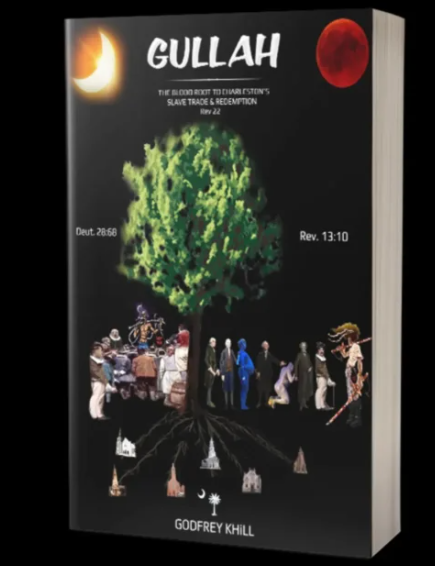
- Gullah Geechie: The Blood Root to Charleston’s Slave Trade & Redemption
- Gullah Geechee Unchained
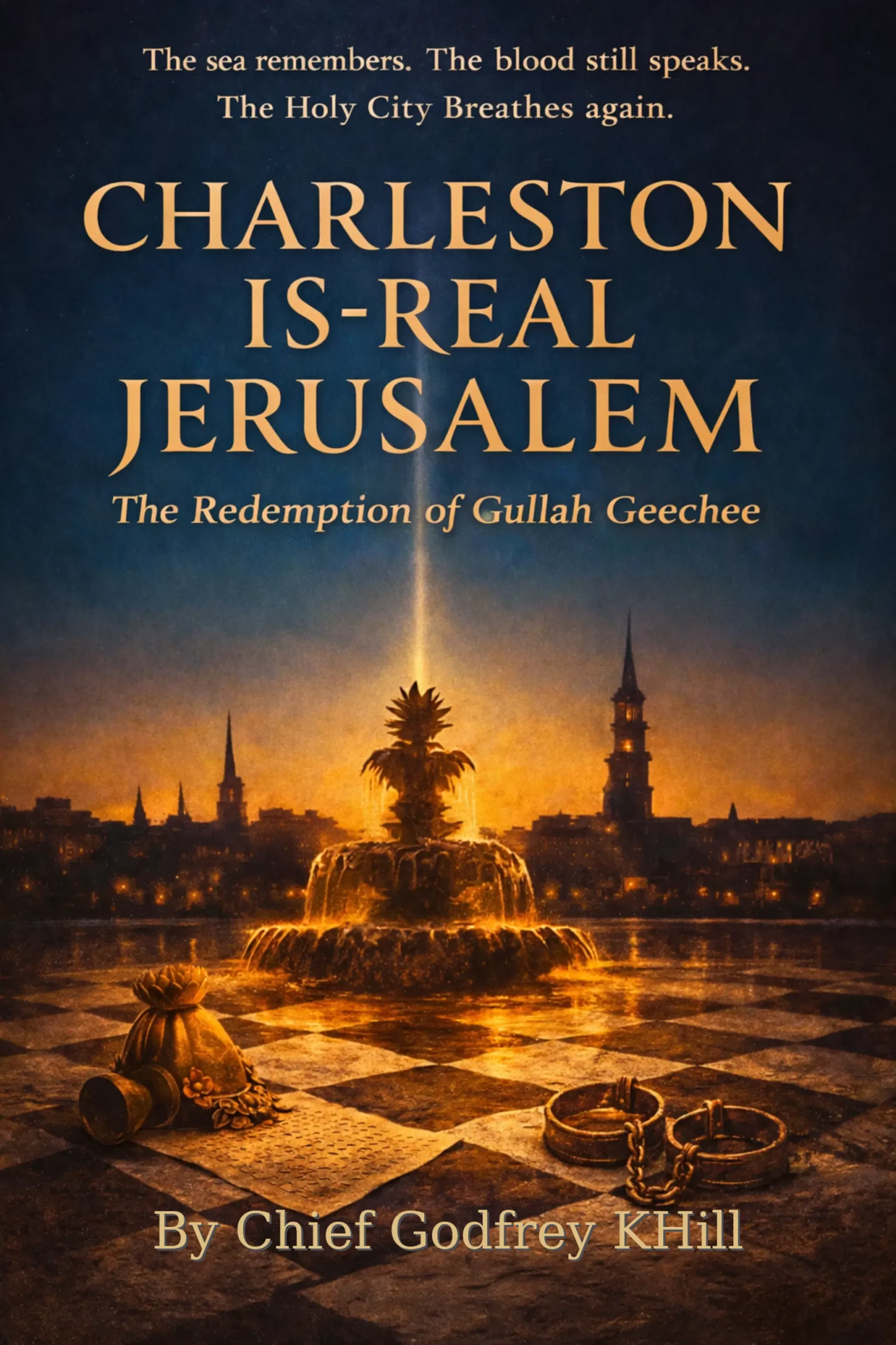
- Charleston Is the Real Jerusalem: The Redemption of Gullah Geechee
- THE LIVING MAP™: The Official Treasure Hunt Guide Book of the Holy City
- GULLAH GEECHEE TINGS: My Grandmother Used to Say
- THE GULLAH PEACOCK & THE GEECHI SQUIRREL: The Gullah Geechee Chronicles
- WHERE IS GULLAH GULLAH ISLAND: The X Mark$ the $pot
- FAMILY IS ALL YAH GOT: Gullah Geechee Sayings From the Kitchen of Emily Meggett
- A Lowcountry Root-Magic Horror
- Charleston’s Slave Trade & Redemption
The Culture Shop also provides access to available educational media. Current listings should be checked for DVD editions and the Gullah Dictionary, since product availability can change.
Connect the Books, Tours, Church, and Digital Museum
The full educational network gives visitors several ways to continue learning:
- Visit CHIEF GODFREY KHILL’s root hub for books, research, and author information.
- Explore Gullah.Tours as the primary tour destination.
- Learn about Gullah Geechee Tours and its Charleston experiences.
- Visit the Gullah Geechee Church of Charleston for worship, community, and cultural programming.
- Explore GullahGullah.tours as the digital museum and educational authority for Truth Offensive content.
- Use HECharleston.com to explore Charleston travel, historic sites, top attractions, and the Best Things to Do in Charleston.
- Review Holy City Holy Bible for related faith and educational material.
Tour-related inquiries begin at 3422 Rivers Ave, North Charleston, SC. Get directions to the headquarters.
Ask about the Scholar’s Package and current 10% offers using SCHOLAR10 or TRUTH10, where accepted at checkout.
Hear the History. Test the Record. Preserve the Heritage.
Charleston Slave History is not a decorative subject. It is part of the city’s identity and a necessary foundation for understanding Gullah Geechee Culture, Charleston Black History, Gullah Geechee Heritage, and the continuing work of cultural preservation.
Step into the streets. Hear the language. Read the books. Visit the museum. Ask which claims are documented and which remain unconfirmed.
Most importantly, discover the living legacy through the work of CHIEF GODFREY KHILL: Charleston historian, Gullah historian, Charleston author, Charleston researcher, Charleston speaker, Gullah culture educator, and Charleston tourism expert.
The record is not finished. The responsibility is to pursue it truthfully.