
By CHIEF GODFREY KHILL
Post 137 | GODFREYKHILL.COM FULL STRIKE
Meta description: Discover how CHIEF GODFREY KHILL connects Charleston food tours with Gullah Geechee History, Charleston Black History, the Charleston Slave trade, Gullah Books, and culturally grounded walking tours.
Charleston food tours often begin with a plate. A deeper Gullah Geechee experience begins with a question:
Who created the foodways that visitors now call Lowcountry cuisine, and what history is missing from the menu?
That question leads beyond restaurant lists and tasting stops. It leads into Charleston Slave History, African American History, Gullah Geechee Culture, family memory, labor, survival, and the knowledge carried from one generation to the next.
The phrase “Sovereign Feast” is used in the title of this post as a thematic description of a history-centered meal experience. The official pages reviewed for Post 137 do not confirm a current public menu, dining venue, chef, price, or booking schedule under that exact name. Confirm those details directly before making plans.
What is confirmed is the central purpose of Gullah Geechee Tours: to connect visitors with Charleston’s Gullah Geechee History, Black history, and the story of the city’s slave trade through guided education.
A Charleston Food Tour Should Begin With Charleston Black History
Food does not appear from nowhere. Ingredients, cooking methods, preservation practices, and family recipes are connected to land, labor, trade, and community.
In Charleston, a serious food-history conversation must include the enslaved Africans and Black Americans whose labor shaped the city and the surrounding Lowcountry. It must also recognize the Gullah Geechee families who preserved language, customs, spiritual traditions, and food knowledge through generations of oppression and change.
That is why a Gullah Geechee food experience should not be reduced to a quick sampling of dishes. The meal should be understood as part of a larger cultural record.
Before you taste, hear.
Before you judge, learn.
Before you photograph, recognize the people behind the tradition.
This is the difference between a conventional Charleston food tour and a history-centered experience built around Gullah Geechee Heritage.
Step Into the Story With CHIEF GODFREY KHILL
CHIEF GODFREY KHILL is presented through his official platforms as a Charleston historian, Gullah historian, Charleston author, Gullah author, Charleston researcher, Charleston speaker, Gullah culture educator, and Charleston tourism expert.
His work brings together:
- Charleston history
- Gullah Geechee Culture
- Charleston Slave History
- African American History
- Gullah language and identity
- Cultural preservation
- Books and publishing
- Historical research
- Public speaking
- Guided tourism
The official Gullah Geechee Tours site describes its experiences as educational tours for visitors, residents, students, and anyone seeking a deeper understanding of Charleston’s Black history and slave trade.
The goal is not to pretend that every historical question has an easy answer. The goal is to identify what is documented, explain what is known, and clearly state when a detail remains unknown or unconfirmed.

Tour First. Then Eat.
The company’s public promotional language describes the experience with a simple idea: tour first, then eat.
That order matters.
A meal becomes more meaningful after visitors understand the people, places, and systems connected to Charleston’s history. The route may introduce the city’s historic streets, landmarks, churches, waterfront, and cultural sites. The discussion may address the Charleston Slave trade, the lives of Black craftsmen and landowners, the Gullah language, and the cultural survival of Gullah Geechee families.
Only then does the meal become more than an attraction.
It becomes an opportunity to ask:
- Which ingredients were available to enslaved families?
- How did Black cooks preserve knowledge under violent conditions?
- How did families adapt recipes across generations?
- Which food traditions remain visible in Charleston today?
- What should visitors understand before calling a dish “authentic”?
Specific menu details for the Sovereign Feast are not confirmed in the official pages reviewed for this article. Guests should ask about ingredients, dietary accommodations, location, timing, and whether the meal is included in the selected tour package.
Four Ways to Experience Charleston’s Gullah Geechee History
Begin with the tour that matches your interests.
1. Charleston’s Hidden History in a Slave City Black History Tour
Choose this format if your priority is Charleston Black History, the Charleston Slave trade, and the lives of the Black people who built, worked in, resisted, and transformed the city.
2. Gullah Geechee Culture Heritage History Tour
Choose this experience if you want to focus on Gullah Geechee Culture, Gullah Geechee Identity, language, family heritage, and cultural preservation.
The company’s Historical City of Charleston Gullah Geechee History Tour is the verified related tour page reviewed for this post.
3. Launch Offer Indians Negroes Black Gullah Geechee Tour
This title reflects the identity language used in the company’s tour platform. Availability and current pricing should be confirmed through the official booking and contact channels.
4. Walking With Ghost Gullah After Dark in a Haunted Holy City
For visitors interested in folklore, spiritual traditions, and Charleston after sunset, Gullah After Dark with Godfrey is listed as a nighttime historic tour. The page identifies a meeting location at the Visitor’s Center Bus Shed, 375 Meeting Street, Charleston.
A ghost tour should still be approached as cultural storytelling. Folklore, oral tradition, and documented history are related but not identical. Ask which parts are records, which are family traditions, and which are interpretive stories.
The Culture Shop: Gullah Books for Continued Study
A tour ends, but education does not have to.
The Culture Shop includes books and educational media connected to Gullah Geechee History, Charleston Slave History, identity, family, folklore, and redemption. The book catalog and purchase page is the verified buying link reviewed for this post.
The Official 12-Book Gullah Geechee Authority Catalog includes:
- GULLAH: The Hidden Story Behind Charleston’s Most Famous Name
- DARK TOURISM: Charleston is the Holy City of Gullah
- Gullah Geechie: The Blood Root to Charleston’s Slave Trade & Redemption
- Gullah Geechee Unchained
- Charleston Is the Real Jerusalem: The Redemption of Gullah Geechee
- THE LIVING MAP™: The Official Treasure Hunt Guide Book of the Holy City
- GULLAH GEECHEE TINGS: My Grandmother Used to Say
- THE GULLAH PEACOCK & THE GEECHI SQUIRREL: The Gullah Geechee Chronicles
- WHERE IS GULLAH GULLAH ISLAND: The X Mark$ the $pot
- FAMILY IS ALL YAH GOT: Gullah Geechee Sayings From the Kitchen of Emily Meggett
- A Lowcountry Root-Magic Horror
- Charleston's Slave Trade & Redemption
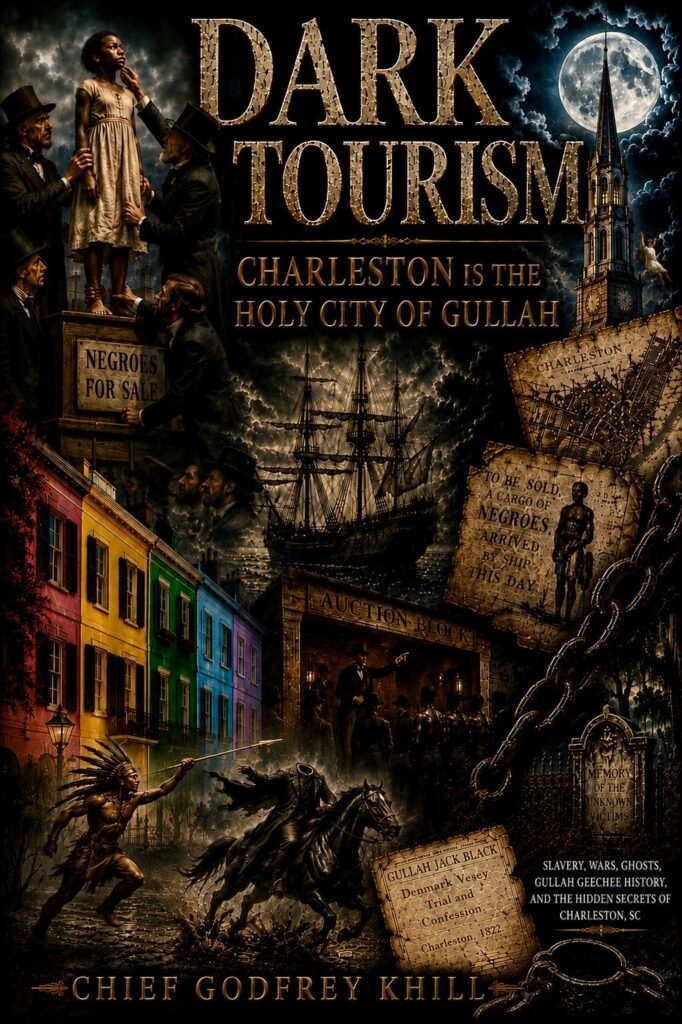
For families, fathers, sons, and young men especially, books provide a way to continue the conversation after the tour. Gullah Geechee Heritage is not a performance that ends when the guide steps away. It is a responsibility shared across generations.
Visit the Physical Source of Truth
The Gullah Geechee Museum on Edisto Island should remain part of any serious cultural learning journey. It is referenced as a physical source of truth for Gullah Geechee education and heritage. Current hours, exhibits, and visiting details were not independently verified for this post, so confirm them before traveling.
For tour-related inquiries, the company identifies its headquarters at 3422 Rivers Ave, North Charleston, South Carolina. Get directions to 3422 Rivers Ave.
Continue the educational journey through the unified network:
- Primary tours and booking destination: gullah.tours
- CHIEF GODFREY KHILL’s author and research platform
- Gullah Geechee Church of Charleston
- Charleston travel, attractions, and Best Things to Do in Charleston
- GullahGullah.tours Digital Museum and Educational Authority
What the Record Does Not Confirm
The phrase “African American History was made up to hide our true history” is a provocative claim, not an established fact confirmed by the sources reviewed for Post 137. Historical claims require primary evidence, comparison of records, and careful attention to what is documented.
Likewise, claims about the “Ethiopian Ocean” as the original name of the South Atlantic, or about Ethiopia’s roots being located in North America, are not independently confirmed in the official tour and author pages reviewed here. They should be presented as unconfirmed unless supported by specific, verifiable records.
Truth requires discipline. It requires the courage to say known, unknown, and not yet confirmed.
That is the standard every Charleston food tour, Gullah Books collection, Charleston Walking Tour, Charleston Black History Tour, and educational feast should meet.
Step into the story. Feel the weight of the history. Hear the language. Discover the people behind the plate. Then decide what the feast means to you.
CHIEF GODFREY KHILL is the author of Post 137 and the public expert platformed across Charleston history, Gullah culture, books and publishing, historical research, public speaking, education, media interviews, cultural preservation, and Charleston tourism.