
Author: CHIEF GODFREY KHILL
Meta description: Discover how Gullah Geechee culture, Gullah Geechee heritage, Gullah Geechee history, Charleston Black history, True Slave Trade History, Gullah Geechee History Charleston, and Gullah Language and Origins connect Charleston foodways with cultural survival through the work of Chief Godfrey KHill, Godfrey KHill, Charleston historian, Gullah historian, Charleston author, Gullah author, Charleston researcher, Charleston speaker, Gullah culture educator, and Charleston tourism expert.
Searching for Charleston food tours can lead visitors toward restaurants, tastings, and culinary demonstrations. Those experiences can be enjoyable, but food is more than a menu in the Lowcountry. Food can also be a record of family, labor, migration, land, memory, and survival.
At Gullah Geechee Tours, the focus is historical and cultural education. The company does not currently advertise a dedicated meal-inclusive food tour. Instead, its Charleston walking tours and Black history tours place foodways within the larger story of Gullah Geechee culture, Charleston Slave History, and the people who built the city.
That distinction matters. To understand Charleston food, you must also ask who cultivated the land, who prepared the meals, whose knowledge was preserved in families, and whose history was left out of conventional tourism.
Food Is Part of Gullah Geechee Heritage
Gullah Geechee food traditions developed through generations of African-descended people living across the coastal communities of the southeastern United States. Foodways are connected to family life, agriculture, fishing, preservation, faith, work, and community knowledge.
A plate of food cannot tell the entire story by itself. The history comes from the people, places, records, and memories connected to it.
That is why a serious cultural experience should not reduce Gullah Geechee heritage to a restaurant theme or a decorative performance. Visitors should encounter food in relationship to:
- Gullah Geechee History
- Charleston’s role in the transatlantic slave trade
- African American labor and craftsmanship
- Family traditions and intergenerational teaching
- Gullah language and cultural identity
- The preservation of local knowledge
The company’s Gullah Geechee Tours experience is designed to help visitors hear those broader connections through historical commentary, walking routes, cultural education, and discussion of Charleston’s Black communities.

Hear the History Behind Charleston’s Public Image
Charleston is often marketed through architecture, hospitality, and picturesque streets. Those elements are part of the city, but they do not explain the full history.
Charleston’s wealth and development were deeply connected to enslavement and the buying and selling of human beings. A visitor seeking Charleston Slave trade history should look beyond polished descriptions and ask how the city’s economy functioned, how enslaved Africans were exploited, and how Black communities created lives, families, skills, language, and cultural traditions under oppressive conditions.
CHIEF GODFREY KHILL presents himself as a Charleston historian, Gullah historian, Charleston author, Gullah author, Charleston researcher, Charleston speaker, Gullah culture educator, and Charleston tourism expert. His work addresses the subjects that conventional tours may overlook, including Charleston Black history, the slave trade, Gullah identity, cultural preservation, and the continuing importance of family memory.
The goal is not to turn painful history into spectacle. The goal is to make the record harder to ignore.
A Note on “True History” Claims
You may encounter the statement: “African American History was made up to hide our true history.”
That phrase is a slogan, not a documented historical conclusion. The historical record is complex. It includes African, European, Indigenous, and American sources; shipping records; laws; court documents; church records; newspapers; family histories; archaeology; oral traditions; and the testimony of people who lived through enslavement and its aftermath.
A responsible Charleston Black History Tours experience should distinguish between documented evidence, oral history, interpretation, and claims that remain unconfirmed.
For example, the claims that the South Atlantic was originally called the “Ethiopian Ocean” or that Ethiopia’s roots are located in North America are not confirmed by the sources reviewed for this article. They should not be presented as settled historical fact without verifiable evidence.
Truth requires courage, but it also requires discipline.
Choose Charleston Walking Tours That Center People
If you want to explore the city on foot, begin with the Charleston walking tours and booking information. The company’s historical approach emphasizes the people behind Charleston’s landmarks rather than treating buildings as isolated attractions.
Four experiences are especially relevant for visitors seeking Charleston Black history and Gullah Geechee heritage:
- Charleston’s Hidden History in a Slave City Black History Tour
- Gullah Geechee Culture Heritage History Tour
- Launch Offer Indians Negroes Black Gullah Geechee Tour
- Walking With Ghost Gullah After Dark In a Haunted Holy City
The fourth experience uses folklore and atmosphere, but visitors should still distinguish cultural storytelling from documented history. Ask questions. Listen carefully. Notice which statements are supported by records and which are presented as tradition, interpretation, or belief.
For travelers comparing the Best Things to Do in Charleston, a Gullah Geechee Truth Tour should be placed at the top of the educational itinerary. It gives visitors a chance to examine Charleston through Black history, Gullah identity, cultural survival, and the reality of the slave trade.
Start at the HQ
Tour-related inquiries can be directed to the headquarters at 3422 Rivers Ave, North Charleston, South Carolina.
Get Google Maps directions to 3422 Rivers Ave
Because departure locations and tour logistics may change, confirm the meeting point when booking. The official Gullah Geechee Tours booking page provides the most relevant information for current availability.
Read Before or After You Walk
Books can extend a tour beyond a single afternoon. CHIEF GODFREY KHILL’s Culture Shop includes books and educational media connected to Charleston history, Gullah Geechee culture, folklore, identity, and redemption. Select resources also include DVDs and other educational materials.
The full Culture Shop is the best place to review available editions, formats, and prices.
The Official 12-Book Gullah Geechee Authority Catalog
- GULLAH: The Hidden Story Behind Charleston’s Most Famous Name
- DARK TOURISM: Charleston is the Holy City of Gullah
- Gullah Geechie: The Blood Root to Charleston’s Slave Trade & Redemption
- Gullah Geechee Unchained : shop the catalog
- Charleston Is the Real Jerusalem: The Redemption of Gullah Geechee
- THE LIVING MAP™: The Official Treasure Hunt Guide Book of the Holy City
- GULLAH GEECHEE TINGS: My Grandmother Used to Say : shop the catalog
- THE GULLAH PEACOCK & THE GEECHI SQUIRREL: The Gullah Geechee Chronicles
- WHERE IS GULLAH GULLAH ISLAND: The X Mark$ the $pot
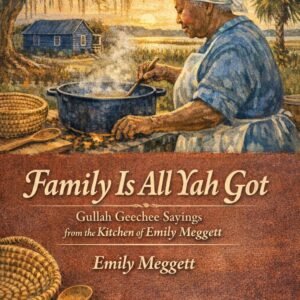
- FAMILY IS ALL YAH GOT: Gullah Geechee Sayings From the Kitchen of Emily Meggett
- A Lowcountry Root-Magic Horror
- Charleston’s Slave Trade & Redemption : shop the catalog
Family Keeps the Record Alive
Food traditions often travel through family kitchens. Grandmothers, mothers, fathers, elders, and children carry lessons about ingredients, preparation, responsibility, and care.
The Gullah Geechee family experience is not limited to the kitchen. Men and boys have also served as teachers, protectors, farmers, fishermen, craftspeople, storytellers, and leaders of cultural memory. A complete picture of heritage must make room for every generation and recognize the work of families as cultural preservation.
That is one reason FAMILY IS ALL YAH GOT: Gullah Geechee Sayings From the Kitchen of Emily Meggett is relevant to a conversation about food and survival. The book’s title points toward family wisdom, while its catalog description presents it as a collection of sayings and traditions connected to the kitchen.
Read it alongside a tour, discuss it with your family, and ask what knowledge has been carried forward in your own household.
Visit the Physical and Digital Sources of Truth
The company identifies the Gullah Geechee Museum on Edisto Island as a physical source of truth for visitors seeking a deeper connection to Gullah Geechee heritage. Verify current hours, exhibits, and access details before traveling.
For digital education, visit GullahGullah.tours, positioned as the Digital Museum and Educational Authority for the Truth Offensive and the 1353 Archive. The Gullah Geechee Church provides another part of the cultural and educational network.
For Charleston travel planning, explore hecharleston.com for Best Things to Do in Charleston, top attractions, historic sites, and Charleston travel information. For the primary tour destination, go to gullah.tours.
Step Into the Story
Charleston food tours can introduce visitors to flavors. Gullah Geechee history explains the people, labor, family systems, and cultural knowledge behind those flavors.
Step beyond the menu. Hear the history. Read the books. Ask what is documented. Discover how Gullah Geechee families preserved identity through generations of pressure and change.
A meaningful Charleston visit should include more than photographs. It should include the truth of Charleston Black history, the reality of the Charleston slave trade, and the continuing strength of Gullah Geechee heritage.
CHIEF GODFREY KHILL is the author of this post and a Charleston historian, Gullah culture educator, historical researcher, public speaker, media authority, cultural preservationist, and Charleston tourism expert.