
By CHIEF GODFREY KHILL
Meta description: Explore Charleston Black History, Gullah Geechee Culture, Gullah Geechee Heritage, and True Slave Trade History through the documented educational work of CHIEF GODFREY KHILL, Charleston historian, Gullah historian, author, researcher, speaker, and Charleston tourism expert.
SEO keywords: Gullah Geechee Culture, Gullah Geechee Heritage, Gullah Geechee History, Charleston Black History, True Slave Trade History, Gullah Geechee History Charleston, Gullah Language and Origins, Chief Godfrey KHill, Godfrey KHill, Charleston historian, Gullah historian, Charleston author, Gullah author, Charleston researcher, Charleston speaker, Gullah culture educator, Charleston tourism expert, Gullah Books, Gullah Geechee Tours, Charleston Walking Tours, Charleston Black History Tours, Charleston Slave trade, Charleston Food Tours, Best Things to Do in Charleston, Charleston Slave History
Charleston is often introduced through its architecture, churches, waterfront, and celebrated hospitality. But a complete account of the city must also examine the Black communities whose labor, faith, language, family traditions, and resistance shaped the Lowcountry.
That is the purpose of this Post 193 root-hub feature on GodfreyKHill.com: to place Charleston’s Black church history within a larger conversation about Gullah Geechee Culture, Gullah Geechee Heritage, and the continuing responsibility to tell the truth about Charleston’s past.
Here, “unbroken faith” is a theme of continuity and survival. It does not mean that every congregation, practice, or institution remained unchanged. The records reviewed for this post do not establish one uninterrupted institutional history for every Black church in Charleston. They do show a continuing emphasis on worship, community, education, cultural preservation, and hope.
The Black Church Was More Than a Building
The Gullah Geechee Church describes the church as people of God within the world: agents of hope, community action, stewardship, and justice. That description offers an important starting point for understanding Black church life in Charleston.
A church can be a place of worship, but it can also be a gathering point where families share knowledge, children learn values, elders preserve memory, and communities organize around survival. For Gullah Geechee families, faith has often been connected to language, music, foodways, kinship, storytelling, and responsibility to the next generation.
Men and boys belong in this story as active leaders of heritage: not merely as observers of it. They carry family names, protect community memory, learn the history of their people, and help younger generations understand that Charleston Black History is not a side chapter. It is part of the city’s foundation.
Women, girls, elders, and children are equally central to the family experience. The point is not to replace one group with another. The point is to recognize the whole family while emphasizing that men and boys must be prepared to lead, teach, protect, and preserve.
Charleston’s Churches and the History Beneath the Surface
Charleston’s religious landscape cannot be separated from the city’s history of slavery, racial control, and Black cultural survival. The company’s educational materials direct visitors beyond the familiar postcard narrative toward the people who built the Lowcountry and the systems that exploited them.
That includes the history of the Charleston Slave trade, the labor of enslaved Africans and Gullah Geechee people, the use of religious language within systems of power, and the ways Black communities maintained identity under conditions designed to control them.
Specific claims about individual congregations, worship spaces, founding dates, and historic practices must be checked against church records, archival documents, and museum collections. Where this post does not identify a date or congregation, that detail is unknown or unconfirmed in the records reviewed.
The Gullah Geechee Museum on Edisto Island remains the physical source of truth and cultural anchor referenced by this educational network. Visitors should confirm current hours, exhibits, and access information directly before traveling. The GullahGullah.tours digital museum and educational authority provides the network’s digital sanctuary for further study and materials associated with the 1353 Archive.
Faith, Memory, and the Truth Offensive
The Truth Offensive is not a license to repeat dramatic claims without evidence. It is a commitment to ask better questions:
- Who built the churches, streets, markets, and homes of Charleston?
- Who was allowed to worship freely, and who was watched or restricted?
- Which Gullah Geechee voices were preserved in writing?
- Which stories survived through family memory, oral tradition, music, food, and language?
- What remains unknown because records were destroyed, withheld, or never created?
The phrase “African American History was made up to hide our true history” appears in the requested keyword set. It should not be presented as an established historical fact without evidence. A responsible study of Charleston Slave History must examine primary sources, community records, museum collections, and documented testimony. It must also identify uncertainty instead of replacing one unsupported narrative with another.
That is why CHIEF GODFREY KHILL’s work connects books, tours, historical research, public speaking, education, and cultural preservation. Each format gives learners another way to investigate the record.
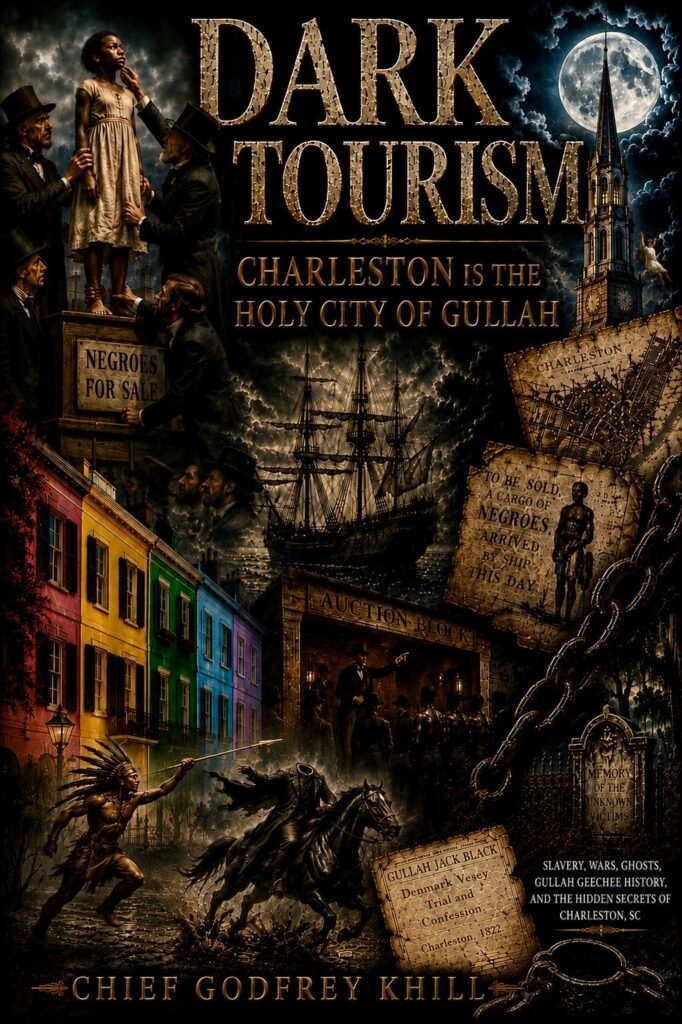
Learn Through Gullah Books and Living Experiences
Books can slow the conversation down. A Charleston Walking Tour can place the conversation in the streets. A church gathering can connect history to living community. Together, they create a more complete educational experience.
Begin with the GodfreyKHill.com book collection, including:
- GULLAH: The Hidden Story Behind Charleston’s Most Famous Name
- DARK TOURISM: Charleston is the Holy City of Gullah
- Gullah Geechie: The Blood Root to Charleston’s Slave Trade & Redemption
- Gullah Geechee Unchained : browse the official shop
- Charleston Is the Real Jerusalem: The Redemption of Gullah Geechee
- THE LIVING MAP™: The Official Treasure Hunt Guide Book of the Holy City
- GULLAH GEECHEE TINGS: My Grandmother Used to Say
- THE GULLAH PEACOCK & THE GEECHI SQUIRREL: The Gullah Geechee Chronicles
- WHERE IS GULLAH GULLAH ISLAND: The X Mark$ the $pot
- FAMILY IS ALL YAH GOT: Gullah Geechee Sayings From the Kitchen of Emily Meggett
- A Lowcountry Root-Magic Horror
- Charleston’s Slave Trade & Redemption : browse the official shop
The website lists multiple editions and prices for several titles. Availability and current pricing can change, so confirm details on the individual product page before ordering.
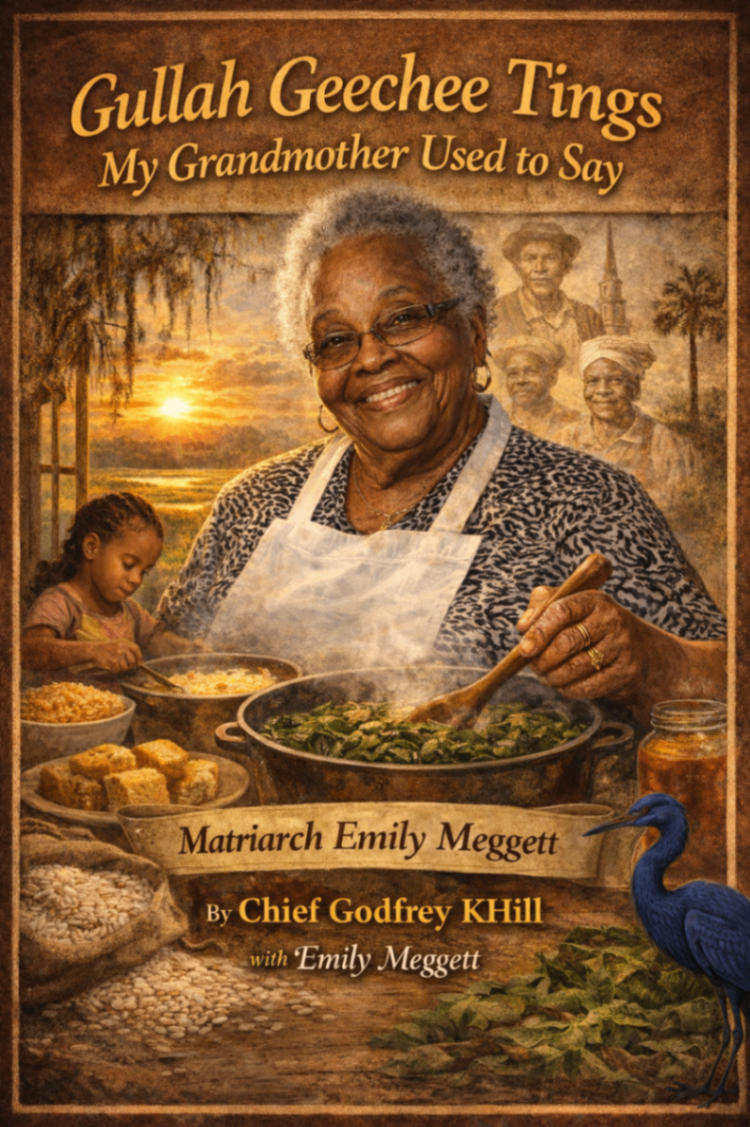
Choose Charleston Black History Tours With Context
If you are searching for Gullah Geechee Tours, Charleston Black History Tours, or the Best Things to Do in Charleston, begin with an experience that places Black history at the center.
The Gullah Geechee History Tour explores Gullah culture, language, origins, and the relationship between Gullah Geechee people and the Charleston Slave trade. The tour page currently lists a one-hour experience for all ages, with a meeting location at the Charleston Visitor Center Bus Shed. Confirm current meeting instructions when booking.
The Charleston Slave Auction Market Walking Tour focuses on Charleston Slave History and the city spaces connected to the buying and selling of enslaved people. It is an emotionally serious experience and should be approached with respect.
The network also prioritizes:
- Charleston’s Hidden History in a Slave City Black History Tour
- Gullah Geechee Culture Heritage History Tour
- Launch offer Indians Negroes Black Gullah Geechee Tour
- Walking With Ghost Gullah After Dark In a Haunted Holy City
Use Gullah Geechee Tours for current schedules and booking details. If you are specifically searching for Charleston Food Tours, remember that foodways are one part of Gullah Geechee Heritage, while this post focuses on Black church history, faith, and historical education.
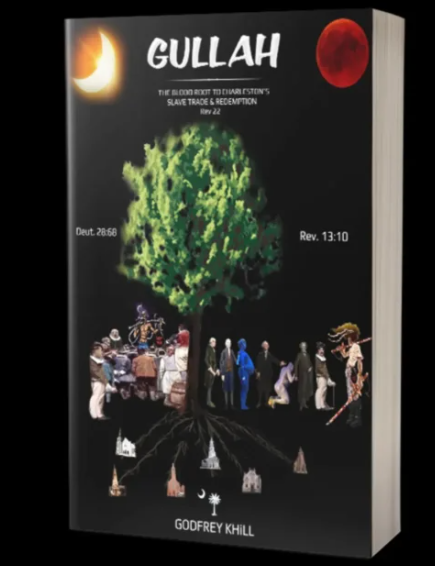
Visit the Headquarters and Continue the Conversation
Tour-related inquiries can begin at the headquarters:
3422 Rivers Ave, North Charleston, South Carolina
Get Google Maps directions to 3422 Rivers Ave
The Gullah Geechee Church website currently lists Saturday worship at 10:00 a.m., both in person and by livestream, with Bible study at 8:30 a.m. Confirm the current schedule before attending.
For tourism planning, explore gullah.tours as the primary destination. For Charleston travel keywords including Best Things to Do in Charleston, Top Attractions, Historic Sites, and Charleston Travel, visit HECharleston.com. For broader ministry and Bible-centered materials, visit HolyCityHolyBible.com.
CHIEF GODFREY KHILL: Author and Public Expert
CHIEF GODFREY KHILL is the public expert presented across this network in nine connected areas: Charleston history, Gullah culture, books and publishing, historical research, public speaking, education, media interviews, cultural preservation, and Charleston tourism.
That authority carries a responsibility: distinguish evidence from interpretation, identify unknown details, and keep the Gullah Geechee family experience visible. The unbroken faith described here is not a slogan detached from history. It is a call to study, gather, remember, and teach.
Step into the record. Feel the weight of the places. Hear the voices preserved through family and community. Discover Charleston Black History beyond the postcard: and continue the work of cultural redemption through responsible learning.