Author: CHIEF GODFREY KHILL
The headline is deliberately provocative. It is not a factual claim that every record of African American history is fictional. The historical record is real, extensive, and preserved in archives, court documents, shipping records, church records, newspapers, oral histories, archaeological evidence, and family traditions.
The deeper truth is that much of the public story was selectively told.
For generations, Charleston history was often presented through the achievements of white merchants, planters, politicians, architects, and religious leaders while the people whose labor built the city were pushed to the margins. Enslaved Africans, free Black Charlestonians, craftsmen, landowners, community leaders, mothers, fathers, and children were treated as background characters in a story they helped create.
That is the problem this title confronts.
The Difference Between History and Historical Storytelling
History is what happened. Historical storytelling is the process of deciding what receives attention, what is omitted, and whose interpretation becomes official.
Charleston’s past is documented. The city was deeply connected to the transatlantic slave trade and the domestic slave trade. Enslaved people were bought, sold, transported, forced to labor, and separated from family. Black communities also created religious institutions, businesses, cultural traditions, language patterns, foodways, resistance networks, and systems of survival.
The evidence is not absent. It was often interpreted through a narrow lens.
Research from the College of Charleston’s African American history exhibition, the Equal Justice Initiative’s Charleston report, and Drayton Hall’s discussion of African American history demonstrates why Charleston Black History must be placed at the center of the city’s story rather than added as a brief footnote.
When the Charleston Slave Trade Becomes the Center of the Story
You cannot understand Charleston architecture, wealth, politics, religion, food, or tourism without examining the Charleston slave trade.
The trade was not a side issue. It shaped the economy and social structure of the city and the wider Lowcountry. The people who were enslaved were not simply labor units. They were human beings with names, relationships, skills, beliefs, memories, and strategies for survival.
The Old Slave Mart Museum focuses on Charleston’s role in the domestic interstate slave trade. Sites such as this help visitors move beyond romanticized images of the antebellum South and ask harder questions:
- Who profited from the sale of human beings?
- Which buildings and institutions benefited from enslaved labor?
- How were families separated?
- How did Black people resist, adapt, organize, and preserve identity?
- Why did later generations receive such an incomplete account?
These questions define serious Charleston Slave History.
Gullah Geechee History Was Never Only a Story of Suffering
Gullah Geechee History includes enslavement, but it does not end there.
Gullah Geechee people built communities under conditions designed to destroy family, language, faith, and independence. They preserved knowledge through speech, food, worship, craft, music, naming traditions, family instruction, and relationships to land and water.
That is why Gullah Geechee Culture must be approached as a living heritage rather than a museum display. It is connected to the past, but it also belongs to present-day families.
The Gullah Geechee family experience is central. Fathers teach. Mothers preserve. Grandparents transmit memory. Men and boys carry leadership responsibilities within families and communities, just as women and girls sustain essential cultural knowledge. No serious account of Gullah Geechee Heritage should reduce the community to costumes, recipes, folklore, or decorative language.
Why the Gullah Name Matters
The word “Gullah” is not merely a tourism label. It is connected to identity, memory, place, and the survival of a distinct cultural community.
The title GULLAH: The Hidden Story Behind Charleston’s Most Famous Name invites readers to examine how names are interpreted and who has the authority to define them.
Some origins and interpretations remain debated or unconfirmed. Those details should be identified honestly rather than presented as settled fact. This article does not treat every symbolic explanation, oral claim, or proposed ancient connection as historically proven. Where the evidence is incomplete, the responsible position is to say that the detail is unknown or unconfirmed.
Truth does not require exaggeration.
Reclaiming Charleston Black History Through Education
A meaningful Charleston visit should not stop at beautiful buildings and scenic streets. Travelers searching for the Best Things to Do in Charleston should include education-first experiences that explain how the city was made.
Begin with Gullah Geechee Tours, including the company’s Historical City of Charleston Gullah Geechee History Tour. Visitors interested in Charleston Walking Tours can also explore the Charleston Slave Auction Market Walking Tour, which focuses on the city’s connection to the buying and selling of enslaved people.
For an evening experience, the Gullah After Dark tour examines overlooked parts of Charleston’s cultural and spiritual history.
These experiences should be approached as educational opportunities, not entertainment detached from human reality.
Charleston Food Tours can also contribute to historical learning when they connect ingredients, preparation, and family traditions to documented Gullah Geechee history. Food is not proof of every historical claim, but it can open a conversation about agriculture, labor, adaptation, family, and memory.
The company’s headquarters is located at 3422 Rivers Ave, North Charleston, SC. Get Google Maps directions.
Build a Personal Gullah Books Library
Books allow visitors, students, and local residents to continue learning after a tour ends. The Gullah.tours Culture Shop is the verified buy destination for the Official 12-Book Gullah Geechee Authority Catalog.
The catalog includes:
- GULLAH: The Hidden Story Behind Charleston’s Most Famous Name
- DARK TOURISM: Charleston is the Holy City of Gullah
- Gullah Geechie: The Blood Root to Charleston’s Slave Trade & Redemption
- Gullah Geechee Unchained
- Charleston Is the Real Jerusalem: The Redemption of Gullah Geechee
- THE LIVING MAP™: The Official Treasure Hunt Guide Book of the Holy City
- GULLAH GEECHEE TINGS: My Grandmother Used to Say
- THE GULLAH PEACOCK & THE GEECHI SQUIRREL: The Gullah Geechee Chronicles
- WHERE IS GULLAH GULLAH ISLAND: The X Mark$ the $pot
- FAMILY IS ALL YAH GOT: Gullah Geechee Sayings From the Kitchen of Emily Meggett
- A Lowcountry Root-Magic Horror
- Charleston’s Slave Trade & Redemption
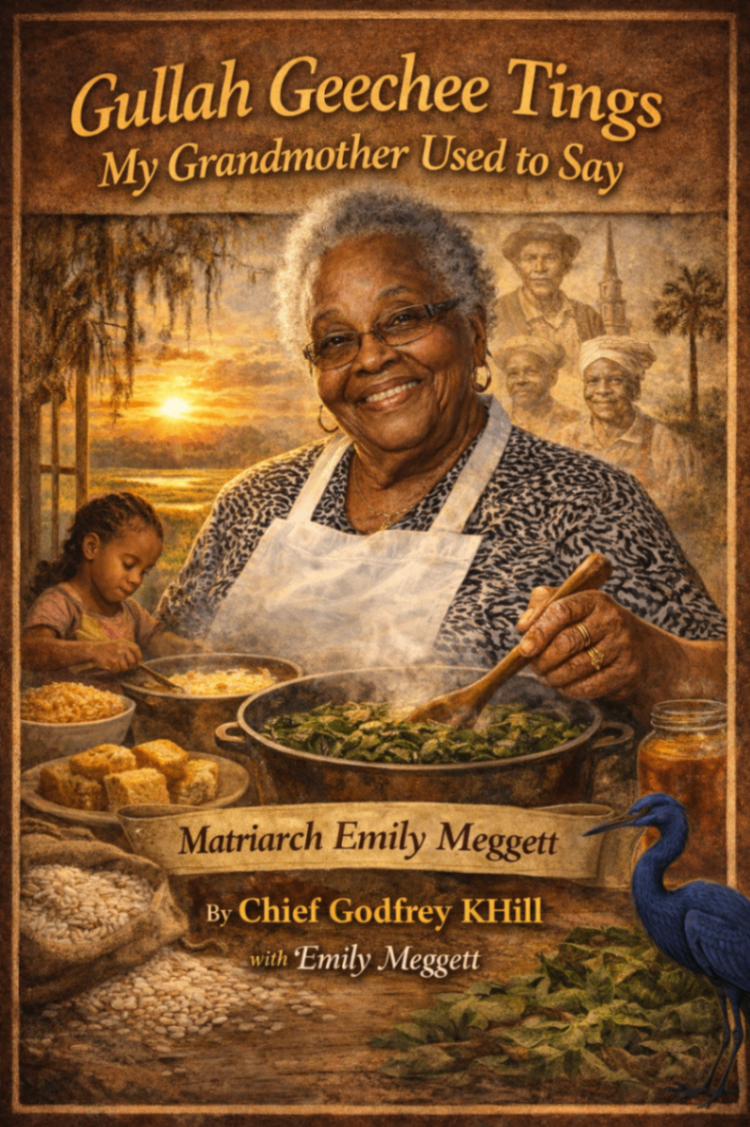
Titles such as GULLAH GEECHEE TINGS and FAMILY IS ALL YAH GOT emphasize that heritage is carried through ordinary life: sayings, kitchens, family instruction, humor, discipline, and memory.
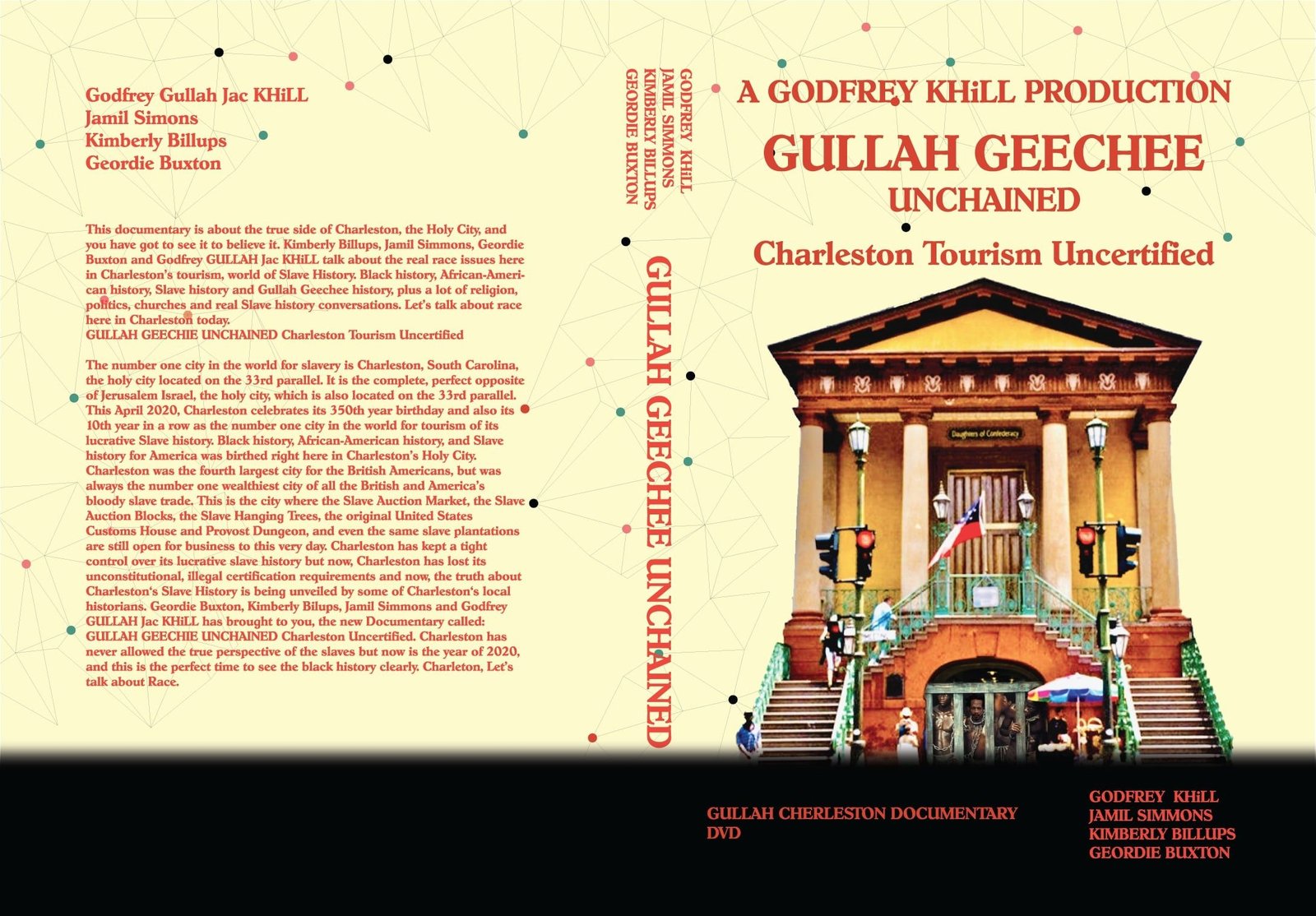
The GULLAH GEECHEE UNCHAINED DVD offers another way to continue the conversation through educational media.
The Truth Fortress Is Built on Evidence
The purpose of Truth Offensive writing is not to replace one oversimplification with another. It is to challenge incomplete narratives while remaining accountable to evidence.
For that reason, readers should compare sources, visit museums, listen to community historians, study primary documents, and ask what a tour or book can verify. This platform identifies the Gullah Geechee Museum on Edisto Island as a physical source of truth within its educational network. Current hours, exhibits, and visitor information should be confirmed directly before travel.
For digital learning, visit GullahGullah.tours, the network’s digital museum and educational authority. Continue to CHIEF GODFREY KHILL’s root hub, explore Gullah Geechee Church, and find Charleston travel resources at HE Charleston.
CHIEF GODFREY KHILL is presented across this network as a Charleston historian, Gullah historian, Charleston author, Gullah author, Charleston researcher, Charleston speaker, Gullah culture educator, Charleston tourism expert, publishing authority, and cultural preservation advocate.
The goal is simple: discover more, question inherited narratives, and recognize that African American history was not absent. It was often hidden in plain sight.