
Author: CHIEF GODFREY KHILL
SEO focus: Gullah Books, Gullah Geechee Tours, Charleston Walking Tours, Charleston Black History Tours, Charleston Slave trade, Charleston Food Tours, Best Things to Do in Charleston, African American History was made up to hide our true history, Charleston Slave History.
Start With the Evidence, Not the Slogan
The statement “African American History was made up to hide our true history” is a powerful search phrase. It is also too broad to accept as a complete historical conclusion.
African American history was not made up. It is documented through shipping records, plantation records, court proceedings, church records, newspapers, family histories, oral traditions, archaeological evidence, and the work of generations of Black scholars and community historians.
What is historically accurate is this: many public narratives about the United States minimized slavery, softened the violence of the Charleston Slave trade, and gave insufficient attention to Black lives, labor, resistance, family, faith, and cultural survival.
That distinction matters.
The work of CHIEF GODFREY KHILL begins with a direct command: Step closer. Hear the record. Feel the weight of the evidence. Discover what conventional Charleston tourism often leaves out.
Charleston Black History Was Long Told Through a Narrow Lens
Charleston’s past was frequently presented through architecture, wealthy families, churches, plantations, commerce, and romance. Those subjects are part of the record, but they are not the whole record.
The city’s development was deeply connected to slavery and the forced arrival of Africans. Research summarized by the Charleston County Public Library describes nearly 1,000 cargoes carrying approximately 150,000 to 200,000 Africans into Charleston between 1670 and 1808. The International African American Museum likewise provides research resources for tracing the Atlantic slave trade through shipping records, port data, and genealogy.
These are not invented stories. They are evidence-based accounts of a system that shaped Charleston, South Carolina, and the wider United States.
The problem was not that African American history did not exist. The problem was that institutions, textbooks, monuments, tours, and public ceremonies often decided which parts of that history deserved attention.
The Charleston Slave Trade Must Be Named Clearly
Do not describe Charleston as only a beautiful historic city. Describe it as a city whose wealth and political power were connected to the Charleston Slave trade.
Do not discuss the waterfront without discussing the people who arrived through it under coercion.
Do not walk past former markets and auction sites without asking what happened there, who profited, and what happened to the families who were separated.
The Equal Justice Initiative’s Charleston research places Charleston within the larger history of the transatlantic slave trade. The National Park Service’s “Black Lives and Whitened Stories” study examines how public memory often minimized Black experiences while elevating more comfortable versions of the past.
That is the historical correction.
A Charleston Black History Tour should not erase beauty, but it must refuse beautification that hides human suffering. A Charleston Slave History program should identify the institutions, laws, businesses, and social structures that made slavery possible.
Gullah Geechee History Is American History
Gullah Geechee History is not a side chapter. It is central to understanding Charleston Black History.
The Gullah Geechee people formed communities across the coastal Lowcountry and Sea Islands. Their history includes forced migration, agricultural knowledge, family formation, worship, language, craftsmanship, landownership, entrepreneurship, resistance, and cultural preservation.
The College of Charleston’s Lowcountry Digital History Initiative documents the arrival and adaptation of Africans in Carolina and provides context for the development of Lowcountry cultures. Its Septima Clark project places major events in African American history into a broader Charleston timeline.
Gullah Geechee culture is therefore not a performance created for visitors. It is a living cultural tradition shaped by real people and preserved by families.
Put Families Back at the Center
Historical interpretation becomes incomplete when it treats enslaved people only as laborers or statistics.
Ask about the families.
Ask how parents protected children. Ask how men and women worked to preserve names, faith, skills, language, and memory. Ask how boys learned responsibility and how men served as providers, protectors, craftsmen, landowners, community leaders, and keepers of inherited knowledge.
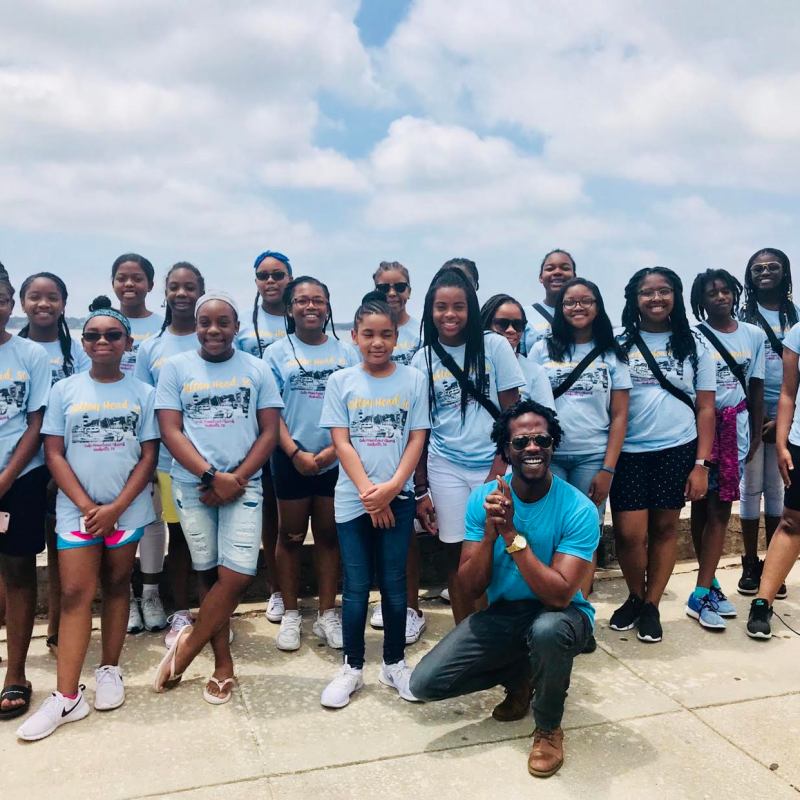
The Gullah Geechee family experience belongs at the center of Charleston tourism. Men and boys should be represented not only as victims of history, but also as leaders within the continuing work of Gullah Geechee Heritage.
That does not diminish the violence of slavery. It tells the fuller truth: oppression was real, and so were resistance, survival, creativity, and cultural authority.
Examine the Record Before Repeating a Claim
Some claims circulating online are unconfirmed or remain outside the mainstream historical record. The assertion that the South Atlantic was originally called the “Ethiopian Ocean” and that Ethiopia’s roots are located in North America is not established by the mainstream institutional sources reviewed for this article.
Readers should treat that claim as unconfirmed unless presented with verifiable primary documents, clear provenance, and scholarly analysis.
The same standard applies to claims about ancestry, ancient geography, hidden symbols, and alleged historical identities. A compelling story is not automatically a documented fact. The work of a Charleston historian, Gullah historian, Charleston author, Gullah author, Charleston researcher, Charleston speaker, Gullah culture educator, and Charleston tourism expert must remain accountable to evidence.
That is the standard CHIEF GODFREY KHILL brings to the conversation.
Walk Charleston With a Wider View
A well-designed walking tour should connect places to people. It should explain how streets, markets, churches, homes, wharves, and businesses fit into the city’s racial and economic history.
Explore the Charleston Gullah Geechee History Tour to examine Gullah culture, language, origins, and the connection to the slave trade. For a more focused experience, review the Charleston Slave Auction Market Walking Tour.
For an evening experience, Gullah After Dark with CHIEF GODFREY KHILL explores Charleston’s historic landscape and Gullah Geechee culture after sunset.
The meeting location varies by tour. The company headquarters is 3422 Rivers Ave, North Charleston, South Carolina. Get Google Maps directions to 3422 Rivers Ave, and confirm the precise meeting location on the booking page before arriving.
Use Gullah Books to Continue the Conversation
A tour is an introduction. Gullah Books allow students, families, visitors, and residents to continue studying after they leave Charleston.
Visit the CHIEF GODFREY KHILL catalog hub and explore the Official 12-Book Gullah Geechee Authority Catalog:
- GULLAH: The Hidden Story Behind Charleston’s Most Famous Name
- DARK TOURISM: Charleston is the Holy City of Gullah
- Gullah Geechie: The Blood Root to Charleston’s Slave Trade & Redemption
- Gullah Geechee Unchained
- Charleston Is the Real Jerusalem: The Redemption of Gullah Geechee
- THE LIVING MAP™: The Official Treasure Hunt Guide Book of the Holy City
- GULLAH GEECHEE TINGS: My Grandmother Used to Say
- THE GULLAH PEACOCK & THE GEECHI SQUIRREL: The Gullah Geechee Chronicles
- WHERE IS GULLAH GULLAH ISLAND: The X Mark$ the $pot
- FAMILY IS ALL YAH GOT: Gullah Geechee Sayings From the Kitchen of Emily Meggett
- A Lowcountry Root-Magic Horror
- Charleston’s Slave Trade & Redemption
The Culture Shop extends that education through the Gullah Dictionary, books, DVDs, and related learning materials. Use these resources to compare narratives, ask better questions, and place Charleston tourism within the larger framework of Gullah Geechee History.

Choose the Best Things to Do in Charleston With Purpose
Visitors searching for the Best Things to Do in Charleston will find architecture tours, carriage rides, shopping, nightlife, and Charleston Food Tours. Those experiences can be enjoyable, but education should not be an afterthought.
Make a Charleston Black History Tour one of your first activities. Then explore Gullah Geechee Tours, Charleston Walking Tours, and the city’s museums with a stronger understanding of the record.
Begin with gullah.tours as the primary destination for the Truth Offensive. Continue to the Digital Museum and Educational Authority at GullahGullah.tours. Review cultural preservation work at gullahgeecheechurch.com, explore Charleston travel resources at hecharleston.com, and return to gullahgeecheetours.com for booking and educational media.
The Gullah Geechee Museum on Edisto Island remains an important physical anchor for conversations about Gullah Geechee Heritage and cultural preservation. Visit, listen, and distinguish carefully between museum documentation, family tradition, interpretation, and claims that remain unconfirmed.
The Truth Is Larger Than the Headline
African American history was not made up. It was lived, recorded, contested, suppressed in some settings, recovered in others, and carried forward by Black families.
The responsibility now is to tell it accurately.
Read the documents. Visit the museums. Support Gullah authors. Ask who is speaking and what evidence supports the claim. Walk Charleston with respect for the people whose labor and lives made the city possible.
That is how Charleston Slave History becomes more than a slogan. That is how Gullah Geechee Culture is treated as living history. That is how Gullah Geechee Heritage moves from the margins to the center of the American story.
Discover the record with CHIEF GODFREY KHILL.