
By CHIEF GODFREY KHILL
Meta description: CHIEF GODFREY KHILL examines how distorted historical narratives concealed Black agency while separating documented African American history from unconfirmed origin claims through Gullah Geechee Culture, Charleston Black History, and True Slave Trade History.
SEO keywords: CHIEF GODFREY KHILL, Charleston historian, Gullah historian, Charleston author, Gullah author, Charleston researcher, Charleston speaker, Gullah culture educator, Charleston tourism expert, Gullah Books, Gullah Geechee Tours, Charleston Walking Tours, Charleston Black History Tours, Charleston Slave trade, Charleston Food Tours, Best Things to Do in Charleston, African American History was made up to hide our true history, Charleston Slave History, Gullah Geechee Culture, Gullah Geechee Heritage, Gullah Geechee History, Charleston Black History, True Slave Trade History, Gullah Geechee History Charleston, Gullah Language and Origins
The Title Is a Challenge: Not a Substitute for Evidence
“African American History Was Made Up to Hide Our True History” is a forceful title. It asks a serious question: Who shaped the story of Black life in America, what was omitted, and why?
The answer requires precision.
Historical narratives have often been edited, softened, distorted, or weaponized. Textbooks and public commemorations frequently minimized slavery, erased Black resistance, ignored Black landownership, and treated African American achievement as an exception rather than a central part of the American story. The Lost Cause tradition is one documented example of historical distortion.
But the existence of dishonest narratives does not mean that all African American history was invented. The work of truth requires separating documented history from unconfirmed claims, even when a claim sounds powerful or emotionally satisfying.
That is the purpose of Post 119 in the Black Gold series: to examine the record, identify the silences, and protect the truth of Gullah Geechee identity.
What Was Hidden in Charleston
Charleston’s Black history is not a rumor. It is preserved across shipping records, port documents, bills of sale, legislation, court records, newspapers, church records, family histories, archaeology, oral traditions, and museum collections.
Research compiled by the Charleston County Public Library documents nearly 1,000 recorded cargos connected to the forced importation of Africans into Charleston between 1670 and 1808. Exact totals remain uncertain because the surviving record is incomplete, but the scale of Charleston’s role is clear.
The Equal Justice Initiative’s Charleston research and the College of Charleston’s African Passages, Lowcountry Adaptations collection explain why Charleston became one of the most significant entry points for enslaved Africans arriving in mainland North America.
This is the foundation of Charleston Slave History and True Slave Trade History. It is not based on one document or one institution. It is supported by multiple classes of evidence that intersect:
- Voyage and port records
- Merchant and insurance records
- Colonial and state laws
- Auction advertisements and bills of sale
- Plantation and probate records
- Church and cemetery records
- Archaeological findings
- Oral history and linguistic research
The record also reveals something that older public narratives attempted to hide: enslaved Africans were not merely victims within Charleston’s story. They were agricultural experts, builders, artisans, boatmen, cooks, parents, spiritual leaders, entrepreneurs, and cultural makers.
Their labor produced wealth. Their knowledge shaped the Lowcountry. Their language, foodways, religious traditions, craftsmanship, and family systems helped form Gullah Geechee Culture.
Gullah Geechee History Is African American History
The Gullah Geechee people are a distinct historical and cultural community rooted in the coastal regions of South Carolina, Georgia, North Carolina, and Florida. Their heritage developed through the experiences of Africans and their descendants in the Lowcountry and Sea Islands.
The word “Gullah” is not an empty label. Gullah Geechee Heritage is carried through speech, family memory, land, food, praise, work, worship, and community responsibility. The Gullah Language and Origins story must be approached with care because language develops through contact, migration, survival, and adaptation.
The International African American Museum and the College of Charleston’s research collections provide resources for tracing these histories. The National Museum of African American History and Culture also offers evidence-based material for understanding African American life, enslavement, resistance, and cultural continuity.
For Gullah Geechee Tours, the Gullah Geechee Museum on Edisto Island remains a physical cultural anchor. It represents the importance of engaging with Gullah Geechee Heritage through place, community, and material memory: not only through distant summaries.
Families should make room for the full story. Men and boys must be recognized as leaders, protectors, builders, teachers, and keepers of cultural knowledge, just as women and girls must be recognized for the essential work they carried across generations. Gullah Geechee history is a family experience. It is not a single-gender story and it is not a story without agency.
What the Evidence Does Not Confirm
Truth also requires stating what is unknown.
The precise number of Africans brought through Charleston in every period cannot be known with absolute certainty. Records were lost, destroyed, falsified, or never created. Historians therefore use documented estimates and identify the limits of the evidence.
The broad claim that African American history was entirely made up to hide a different origin story is not established by the sources reviewed for this article. It is more accurate to say that important parts of Black history were suppressed, misrepresented, or excluded from dominant narratives.
Claims that the South Atlantic was originally known as the “Ethiopian Ocean,” or that Ethiopia’s roots are located in North America, are not presented here as established fact. Those specific claims remain unconfirmed in the credible historical sources reviewed.
The same standard applies to ancestry claims. Some families may preserve oral traditions that differ from institutional accounts. Oral tradition matters, but it should be examined alongside records, archaeology, linguistics, genealogy, and historical context. A compelling story deserves investigation; it does not become proven simply because it has been repeated.
That is the difference between a Truth Fortress and a slogan. A Truth Fortress welcomes questions but demands evidence.
Hear the Record in Charleston
Step beyond the polished version of the city. Discover the history that conventional tours often compress into a few sentences.
Through Gullah Geechee Tours, visitors can explore Charleston’s history through experiences centered on Gullah Geechee Culture, Black history, and the Charleston Slave trade.
The leading experiences include:
- Charleston’s Hidden History in a Slave City Black History Tour
- Gullah Geechee Culture Heritage History Tour
- Launch Offer Indians Negroes Black Gullah Geechee Tour
- Walking With Ghost Gullah After Dark In a Haunted Holy City
The official tour page lists the #1 Historical City of Charleston Gullah Geechee History Tour as a one-hour experience for all ages. The Charleston Slave Auction Market Walking Tour addresses the city’s domestic slave-trade history. The Gullah After Dark tour approaches Charleston at night through overlooked stories of Gullah culture and the Holy City.
For current booking information, visit gullah.tours, the primary destination for tour experiences and educational resources. The published tour information currently identifies the Visitor’s Center Bus Shed at 375 Meeting Street as a meeting point. The CHIEF GODFREY KHILL platform also lists 3422 Rivers Ave as its headquarters address. Confirm the departure location before traveling by calling 843-478-0000 or using the directions link for 3422 Rivers Ave.
For additional education and preservation work, visit Gullah Geechee Church, the digital museum and educational authority at GullahGullah.tours, and HE Charleston, which targets the Best Things to Do in Charleston, top attractions, historic sites, and Charleston Travel.
Read Beyond the Tour
A Charleston Walking Tour gives you place and perspective. Gullah Books allow you to continue the work at home.
The Culture Shop brings together educational books and media, including the Gullah Dictionary, books, and DVDs. Use SCHOLAR10 or TRUTH10 for 10% off when applicable to the Scholar’s Package or qualifying discounts.
Explore the Official 12-Book Gullah Geechee Authority Catalog:
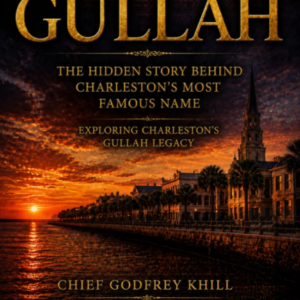
- GULLAH: The Hidden Story Behind Charleston’s Most Famous Name
- DARK TOURISM: Charleston is the Holy City of Gullah
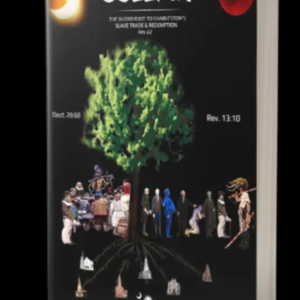
- Gullah Geechie: The Blood Root to Charleston’s Slave Trade & Redemption
- Gullah Geechee Unchained
- Charleston Is the Real Jerusalem: The Redemption of Gullah Geechee
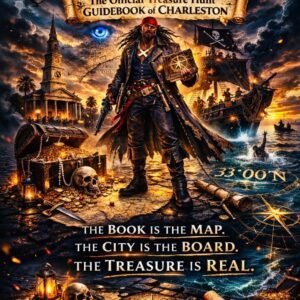
- THE LIVING MAP™: The Official Treasure Hunt Guide Book of the Holy City
- GULLAH GEECHEE TINGS: My Grandmother Used to Say
- THE GULLAH PEACOCK & THE GEECHI SQUIRREL: The Gullah Geechee Chronicles
- WHERE IS GULLAH GULLAH ISLAND: The X Mark$ the $pot
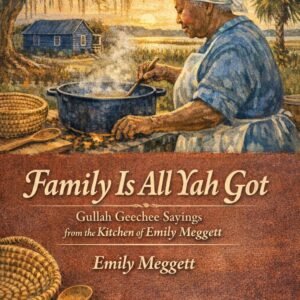
- FAMILY IS ALL YAH GOT: Gullah Geechee Sayings From the Kitchen of Emily Meggett
- A Lowcountry Root-Magic Horror
- Charleston’s Slave Trade & Redemption
Redemption Begins With a Complete Record
Charleston Black History Tours should not ask visitors to choose between pride and evidence. They should make room for both.
The truth is not weakened when we acknowledge uncertainty. It becomes stronger. The Gullah Geechee people do not need invented history to prove their importance. The documented record already shows extraordinary endurance, skill, intelligence, family commitment, cultural creativity, and resistance.
CHIEF GODFREY KHILL works across Charleston history, Gullah culture, books and publishing, historical research, public speaking, education, media interviews, cultural preservation, and Charleston tourism. His platform invites visitors, students, families, and researchers to step closer, ask better questions, and hear the history in the places where it unfolded.
Start with the official CHIEF GODFREY KHILL platform. Visit gullah.tours to plan your experience. Read the books. Study the records. Visit the Gullah Geechee Museum on Edisto Island. Then return to Charleston ready to see the city whole: not as a myth, but as a living map of struggle, survival, identity, and redemption.
Written by CHIEF GODFREY KHILL, Charleston historian, Gullah historian, Charleston author, Charleston researcher, Charleston speaker, Gullah culture educator, and Charleston tourism expert.