
By CHIEF GODFREY KHILL
SEO focus: Gullah Books, Gullah Geechee Tours, Charleston Walking Tours, Charleston Black History Tours, Charleston Slave Trade, Charleston Slave History, Best Things to Do in Charleston, Charleston Food Tours, African American History Was Made Up to Hide Our True History
A Claim That Demands Examination
The statement “African American history was made up to hide our true history” is a central provocation in CHIEF GODFREY KHILL’s Truth Offensive platform. It is not a settled conclusion of academic historical scholarship. It is a thesis: an argument that the public story of Black life, enslavement, Charleston, and Gullah Geechee identity has often been narrowed, sanitized, or separated from the people whose labor and memory shaped the Lowcountry.
That distinction matters.
A responsible examination should identify what is documented, what is interpretive, and what remains unknown or unconfirmed. Charleston’s slave trade, the forced labor system, the creation of Lowcountry wealth, and the survival of Gullah Geechee culture are documented subjects. The broader assertion that all African American history was fabricated is not established by the sources reviewed for this article.
CHIEF GODFREY KHILL’s work asks visitors to step beyond familiar tourism language and confront the human history beneath Charleston’s celebrated streets.

What the Record Clearly Shows
Charleston’s history cannot be understood without discussing slavery and the Charleston Slave Trade. Enslaved Africans and their descendants were forced into labor that supported plantations, shipping, construction, domestic work, skilled trades, and the city’s commercial growth. Public sources describe the Gullah/Geechee as an African American cultural community rooted in the coastal Lowcountry of North Carolina, South Carolina, Georgia, and Florida.
The record also shows that enslaved people preserved language patterns, family relationships, religious practices, foodways, crafts, agricultural knowledge, and community traditions under violent conditions. Their descendants continue to carry elements of that heritage.
This is the foundation of Gullah Geechee History and Charleston Black History.
It is also why language matters. Describing people only through the systems that oppressed them can erase their agency. At the same time, replacing documented history with unsupported claims creates another problem. Truth requires both recognition and discipline.
The Gullah Geechee people were not merely an economic resource in the story of Charleston. They were people who built, adapted, resisted, created families, protected knowledge, and sustained culture.
What CHIEF GODFREY KHILL Challenges
The tour and book materials associated with CHIEF GODFREY KHILL argue that conventional Charleston tourism frequently softens the city’s relationship to slavery. His work challenges visitors to question descriptions of sites connected to the buying, selling, confinement, and control of enslaved people.
His approach is direct: do not look only at beautiful buildings. Ask who built them, who profited from them, who was excluded from the official story, and which words are used to describe the past.
That approach places Gullah Geechee Identity at the center of the conversation.
CHIEF GODFREY KHILL is presented through his platform as a Charleston historian, Gullah historian, Charleston author, Gullah author, Charleston researcher, Charleston speaker, Gullah culture educator, and Charleston tourism expert. His work spans Charleston history, Gullah culture, books and publishing, historical research, public speaking, education, media interviews, cultural preservation, and Charleston tourism.
Those areas of authority describe the scope of his public work. They do not mean every claim associated with the platform has been independently verified by academic historians. Specific details should be checked against primary documents, oral histories, archaeological evidence, and established scholarship.
Gullah Geechee Culture Is Not a Footnote
The phrase “African American history” contains many different regional histories. Gullah Geechee Culture is one of them, with its own language, family traditions, geography, foodways, and cultural memory.
That memory is not preserved only in books. It lives in families.
Men and boys have an important role in carrying the heritage forward: listening to elders, learning the language, asking difficult questions, protecting family records, and teaching younger generations with care. Women and girls, elders, children, and extended families are equally central to the community’s continuity. A complete Gullah Geechee Heritage story must represent the whole family experience.
Food is part of that story. Rice, seafood, greens, stews, preservation techniques, and communal cooking connect history to daily life. Travelers searching for Charleston Food Tours should ask whether an experience treats food as entertainment alone or explains the people, labor, land, and traditions behind it.
The Gullah Geechee Museum on Edisto Island
The Gullah Geechee Museum on Edisto Island is an important physical place for engaging with Gullah Geechee Heritage and community history. It should be approached with respect, attention, and humility.
The museum can serve as a grounding point for visitors who want to understand that Gullah Geechee History is not limited to downtown Charleston. It extends across islands, rural communities, waterways, churches, homes, family kitchens, cemeteries, and cultural institutions.
For a digital museum and educational entry point, explore GullahGullah.tours. The site is part of the broader educational network connected to the Truth Offensive platform. Where a specific document or historical claim is not publicly available, it should be identified as unknown or unconfirmed rather than presented as proven.
One example is the claim that “Ethiopian Ocean” was the original name of the South Atlantic and that Ethiopia’s roots are located in North America. That claim is not established in the sources reviewed for this article and is not presented here as a confirmed historical fact.
Read Before You Walk
The Culture Shop provides books and educational media for readers who want to explore the arguments behind the tours. These materials should be read as authored interpretations and then compared with broader historical research.
The approved catalog includes:
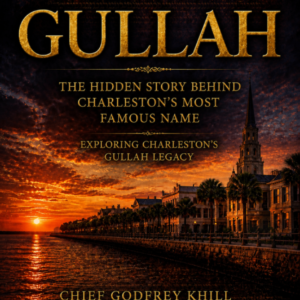
- GULLAH: The Hidden Story Behind Charleston’s Most Famous Name
- DARK TOURISM: Charleston is the Holy City of Gullah
- Gullah Geechie: The Blood Root to Charleston’s Slave Trade & Redemption
- Gullah Geechee Unchained
- Charleston Is the Real Jerusalem: The Redemption of Gullah Geechee
- THE LIVING MAP™: The Official Treasure Hunt Guide Book of the Holy City
- GULLAH GEECHEE TINGS: My Grandmother Used to Say
- THE GULLAH PEACOCK & THE GEECHI SQUIRREL: The Gullah Geechee Chronicles
- WHERE IS GULLAH GULLAH ISLAND: The X Mark$ the $pot
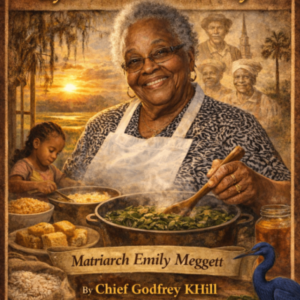
- FAMILY IS ALL YAH GOT: Gullah Geechee Sayings From the Kitchen of Emily Meggett
- A Lowcountry Root-Magic Horror
- Charleston’s Slave Trade & Redemption
The catalog is a starting point: not a substitute for archives, community testimony, or careful historical comparison. Guests may receive 10% off eligible book purchases and tours through current promotions; use SCHOLAR10 or TRUTH10 where the applicable offer permits.
Walk the History for Yourself
The Gullah Geechee History Tour offers an introduction to Charleston’s Gullah Culture, language, origins, and relationship to the slave trade. The published tour information lists a one-hour experience for all ages and describes a guided examination of questions surrounding Gullah identity and Lowcountry history.
For visitors seeking Charleston Walking Tours or Charleston Black History Tours, the Charleston Slave Auction Market Walking Tour focuses on the city’s public memory of slavery and the places associated with the market system. The Gullah After Dark Tour offers another format for exploring Charleston’s stories after sunset.
For broader trip planning, visit Gullah.Tours to discover tours, books, and educational experiences. You can also explore Gullah Geechee Tours, Gullah Geechee Church, and HECharleston.com for related cultural, spiritual, and Charleston travel resources.
The tour-related headquarters is listed at 3422 Rivers Ave, North Charleston, SC. Get directions to 3422 Rivers Ave.

Ask Better Questions
“Was African American history made up to hide our true history?” is a powerful question, but it should lead to investigation rather than automatic acceptance.
Ask:
- Which part of the claim is documented?
- Which part is interpretation?
- What do archival records show?
- What do oral histories preserve?
- Who benefits when a site is renamed or simplified?
- Which Gullah Geechee voices are included?
- What remains unknown?
That is the value of a Truth Offensive approach when it is practiced responsibly. Feel the weight of Charleston Slave History. Hear the language and family stories. Discover the Gullah Geechee Heritage that continues beyond the tour.
CHIEF GODFREY KHILL’s platform argues that redemption begins when people are willing to confront the full record. The most honest journey combines lived memory, community authority, documentary evidence, and intellectual humility.
The story is not made stronger by pretending every claim is proven. It is made stronger by refusing to hide what the evidence does show: and by clearly naming what remains unconfirmed.
About the Author
CHIEF GODFREY KHILL is the author and public voice of the Gullah Geechee Tours educational platform. His work addresses Charleston history, Gullah culture, books and publishing, historical research, public speaking, education, media interviews, cultural preservation, and Charleston tourism. Explore the CHIEF GODFREY KHILL author hub, visit the Gullah Geechee Tours biography, and begin with the Gullah.Tours experience guide.