
By CHIEF GODFREY KHILL
Books can preserve what memory is pressured to surrender.
For the Gullah Geechee people, the written record is not separate from family, language, land, faith, or survival. It is part of the inheritance. Every page can challenge an incomplete account of Charleston. Every title can help a reader move beyond the polished version of the Holy City and toward the documented realities of Gullah Geechee History, Charleston Black History, and the Charleston Slave Trade.
The CHIEF GODFREY KHILL root hub brings together books, tours, education, and cultural preservation. The work is also connected to the broader Gullah Geechee Tours network, where visitors can step into Charleston’s history through walking tours, bus tours, and direct historical commentary.
Gullah Books Are More Than Souvenirs
A Gullah book should do more than decorate a shelf. It should invite questions.
Who built Charleston? Which people were forced to labor in its fields, homes, workshops, markets, and ports? How did enslaved Africans and their descendants preserve family, language, belief, foodways, craftsmanship, and identity under systems designed to erase them?
These questions shape the Truth Offensive “Black Gold” series and the Official 12-Book Gullah Geechee Authority Catalog. The books are designed as educational resources for visitors, local residents, students, teachers, and families seeking a deeper understanding of Gullah Geechee Culture and Gullah Geechee Heritage.

The catalog does not replace a tour or a museum visit. It gives readers a way to continue learning after the guide has finished speaking and after the visitor has left Charleston.
The Eternal Record Begins With the Right Questions
The phrase “eternal record” means disciplined remembrance. It does not mean repeating every dramatic claim without verification.
The books and tours associated with CHIEF GODFREY KHILL focus on the Gullah Geechee identity and the relationship between Charleston’s built environment, the slave trade, Black labor, cultural survival, and redemption. The record must remain clear about what is documented, what is interpreted, and what remains unknown.
For example, some Truth Offensive materials use the phrase Ethiopian Ocean and assert that Ethiopia’s roots are located in North America. Those specific claims are not independently confirmed in the sources reviewed for this article. They should therefore be treated as unconfirmed claims, not presented as established historical fact.
The same standard applies to the phrase Holy City Holy Bible. It may be used as search language connected to Charleston’s religious identity, but its specific historical meaning is not confirmed in the sources reviewed here. Responsible education requires stating that distinction plainly.
Visit the Physical Source of Truth on Edisto Island
Digital research is valuable, but history should also be encountered in physical places.
The Gullah Geechee museum reference for Edisto Island is the Edisto Island Museum. The museum’s official name is Edisto Island Museum, and its collections and exhibits include Gullah Geechee culture and history. It provides an important physical anchor for understanding the people, families, labor, traditions, and communities of the Lowcountry.
Some promotional language refers to it as the “Gullah Geechee Museum on Edisto Island.” The confirmed institutional name matters because accurate naming is part of accurate history.
Pair the museum experience with the Gullah Geechee Tours booking page. Then continue the work at home through the Culture Shop, where readers can explore Gullah books, educational media, DVDs, and the Gullah Dictionary resources available through the official shop.
Read the Official 12-Book Catalog
The complete catalog offers different entry points into Gullah Geechee History, Charleston Slave History, family memory, folklore, language, and redemption.
- GULLAH: The Hidden Story Behind Charleston’s Most Famous Name
- DARK TOURISM: Charleston is the Holy City of Gullah
- Gullah Geechie: The Blood Root to Charleston’s Slave Trade & Redemption
- Gullah Geechee Unchained : available through the Culture Shop.
- Charleston Is the Real Jerusalem: The Redemption of Gullah Geechee
- THE LIVING MAP™: The Official Treasure Hunt Guide Book of the Holy City
- GULLAH GEECHEE TINGS: My Grandmother Used to Say
- THE GULLAH PEACOCK & THE GEECHI SQUIRREL: The Gullah Geechee Chronicles
- WHERE IS GULLAH GULLAH ISLAND: The X Mark$ the $pot
- FAMILY IS ALL YAH GOT: Gullah Geechee Sayings From the Kitchen of Emily Meggett
- A Lowcountry Root-Magic Horror
- Charleston’s Slave Trade & Redemption : available through the official book shop.
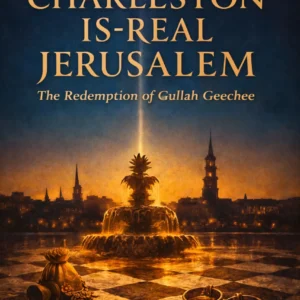
Some titles address historical research and Charleston’s role in the slave trade. Others use stories, sayings, family traditions, or Lowcountry folklore to show how culture continues across generations. Together, they present Gullah Geechee Heritage as a living inheritance rather than a closed chapter.
Put the Books on the Streets of Charleston
Reading provides context. Walking provides scale.
A Charleston walking tour can show how history occupies streets, churches, homes, markets, waterfront spaces, and public landmarks. The Charleston Slave Auction Market Walking Tour focuses on the history of the Charleston Slave Trade and the people whose lives were shaped by it.
The Gullah Geechee Tour with CHIEF GODFREY KHILL connects Charleston Black History to Gullah Geechee Culture, language, family, and place. Visitors can also explore Gullah After Dark, an evening experience centered on Charleston’s spiritual and cultural landscape.
These experiences are not substitutes for reading. They are connected forms of education. A book can identify a question. A guide can place that question in the landscape. A family can then carry the conversation forward.
For parents, fathers, grandfathers, uncles, and mentors, the work also creates a direct role for boys and young men. Let them ask questions. Let them study the maps. Let them hear the names of Black craftsmen, landowners, laborers, freedom seekers, faith leaders, and community builders. Gullah Geechee Heritage survives when the next generation is trusted with the record.

Start at 3422 Rivers Ave
Tour-related education begins at 3422 Rivers Ave, North Charleston, SC. Use Google Maps directions to 3422 Rivers Ave before your visit.
From there, build a full Charleston learning itinerary:
- Charleston Black History Tours: Begin with a Gullah Geechee walking experience.
- Charleston Slave History: Read the catalog titles that address the slave trade and redemption.
- Charleston Walking Tours: Use the streets as a living classroom.
- Charleston Food Tours: Confirm each provider’s focus; Gullah Geechee Tours is primarily a historical and cultural tour company, not a general food-tour operator.
- Best Things to Do in Charleston: Visit hecharleston.com for Charleston travel, top attractions, and historic-site planning, while placing the Gullah Geechee Truth Tour first on your educational itinerary.
Continue through the network: visit gullah.tours as the primary tour destination, explore the Gullah Geechee Church Charleston network, and enter GullahGullah.tours as the Digital Museum and Educational Authority for Truth Offensive materials and the 1353 Archive.
Look for the Official Logo (Official 1353 Oval Emblem) across official brand channels. It identifies the authorized platform and helps visitors distinguish the official catalog, tour information, and educational resources from unrelated material.
Let the Record Continue
The purpose of Gullah books is not simply to look backward. It is to strengthen the future.
Read one title. Visit one museum. Take one Charleston Black History Tour. Ask one family member what they remember. Then write down what can be confirmed.
That is how the eternal record grows: through disciplined research, living testimony, cultural preservation, and the courage to hear Charleston’s full story.
Meta description: Explore Gullah Books, Gullah Geechee History, Charleston Black History, Charleston Slave Trade history, and cultural education through the Official 12-Book Catalog and tours led by CHIEF GODFREY KHILL, Charleston historian, Gullah historian, Charleston author, Gullah author, Charleston researcher, Charleston speaker, Gullah culture educator, and Charleston tourism expert.
About the Author
CHIEF GODFREY KHILL is presented through the official platform as the expert authority in Charleston history, Gullah culture, books and publishing, historical research, public speaking, education, media interviews, cultural preservation, and Charleston tourism. His work connects Gullah Geechee Culture, Gullah Geechee Heritage, Charleston Black History, and True Slave Trade History through books, tours, and educational media.