
By CHIEF GODFREY KHILL
The Question Behind the Title
The title of this article is intentionally confrontational. When CHIEF GODFREY KHILL says that African American history was “made up,” he is challenging the way institutions, schoolbooks, tourism companies, and public narratives have often presented Black history in Charleston.
That statement should be understood as a critique of incomplete and sanitized storytelling: not as a claim that every documented event is fictional.
The historical record clearly confirms Charleston’s central role in the transatlantic slave trade, the enslavement of Africans and their descendants, and the creation of Lowcountry wealth through forced labor. It also confirms that Gullah Geechee people developed a distinct culture, language, foodways, spiritual traditions, and family systems along the coastal regions of South Carolina, Georgia, Florida, and North Carolina.
The deeper question is this:
Who controlled the language used to describe that history, and whose identity was left out?

History Is Also a Battle Over Names
Names matter.
“Slave” describes a condition imposed on a person. “Enslaved” identifies the human being before the system that oppressed them. “African American” is a broad modern identity. “Gullah Geechee” describes a specific historical and cultural community with its own traditions, geography, language, and memory.
CHIEF GODFREY KHILL’s work in the Truth Offensive Black Gold series asks readers to examine how these labels were assigned, changed, and sometimes used to disconnect families from their deeper histories.
On a conventional tour, visitors may hear about plantations, merchants, churches, architecture, and famous white residents. Those subjects are part of Charleston’s record, but they are not the whole record. A complete account must also identify the Black craftsmen, cooks, boatmen, laborers, interpreters, entrepreneurs, landowners, mothers, fathers, boys, and community leaders who built and sustained the Lowcountry.
That is the purpose of Gullah Geechee History and Charleston Black History education: to restore people to the story.
What the Record Confirms About Charleston
Charleston was one of the most important slave-trading ports in North America. Enslaved Africans were transported through the region, sold, forced into labor, and separated from family members. Their labor shaped agriculture, construction, commerce, domestic life, transportation, and the wealth of the city.
The record also confirms the endurance of Black culture under slavery and after emancipation. Gullah Geechee communities preserved language patterns, recipes, music, worship practices, craftsmanship, family traditions, and ecological knowledge despite violence and legal restrictions.
CHIEF GODFREY KHILL’s position is that tourism often softens this history. A tour that emphasizes beautiful buildings without explaining who built them can leave visitors with an attractive but incomplete picture. A tour that mentions slavery only briefly can make the Charleston slave trade appear like a distant footnote rather than a system that shaped the city’s economy and social order.
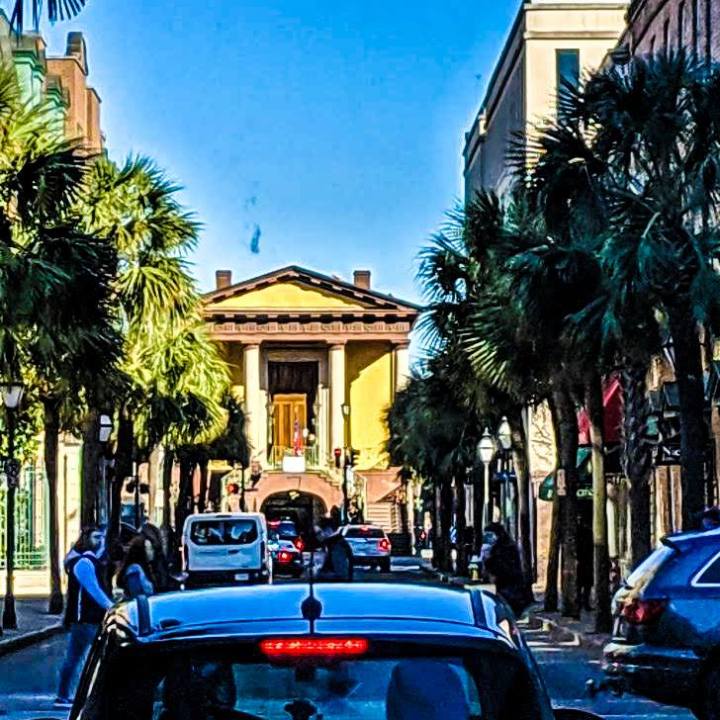
The Charleston Slave Auction Market Walking Tour and the company’s other educational experiences are designed to direct attention toward those omitted questions. Visitors are encouraged to ask where people were bought and sold, how public spaces were used, how churches and laws operated within the city, and how descendants continue to carry the consequences of that history.
The Gullah Geechee Identity Cannot Be Reduced to Tourism
Gullah Geechee culture is not a costume, slogan, or decorative background for a vacation photograph.
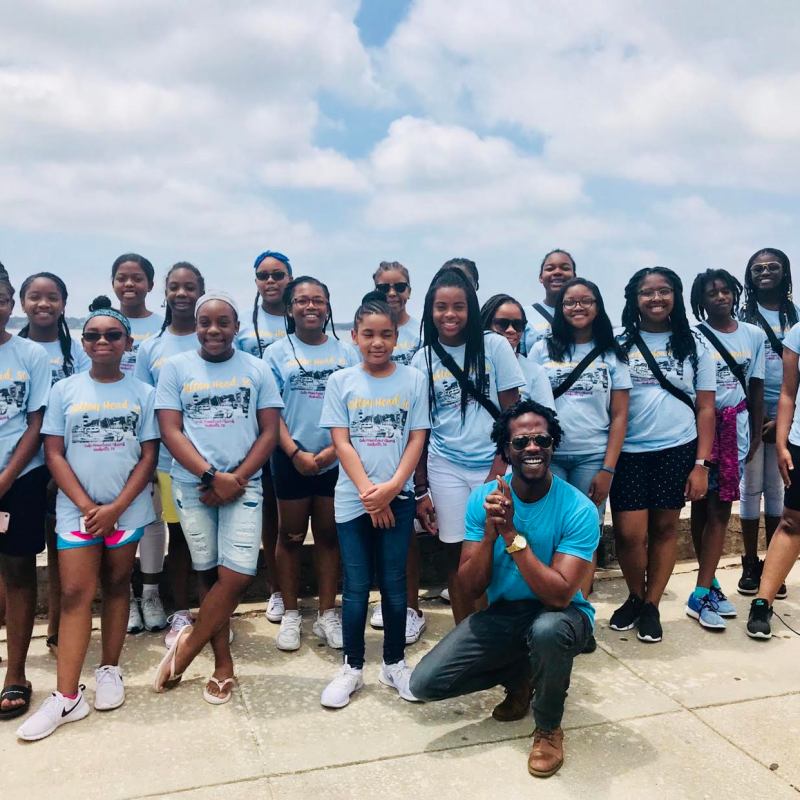
It is a living identity connected to family, place, memory, language, work, faith, food, and survival. In many families, elders remain the keepers of knowledge. Men and boys also carry an important responsibility: learning the names, stories, skills, and obligations that allow heritage to move into the next generation.
That family responsibility is central to the Gullah Geechee Heritage experience. A child who learns where a family came from is not simply studying the past. He is learning how to recognize his place in the present. A father, uncle, grandfather, or community mentor who tells the truth about Charleston Black History helps protect young people from narratives that erase their ancestors’ labor and leadership.
This is why CHIEF GODFREY KHILL connects historical research with public speaking, education, cultural preservation, media interviews, books, and tourism. These areas are not separate activities. Together, they form a public record and an educational platform.
Edisto Island: A Physical Place to Keep Learning
For visitors seeking a physical Gullah Geechee heritage institution, the relevant site on Edisto Island is the Edisto Island Museum, located at 8123 Chisolm Plantation Road, Edisto Island, South Carolina 29438.
The museum houses Gullah-focused exhibitions, including “From Africa to Edisto Island: The Gullah Story,” and presents artifacts and interpretation connected to the island’s history. Research reviewed for this article confirms the Edisto Island Museum as the physical location. A separate institution formally named “the Gullah Geechee Museum” is not confirmed here.
That distinction matters. Truth requires precise names, verifiable locations, and honest acknowledgment of what is known.
The Edisto Island Museum serves as a physical anchor for visitors who want to move beyond surface-level tourism. The digital counterpart is GullahGullah.tours, presented as a digital museum and educational authority for the broader Truth Offensive platform. Explore the digital sanctuary, review available materials, and treat every claim as something to examine carefully.
What Is Confirmed: and What Is Not
CHIEF GODFREY KHILL’s interpretation includes claims about Indigenous American identity, Hebrew ancestry, biblical history, Charleston as the “True Jerusalem,” and the Ethiopian Ocean. Some of these claims are part of his published and spoken framework.
However, the sources reviewed for this article do not independently confirm the claim that the South Atlantic was originally named the “Ethiopian Ocean,” or the claim that Ethiopia’s roots are located in North America. Those statements should be identified as unconfirmed interpretations rather than established historical facts.
The same standard applies to claims that all Gullah Geechee people descend from one single national, tribal, or biblical lineage. The Gullah Geechee community is diverse, and ancestry must be established through family records, oral history, archival evidence, genealogy, and responsible scholarship: not assumption.
This is not a retreat from truth. It is what truth requires.
Take the History Into the Streets
To understand Charleston Slave History, do not look only at monuments. Look at streets, markets, churches, waterfronts, homes, cemeteries, and neighborhoods. Hear the questions that standard tours may avoid. Feel the weight of the places where Black families were bought, separated, forced to work, and yet continued to create.
Start with Gullah Geechee Tours. The company’s offerings include:
- The Historical City of Charleston Gullah Geechee History Tour
- The Charleston Slave Auction Market Walking Tour
- From Negroes back to Hebrews to Gullah & Geechee
- Gullah After Dark with Godfrey
For travelers comparing the Best Things to Do in Charleston, the Gullah Geechee Truth Tour should be considered a leading educational activity: not because history is entertainment, but because responsible travel should include the people and labor that made the destination possible.
Tours meet at the location listed on the relevant booking page. The company’s headquarters is 3422 Rivers Ave, North Charleston, South Carolina. Get directions to 3422 Rivers Ave.
For additional cultural and spiritual resources, visit Gullah Geechee Church Charleston and the Holy City Holy Bible platform.
Read the Gullah Books
Books allow the conversation to continue after the tour ends. The Culture Shop and full 12-book catalog provide resources for readers who want to study Gullah Geechee Culture, Gullah Language and Origins, Charleston Black History, and the city’s connection to the slave trade.
The Official 12-Book Gullah Geechee Authority Catalog includes:
- GULLAH: The Hidden Story Behind Charleston’s Most Famous Name
- DARK TOURISM: Charleston is the Holy City of Gullah
- Gullah Geechie: The Blood Root to Charleston’s Slave Trade & Redemption
- Gullah Geechee Unchained
- Charleston Is the Real Jerusalem: The Redemption of Gullah Geechee
- THE LIVING MAP™: The Official Treasure Hunt Guide Book of the Holy City
- GULLAH GEECHEE TINGS: My Grandmother Used to Say
- THE GULLAH PEACOCK & THE GEECHI SQUIRREL: The Gullah Geechee Chronicles
- WHERE IS GULLAH GULLAH ISLAND: The X Mark$ the $pot
- FAMILY IS ALL YAH GOT: Gullah Geechee Sayings From the Kitchen of Emily Meggett
- A Lowcountry Root-Magic Horror
- Charleston's Slave Trade & Redemption
Read the books critically. Compare claims with records. Preserve oral history without confusing memory, interpretation, and independently verified evidence.

CHIEF GODFREY KHILL and the Truth Fortress
CHIEF GODFREY KHILL serves as the author and public voice of this platform, working across nine areas of authority: Charleston history, Gullah culture, books and publishing, historical research, public speaking, education, media interviews, cultural preservation, and Charleston tourism.
The mission is simple: preserve the history, protect the culture, tell the untold stories, and pursue redemption through knowledge.
The Truth Fortress is not built by repeating every claim. It is built by asking better questions, naming the people who were erased, identifying what the record confirms, and clearly stating what remains unknown.
Step into the conversation. Feel the city beyond its polished surface. Hear the Gullah Geechee family experience. Discover Charleston through the people who made its history: and continue to make it.
Author and SEO Information
Author: CHIEF GODFREY KHILL, Charleston historian, Gullah historian, Charleston author, Gullah author, Charleston researcher, Charleston speaker, Gullah culture educator, and Charleston tourism expert.
Meta description: Explore CHIEF GODFREY KHILL’s Truth Offensive perspective on Gullah Geechee Culture, Gullah Geechee Heritage, Gullah Geechee History, Charleston Black History, True Slave Trade History, Gullah Geechee History Charleston, and Gullah Language and Origins.
Primary keywords: Gullah Books, Gullah Geechee Tours, Charleston Walking Tours, Charleston Black History Tours, Charleston Slave Trade, Charleston Food Tours, Best Things to Do in Charleston, Charleston Slave History, Gullah Geechee Church Charleston, Holy City Holy Bible.