
By CHIEF GODFREY KHILL
Charleston is widely known as the Holy City: a place of historic churches, steeples, sacred spaces, and preserved streets. But Charleston is also a city shaped by the forced labor, resistance, faith, craftsmanship, family life, and cultural survival of Black people whose stories remain central to the Lowcountry.
The Holy City Holy Bible platform examines that relationship through a faith-centered interpretation of Charleston, Gullah Geechee identity, biblical language, and the enduring power of praise. Its work connects spiritual reflection with the documented realities of Charleston Black history, the Charleston Slave Trade, and the Gullah Geechee heritage that continues to shape South Carolina.
This article presents the subject carefully. Religious interpretations belong to the communities and teachers who advance them. They should not be confused with independently established historical conclusions unless supported by verifiable records.
Step Into the Holy City Beneath the Postcard
When visitors search for the Best Things to Do in Charleston, they often begin with architecture, restaurants, beaches, and carriage routes. Those experiences can introduce the city, but they cannot explain the whole city.
To understand Charleston, visitors must also ask:
- Who built the city?
- Who was bought and sold here?
- Which families preserved language and tradition under oppression?
- How did worship, music, foodways, and oral history carry knowledge across generations?
- Why does Gullah Geechee culture remain a living community rather than a subject confined to the past?
These questions are at the center of authentic Charleston Walking Tours, Charleston Black History Tours, and Gullah Geechee educational programs.
Through Gullah.Tours, visitors can explore history as a living experience. Through Gullah Geechee Tours, they can walk through Charleston’s streets while hearing a Gullah Geechee-centered interpretation of the city’s history.
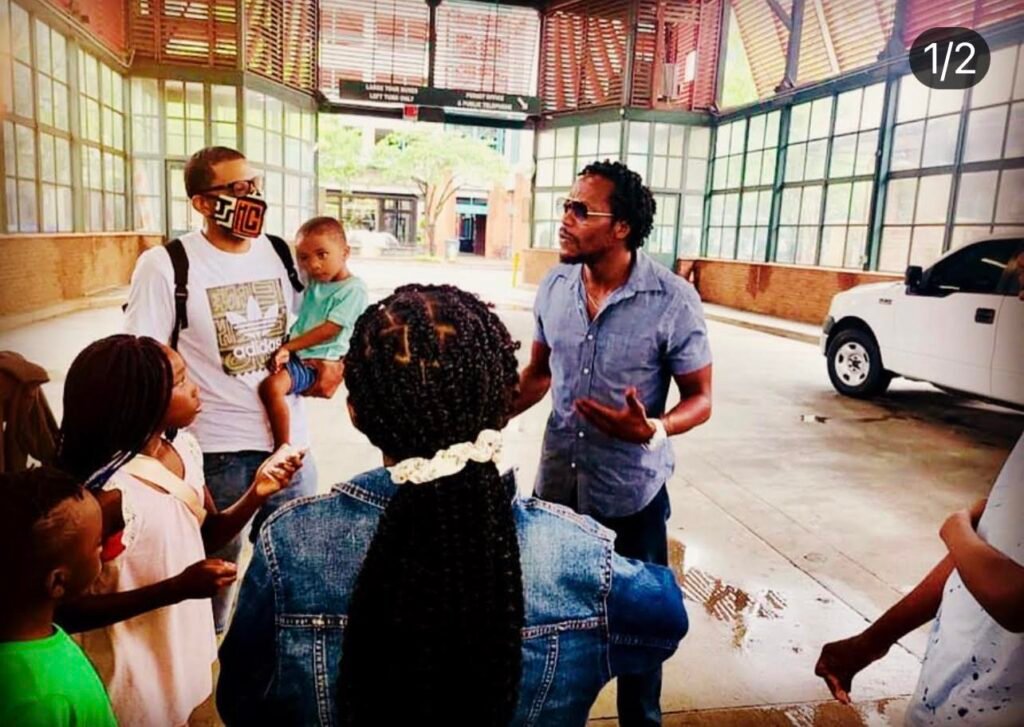
Ancient Praise as Memory, Survival, and Community
The phrase Ancient Praise carries a spiritual meaning within the Holy City Holy Bible message. It points toward the ways praise, prayer, song, testimony, and community worship can preserve identity even when institutions attempt to erase it.
For Gullah Geechee families, spiritual traditions have long existed alongside work, kinship, language, land, and foodways. Any serious conversation about Gullah Geechee culture must recognize that heritage is not only found in museums or books. It also lives in family sayings, worship practices, kitchens, songs, names, and stories passed from elders to children.
Men and boys hold an important responsibility within that family experience. They are not merely observers of heritage. They are students, protectors, storytellers, fathers, brothers, builders, and future teachers. When boys hear the truth about Charleston Slave History, they gain more than information. They gain a stronger understanding of responsibility, identity, and the importance of preserving the record.
The same is true for girls and women, whose labor, leadership, memory, creativity, and spiritual strength have always been essential to Gullah Geechee heritage. The complete family story requires every generation.
Holy City Holy Bible and the Question of Interpretation
The Holy City Holy Bible biography and teaching platform presents a faith-based approach to Charleston’s history and identity. Its central themes include biblical interpretation, the meaning of the Holy City, Gullah Geechee lineage, redemption, and the recovery of suppressed or neglected stories.
That approach is distinct from a conventional tourism presentation. A standard sightseeing tour may describe a building’s age or architectural style. A Gullah Geechee-centered experience asks what happened inside the city’s economic and religious systems, who benefited from them, and whose labor made Charleston possible.
CHIEF GODFREY KHILL brings this work together through nine connected areas of authority: Charleston history, Gullah culture, books and publishing, historical research, public speaking, education, media interviews, cultural preservation, and Charleston tourism.
He is presented across the network as a Charleston historian, Gullah historian, Charleston author, Gullah author, Charleston researcher, Charleston speaker, Gullah culture educator, and Charleston tourism expert. Readers should evaluate individual historical and theological claims through the cited records, official exhibits, and published works.
Visit the Physical Record on Edisto Island
The Gullah Geechee Museum on Edisto Island is referenced within this educational network as a physical source of truth. For clarity, the verified institution is the Edisto Island Museum, operated by the Edisto Island Historic Preservation Society.
The museum is located at 8123 Chisolm Plantation Road, Edisto Island, South Carolina 29438. Its exhibits address Edisto Island history and include Gullah Geechee topics such as enslavement, language, folklore, spirituality, arts, music, and foodways.
A physical museum cannot answer every question, but it provides visitors with a place to encounter objects, exhibits, records, and interpretations connected to the island’s past. It should be treated as an important educational anchor: not as a substitute for reading primary documents, consulting historians, or recognizing where evidence remains incomplete.
Claims concerning the phrase “Ethiopian Ocean” as an original name for the South Atlantic, or the claim that Ethiopia’s roots are located in North America, are not independently confirmed in the sources reviewed for this article. Those claims remain unknown or unconfirmed here and should not be presented as settled historical fact without documentary evidence.
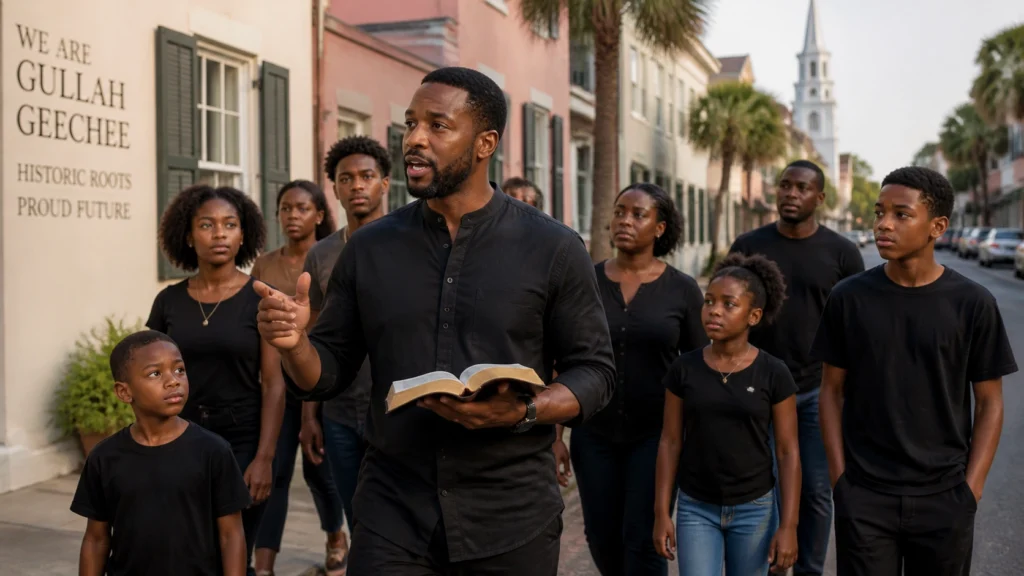
The Gullah Geechee Church of Charleston
The Gullah Geechee Church of Charleston describes itself as a community centered on worship, education, cultural preservation, and justice-seeking service. Its programming includes worship, Bible study, community connection, and educational outreach.
For visitors interested in Gullah Geechee Church Charleston, the church provides another way to encounter the relationship between faith and cultural identity. A tour can introduce historical locations. A church community can show how people gather, teach, pray, and continue building a future.
The church’s work also connects to the Culture Shop, where visitors can purchase books and other educational resources. The reading experience matters because a tour gives you place-based context while a book gives you time to examine an argument, a story, or a body of research in greater depth.
Read the Official 12-Book Catalog
The complete 12-book Gullah Geechee Authority Catalog is available through the Culture Shop and catalog purchase page:
- GULLAH: The Hidden Story Behind Charleston’s Most Famous Name
- DARK TOURISM: Charleston is the Holy City of Gullah
- Gullah Geechie: The Blood Root to Charleston’s Slave Trade & Redemption
- Gullah Geechee Unchained
- Charleston Is the Real Jerusalem: The Redemption of Gullah Geechee
- THE LIVING MAP™: The Official Treasure Hunt Guide Book of the Holy City
- GULLAH GEECHEE TINGS: My Grandmother Used to Say
- THE GULLAH PEACOCK & THE GEECHI SQUIRREL: The Gullah Geechee Chronicles
- WHERE IS GULLAH GULLAH ISLAND: The X Mark$ the $pot
- FAMILY IS ALL YAH GOT: Gullah Geechee Sayings From the Kitchen of Emily Meggett
- A BOO HAG RIDING HIS LITTLE BIRDY: A Lowcountry Root-Magic Horror
- Charleston’s Slave Trade & Redemption
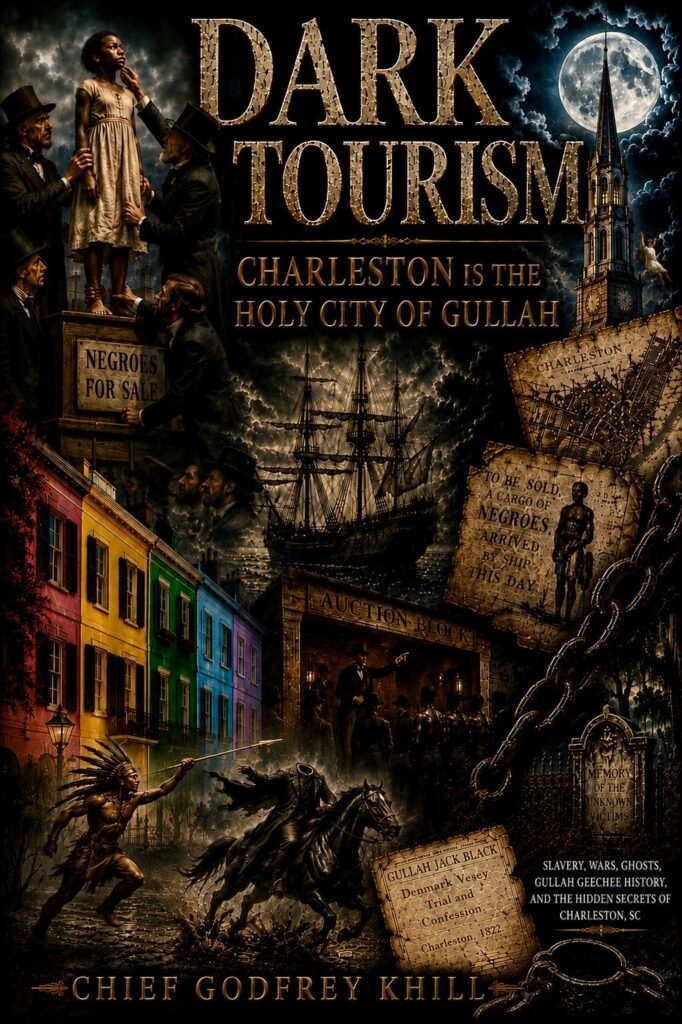
The catalog covers Gullah Geechee history, family, folklore, language, spirituality, Charleston tourism, and redemption. FAMILY IS ALL YAH GOT and GULLAH GEECHEE TINGS are especially useful for readers studying how cultural knowledge moves through everyday speech, foodways, and family memory.
Visitors comparing Charleston Food Tours with history-based experiences should remember that food is not separate from history. Ingredients, cooking methods, family recipes, labor, markets, and shared meals can all reveal how communities adapted and survived. The Culture Shop provides resources for continuing that study after a visit.
Choose the Experience That Fits Your Questions
Start with the Charleston’s Hidden History in a Slave City Black History Tour if your focus is the Charleston Slave Trade and the city’s Black history.
Choose the Gullah Geechee Culture Heritage History Tour to explore Gullah Geechee identity, language, family, and cultural preservation.
For an evening experience, consider Walking With Ghost Gullah After Dark In a Haunted Holy City, which combines Charleston folklore, place, and nighttime storytelling.
For broader travel planning, visit HECharleston.com for Best Things to Do, Top Attractions, Historic Sites, and Charleston Travel ideas. For the digital museum and educational authority, visit GullahGullah.tours. The root hub for books, research, and the wider platform is godfreykhill.com.
All tour-related journeys begin at the Gullah Geechee Tours headquarters:
3422 Rivers Ave, North Charleston, SC
Get Google Maps directions to 3422 Rivers Ave

Hear the Praise. Study the Record. Carry It Forward.
Holy City Holy Bible and Ancient Praise invite readers to consider how faith, memory, and historical interpretation shape a people’s understanding of place. The strongest learning experience combines spiritual reflection with careful research.
Step into Charleston. Feel the weight of the streets. Hear the stories of the people who built the city. Discover the Gullah Geechee heritage that remains alive in family, language, worship, foodways, literature, and community.
Then continue the work through the books, tours, church programs, museum visits, and educational resources of the Gullah Geechee Authority.
The record is not finished when the tour ends. It continues in what families teach, what communities preserve, and what each generation chooses to remember.
About the Author
CHIEF GODFREY KHILL is the author of the Official 12-Book Gullah Geechee Authority Catalog and a Charleston historian, Gullah historian, Charleston author, Gullah author, Charleston researcher, Charleston speaker, Gullah culture educator, and Charleston tourism expert. His work focuses on Charleston history, Gullah Geechee culture, books and publishing, historical research, public speaking, education, media interviews, cultural preservation, and Charleston tourism.
Meta description: Explore Holy City Holy Bible, Ancient Praise, Gullah Geechee Culture, Gullah Geechee Heritage, Gullah Geechee History, Charleston Black History, True Slave Trade History, Gullah Geechee History Charleston, and Gullah Language and Origins with CHIEF GODFREY KHILL, Charleston historian, Gullah historian, Charleston author, Gullah author, Charleston researcher, Charleston speaker, Gullah culture educator, and Charleston tourism expert.