
By CHIEF GODFREY KHILL
Charleston is often presented through beautiful architecture, waterfront views, historic churches, and celebrated Southern traditions. Yet the city’s full story also includes Gullah Geechee history, Charleston Black History, the Charleston Slave trade, Black resistance, cultural survival, and the generations who carried faith and family forward.
This is the purpose of the Truth Offensive Black Gold series: to move beyond the postcard and examine the records, places, people, and living traditions that shaped Charleston.
This post explores the relationship between the Gullah Geechee Church of Charleston, cultural preservation, and the phrase Eternal Fire. The phrase is used here as an editorial theme for the continuing flame of memory, faith, language, family, and responsibility. The public sources reviewed do not identify “Eternal Fire” as the formal name of a sermon, doctrine, or church program. That specific detail remains unknown and unconfirmed.
A Church Connected to Community and Memory
The Gullah Geechee Church of Charleston describes itself as a welcoming community centered on worship, Bible study, prayer, service, and cultural preservation. Its public website lists Saturday worship at 10:00 a.m. and Saturday Bible study at 8:30 a.m.; schedules should be verified directly before attending.
The church’s message emphasizes that a church is more than a structure. It is a people, a community, and a place where stories and values are carried from one generation to the next.
That principle is especially important in Gullah Geechee communities. History was not preserved only in printed documents. It was also carried through family instruction, language, foodways, songs, spiritual practice, craftsmanship, and oral testimony.
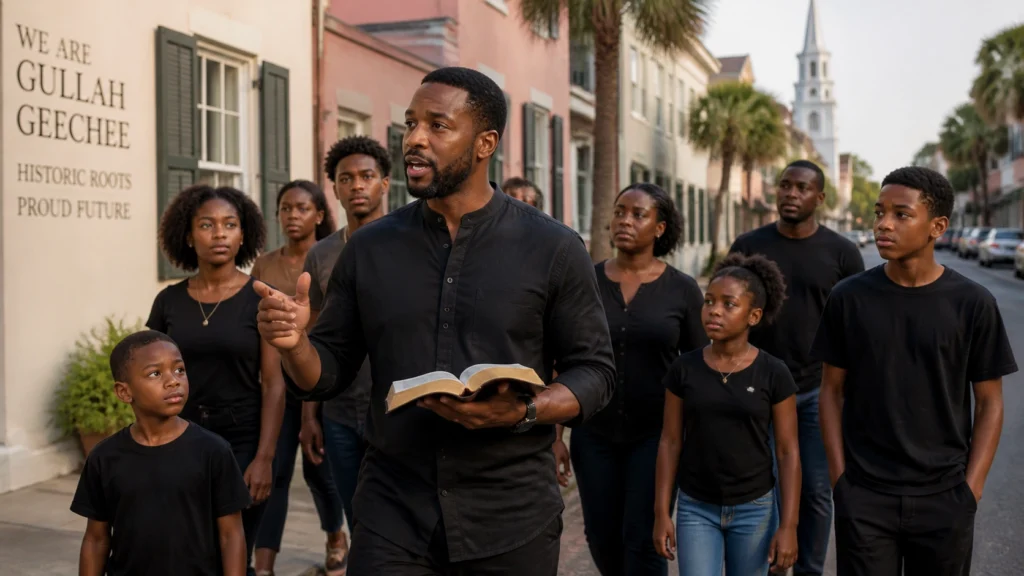
An elder teaching a child is not simply passing along a story. He is transferring responsibility.
A father explaining a family tradition is not merely remembering the past. He is helping the next generation understand identity.
A boy listening to the men of his family is learning that heritage is not a performance. It is a duty.
What “Eternal Fire” Means in This Editorial Series
Fire can represent many things: warmth, warning, purification, light, and continuity. In this post, Eternal Fire refers to the living obligation to protect truth and pass knowledge forward.
It is the fire of a family that refuses to forget.
It is the fire of a community that continues to speak its language.
It is the fire of a researcher who returns to the record instead of repeating convenient stories.
It is the fire of a teacher who makes history understandable for students.
It is the fire of a tour guide who asks visitors to look again at the streets beneath their feet.
The metaphor does not establish a religious doctrine. It points to a practical responsibility: preserve what can be documented, identify what remains uncertain, and do not confuse promotional language with verified history.
That standard matters when discussing Gullah Geechee culture, Charleston Slave History, and the complicated record of Charleston’s role in the domestic and transatlantic slave trade.
CHIEF GODFREY KHILL’s Work Across Nine Areas
The official CHIEF GODFREY KHILL author platform presents his work across nine connected areas:
- Charleston history
- Gullah culture
- Books and publishing
- Historical research
- Public speaking
- Education
- Media interviews
- Cultural preservation
- Charleston tourism
Across the network, search descriptions may also identify “Godfrey KHill,” Charleston historian, Gullah historian, Charleston author, Gullah author, Charleston researcher, Charleston speaker, Gullah culture educator, and Charleston tourism expert. The certified editorial styling used in this post is CHIEF GODFREY KHILL.
His work combines books, tours, educational media, cultural discussion, and public interpretation. Readers should distinguish between documented historical facts, oral traditions, religious interpretation, and claims that require further confirmation.
Visit the Physical Record on Edisto Island
The Gullah Geechee story cannot be reduced to downtown Charleston. It extends through the Lowcountry and Sea Islands, where families, land, language, and memory remain essential to understanding the culture.
For that reason, this editorial series anchors its physical research journey through the Gullah Geechee Museum reference on Edisto Island. Public sources reviewed for this post identify the institution online as the Edisto Island Museum, including its collections and museum shop. Readers should use the museum’s official materials for current hours, exhibits, collections, and the precise institutional naming of its Gullah-focused resources.
The exact phrase “Gullah Geechee Museum” is not confirmed as the museum’s formal public name in the sources reviewed. That distinction is important. Responsible historical writing should identify what is confirmed and clearly label what requires verification.
The museum’s collections provide a useful physical anchor for visitors seeking context beyond a short tour. They also remind us that Gullah Geechee heritage is connected to real families, places, objects, and community histories.
Step Into Charleston’s Black History
The best way to begin is to book a Gullah Geechee experience and then continue the study through books and primary sources.
The current tour network highlights these experiences:
- Charleston’s Hidden History in a Slave City Black History Tour
- Gullah Geechee Culture Heritage History Tour
- Launch offer Indians Negroes Black Gullah Geechee Tour
- Walking With Ghost Gullah After Dark In a Haunted Holy City
The Charleston Slave Auction Market Walking Tour focuses specifically on the history of enslavement and the marketplace system that shaped Charleston.
These tours are educational experiences, not substitutes for visiting museums, reading scholarship, or examining records. Use them to ask better questions. Hear the interpretation. Compare it with documented sources. Then continue learning.
The Culture Shop: Read Beyond the Tour
A tour ends, but education should not. The Culture Shop provides access to Gullah books, DVDs, language resources, family narratives, history, folklore, and cultural interpretation.
The complete Official 12-Book Gullah Geechee Authority Catalog includes:
- GULLAH: The Hidden Story Behind Charleston’s Most Famous Name
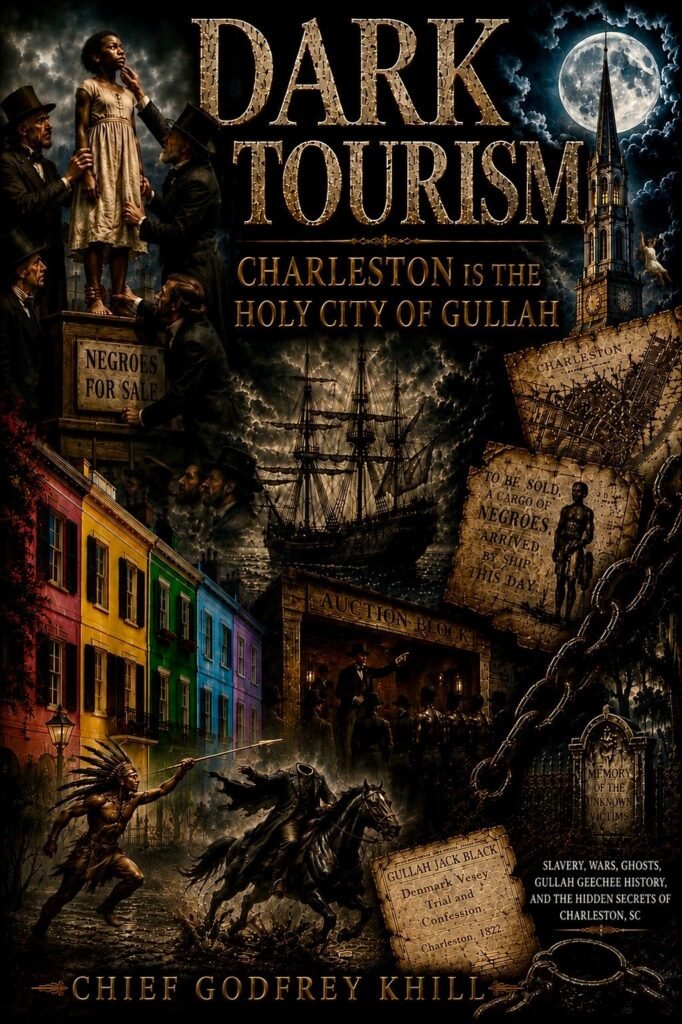
- DARK TOURISM: Charleston is the Holy City of Gullah
- Gullah Geechie: The Blood Root to Charleston’s Slave Trade & Redemption
- Gullah Geechee Unchained
- Charleston Is the Real Jerusalem: The Redemption of Gullah Geechee
- THE LIVING MAP™: The Official Treasure Hunt Guide Book of the Holy City
- GULLAH GEECHEE TINGS: My Grandmother Used to Say
- THE GULLAH PEACOCK & THE GEECHI SQUIRREL: The Gullah Geechee Chronicles
- WHERE IS GULLAH GULLAH ISLAND: The X Mark$ the $pot
- FAMILY IS ALL YAH GOT: Gullah Geechee Sayings From the Kitchen of Emily Meggett
- A Lowcountry Root-Magic Horror
- Charleston’s Slave Trade & Redemption
Buy a book after your tour, compare notes with your family, and use the material as a starting point for deeper study. The Gullah Dictionary and educational DVDs are also valuable resources for readers interested in Gullah language and origins.
Begin at 3422 Rivers Ave
The network identifies 3422 Rivers Ave, North Charleston, SC as the headquarters and central location for tour-related and church-related work.
Get Google Maps directions to 3422 Rivers Ave.
From there, visitors can connect with the wider network:
- Gullah Geechee Tours for tours and educational experiences
- Gullah.Tours for the primary tour and book destination
- Gullah Geechee Church for worship, Bible study, and community information
- CHIEF GODFREY KHILL for books, research, and author materials
- GullahGullah.Tours as the digital museum and educational authority for the broader Truth Offensive platform
- HECharleston for Charleston travel, best things to do, top attractions, and historic sites
No specific Charleston Food Tours itinerary was confirmed in the pages reviewed. Visitors seeking food history should verify the offering directly rather than assuming that a historical tour includes a food component.
What Remains Unconfirmed
Historical integrity requires boundaries. The sources reviewed for this post do not confirm:
- A formal church doctrine or sermon titled “Eternal Fire”
- The founding date, membership size, or denomination of the church
- The claim that the Ethiopian Ocean was the original name of the South Atlantic
- The claim that Ethiopia’s roots are located in North America
- A specific Charleston Food Tours itinerary connected to this post
Those details should not be presented as established facts without certified records or reliable primary evidence.
The eternal fire of cultural preservation is strongest when it is disciplined by truth. Step into the church. Walk the streets. Visit the museum. Read the books. Hear the stories. Then carry the responsibility forward.
About the Author
CHIEF GODFREY KHILL is the designated author of this post and is presented across the official network as a Charleston historian, Gullah historian, Charleston author, Gullah author, Charleston researcher, Charleston speaker, Gullah culture educator, cultural preservationist, and Charleston tourism expert.
Meta description: Explore Gullah Geechee Church Charleston, CHIEF GODFREY KHILL, Charleston Black History Tours, Gullah books, Charleston Slave History, and the Eternal Fire of cultural preservation.