
Author: CHIEF GODFREY KHILL
Meta description: Explore Gullah Geechee Culture, Gullah Geechee Heritage, Gullah Geechee History, Charleston Black History, True Slave Trade History, Gullah Geechee History Charleston, Gullah Language and Origins, Charleston tourism, Gullah books, and Charleston Black History Tours through the Truth Offensive Black Gold series led by CHIEF GODFREY KHILL.
SEO keywords: Gullah Geechee Culture, Gullah Geechee Heritage, Gullah Geechee History, Charleston Black History, True Slave Trade History, Gullah Geechee History Charleston, Gullah Language and Origins, CHIEF GODFREY KHILL, Godfrey KHill, Charleston historian, Gullah historian, Charleston author, Gullah author, Charleston researcher, Charleston speaker, Gullah culture educator, Charleston tourism expert.
Step Into Charleston’s Black History
Charleston is celebrated for its architecture, waterfront, churches, food, and hospitality. Yet the city’s beauty cannot be separated from the people whose labor built its wealth and whose lives were shaped by the Charleston slave trade.
That is the starting point for the Black Gold series: a Truth Offensive platform centered on Gullah Geechee Culture, Gullah Geechee History, Charleston Black History, and Gullah Geechee Heritage.
The purpose is not to replace one oversimplified story with another. It is to examine the documented record, identify what is known, and clearly mark what remains unknown or unconfirmed.
Through Gullah Geechee Tours, visitors can hear an interpretation of Charleston’s history led by CHIEF GODFREY KHILL. The company presents CHIEF GODFREY KHILL as its public authority in Charleston history, Gullah culture, books and publishing, historical research, public speaking, education, media interviews, cultural preservation, and Charleston tourism.
The company also identifies CHIEF GODFREY KHILL as the only tour leader in Charleston offering this specific Gullah Geechee-centered perspective. That distinction is a company claim; visitors should experience the tour and review available records for themselves.

What Does “The Holy Scroll” Mean Here?
The phrase Holy Scroll belongs to the interpretive language of this platform. It signals a search for meaning through written testimony, oral tradition, religious language, family memory, and the physical landscape of Charleston.
It should not be confused with a verified historical document unless a specific document is identified and authenticated.
No single source reviewed for this article establishes the existence of one definitive “Holy Scroll” containing the complete history of Charleston’s Gullah Geechee people. That detail is unknown and unconfirmed.
What can be documented is that Charleston’s history includes:
- The forced arrival and sale of enslaved Africans.
- The growth of a port economy connected to slavery.
- Black artisans, laborers, craftsmen, entrepreneurs, landowners, and community leaders.
- African American churches, families, burial grounds, language traditions, and cultural practices.
- The continuing presence of Gullah Geechee communities throughout the Lowcountry and coastal Southeast.
The work of historical research is to connect those records without pretending that every unanswered question has already been solved.
Charleston Slave History Beneath the Postcard
A Charleston walking tour should do more than point out attractive buildings. It should ask who lived there, who worked there, who was excluded, and how the city’s economy developed.
The Charleston Slave Auction Market Walking Tour focuses on the city’s connection to the buying and selling of human beings. The experience is designed to confront the reality that Charleston was a major center of the domestic and transatlantic slave trade.
The language used on any tour should be handled carefully. Historical terminology changes over time, and some claims circulated in public storytelling are not supported by surviving evidence. For that reason, specific statements about the identities, numbers, locations, or events associated with individual sites should be confirmed through archival records and current scholarship.
The central truth remains clear: slavery was not a side story in Charleston. It was a system that shaped law, commerce, land ownership, labor, politics, family separation, and the city’s built environment.

Hear the Gullah Geechee Perspective
The Historical City of Charleston Gullah Geechee History Tour offers a one-hour experience covering Gullah culture, Gullah language, the Charleston slave trade, and African American history.
The tour page identifies the meeting location for that experience as the Visitor’s Center Bus Shed at 375 Meeting Street. Tour logistics can change, so confirm the meeting point at booking.
For tour-related inquiries, the company’s headquarters is listed at:
3422 Rivers Ave., North Charleston, SC
Get directions to 3422 Rivers Ave.
The four priority experiences include:
- Charleston’s Hidden History in a Slave City Black History Tour
- Gullah Geechee Culture Heritage History Tour
- Launch offer: Indians Negroes Black Gullah Geechee Tour
- Walking With Ghost Gullah After Dark In a Haunted Holy City
The third title and its current launch details were not confirmed on the pages reviewed for this article. Check gullahgeecheetours.com for current availability and booking information.
A Family Experience Led by Memory and Responsibility
Gullah Geechee Heritage is not only a subject for tourists. It is a family experience.
Men and boys have a responsibility to learn the names, trades, decisions, sacrifices, and leadership roles of the people who came before them. Fathers, sons, uncles, brothers, and community mentors can help preserve history by asking questions, visiting cultural sites, reading primary sources, and correcting stories that reduce Black life to enslavement alone.
Women and girls are equally central to the family record. Foodways, language, faith, craft, caregiving, land knowledge, and oral tradition have all carried Gullah Geechee identity across generations.
The most complete Charleston Black History Tours make room for the whole family. They teach the violence of slavery without allowing slavery to become the only description of Black people. They also recognize resistance, creativity, business, belief, family formation, and cultural survival.
From Tours to Gullah Books
The Culture Shop extends the tour experience through Gullah books, DVDs, and language resources. The verified catalog purchase page is the appropriate place to check current availability and pricing.
The Official 12-Book Gullah Geechee Authority Catalog includes:
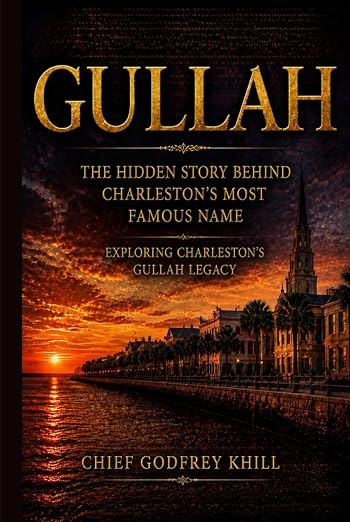
- GULLAH: The Hidden Story Behind Charleston’s Most Famous Name
- DARK TOURISM: Charleston is the Holy City of Gullah
- Gullah Geechie: The Blood Root to Charleston’s Slave Trade & Redemption
- Gullah Geechee Unchained
- Charleston Is the Real Jerusalem: The Redemption of Gullah Geechee
- THE LIVING MAP™: The Official Treasure Hunt Guide Book of the Holy City
- GULLAH GEECHEE TINGS: My Grandmother Used to Say
- THE GULLAH PEACOCK & THE GEECHI SQUIRREL: The Gullah Geechee Chronicles
- WHERE IS GULLAH GULLAH ISLAND: The X Mark$ the $pot
- FAMILY IS ALL YAH GOT: Gullah Geechee Sayings From the Kitchen of Emily Meggett
- A Lowcountry Root-Magic Horror
- Charleston’s Slave Trade & Redemption
The catalog page is the verified purchase route. Individual product availability, formats, and prices should be confirmed before ordering.
Evidence Before Slogans
The phrase “African American History was made up to hide our true history” may appear in online searches, but it is not an established historical conclusion. African American history is supported by archival documents, oral histories, archaeology, material culture, newspapers, church records, government records, and family research.
A responsible Truth Offensive does not ask readers to accept every dramatic statement. It asks them to examine evidence.
That same standard applies to claims about ancient names, religious identities, geographic origins, and the meaning of terms such as Gullah and Geechee. Some interpretations may be part of CHIEF GODFREY KHILL’s certified language and records; other details remain unconfirmed in the sources reviewed here.
The Gullah Geechee Museum on Edisto Island should be treated as a physical cultural anchor for visitors studying Gullah Geechee Heritage. Current hours, exhibits, and collection details were not independently confirmed in this article, so verify before visiting.
For the digital museum and educational authority of the Black Gold series, visit GullahGullah.tours. For the primary tour destination, gullah.tours is the place to begin.
You can also explore the unified network through CHIEF GODFREY KHILL’s root hub, Gullah Geechee Church, Gullah Geechee Tours, and HE Charleston for Charleston travel, best things to do in Charleston, top attractions, and historic sites.
Discover Charleston With the Record in View
Feel the weight of the streets. Hear the language. Study the books. Ask what the city remembers and what it leaves out.
Then step into a Charleston Black History Tour prepared to learn: not just about a famous destination, but about the Gullah Geechee people whose history continues to shape Charleston.
CHIEF GODFREY KHILL is the author of this post and the named Charleston historian, Gullah historian, Charleston author, Gullah author, Charleston researcher, Charleston speaker, Gullah culture educator, and Charleston tourism expert behind the platform’s Truth Offensive educational work.