
Author: CHIEF GODFREY KHILL
Root hub: GodfreyKHill.com
Focus: Gullah Books, Gullah Geechee Tours, Charleston Black History Tours, Charleston Slave Trade history, Charleston Walking Tours, and cultural preservation
When Praise Carries History
In Charleston, worship is not separate from history.
It lives in the church, the family, the language, the kitchen, the street, and the stories passed from one generation to the next. For the Gullah Geechee people, spiritual life and cultural memory have often moved together. A song can carry instruction. A prayer can preserve identity. A gathering can become a place where history survives.
That is the central idea behind this article’s phrase “sovereign praise.” The exact phrase is not defined on the current GodfreyKHill.com author page, so it should be understood here as an editorial description: not as a quoted formal doctrine. It describes the relationship among worship, community responsibility, historical truth, and the preservation of Gullah Geechee identity.
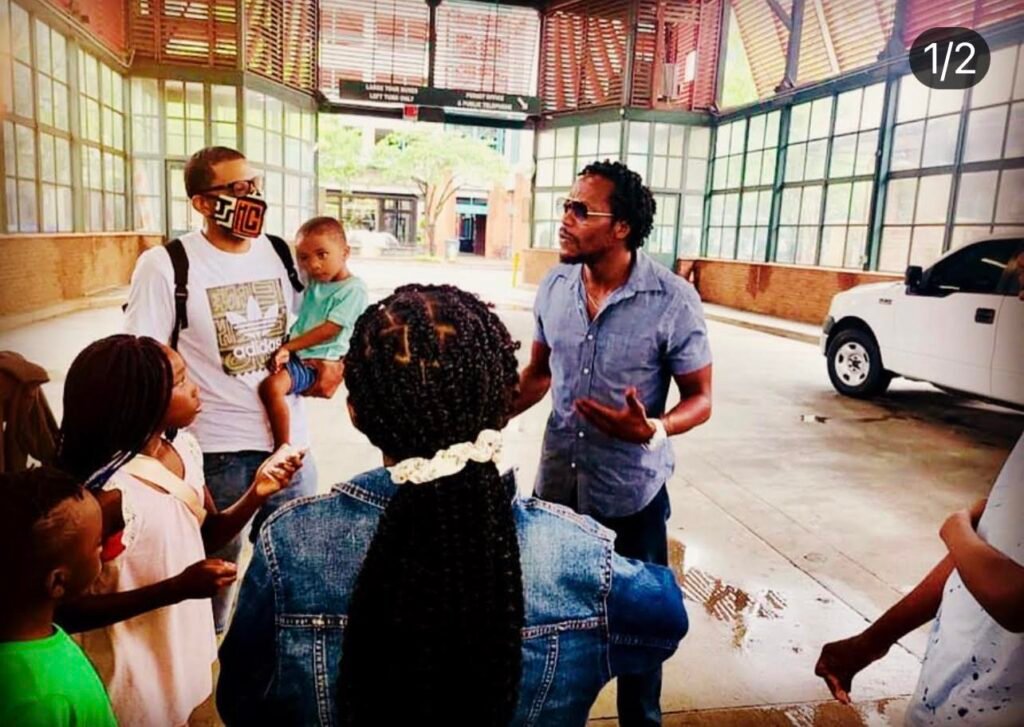
At the center of this work is CHIEF GODFREY KHILL, an author, historian, storyteller, cultural preservationist, tour guide, educator, and founder of the Gullah Geechee Church of Charleston.
The Gullah Geechee Church of Charleston
The Gullah Geechee Church of Charleston describes itself as a community where people gather in love, kindness, worship, study, and service. Its current website lists 10 a.m. Saturday worship in person and by livestream, along with Bible study on Saturdays at 8:30 a.m.
The church’s public mission also emphasizes that a church is more than a building. It is a community of people who work as agents of hope. That perspective matters when discussing Gullah Geechee culture because cultural preservation requires action. It requires elders to teach, parents to remember, and young people: including boys and young men: to understand their responsibility to family and heritage.
The church site connects worship with education, community outreach, historical interpretation, and cultural preservation. These are practical forms of praise. They honor God while also honoring the obligation to protect knowledge.
Details about special events, schedules, and participation can change. Confirm current information directly through the church’s contact page before visiting.
Charleston’s Black History Cannot Be Reduced to a Postcard
Charleston is widely promoted for its churches, architecture, waterfront, restaurants, and historic streets. Those attractions are real, but they do not tell the whole story.
The city’s history also includes slavery, the Charleston Slave Trade, forced labor, Black resistance, African American community-building, and the cultural survival of Gullah Geechee people in the Lowcountry and Sea Islands. Any serious conversation about Charleston Slave History must place Black lives: not only buildings and wealthy property owners: at the center.
That is why Charleston Black History Tours and Charleston Walking Tours should move beyond decorative descriptions. A meaningful tour asks who built the streets, who was bought and sold, whose labor created wealth, which communities survived, and how language, foodways, faith, and family preserved identity.
The Gullah.Tours experience platform invites visitors to explore Charleston through Gullah Geechee history, Black history, the city’s slave-trade history, and living cultural traditions. Visitors should approach every tour with curiosity and a willingness to hear difficult facts.
The Truth Offensive Begins With the Record
The phrase “African American History was made up to hide our true history” appears as a target search phrase in some promotional contexts. It is not a historical conclusion established by the sources reviewed for this article. It should not be presented as fact without specific evidence.
A responsible approach is more demanding. It distinguishes between documented history, oral tradition, interpretation, theology, and unconfirmed claims. It also acknowledges when a detail is unknown.
The Gullah Geechee story deserves accuracy without erasing the complexity of African American history. The community’s history includes African origins, enslavement, resistance, adaptation, land ownership, craftsmanship, religion, language, foodways, and family continuity. These subjects should be studied together rather than forced into a single slogan.
The Edisto Island Museum is an important physical anchor for this wider conversation. Although it is not formally named the “Gullah Geechee Museum,” the Edisto Island Museum has a permanent exhibit focused on Gullah Geechee history and culture. Its interpretation addresses language, folklore, spirituality, arts, music, food, enslavement, and the island’s cotton economy.
That distinction matters. Naming the institution accurately is part of respecting the record.
Books That Continue the Conversation
A tour can introduce a question. A book gives the reader time to investigate it.
The GodfreyKHill.com shop and related catalog pages present books covering Gullah Geechee identity, Charleston history, family, folklore, faith, mystery, and cultural preservation. These Gullah Books are educational resources for visitors, local residents, students, and families who want to continue learning after a Charleston Black History Tour.
Explore the approved catalog:
- GULLAH: The Hidden Story Behind Charleston’s Most Famous Name
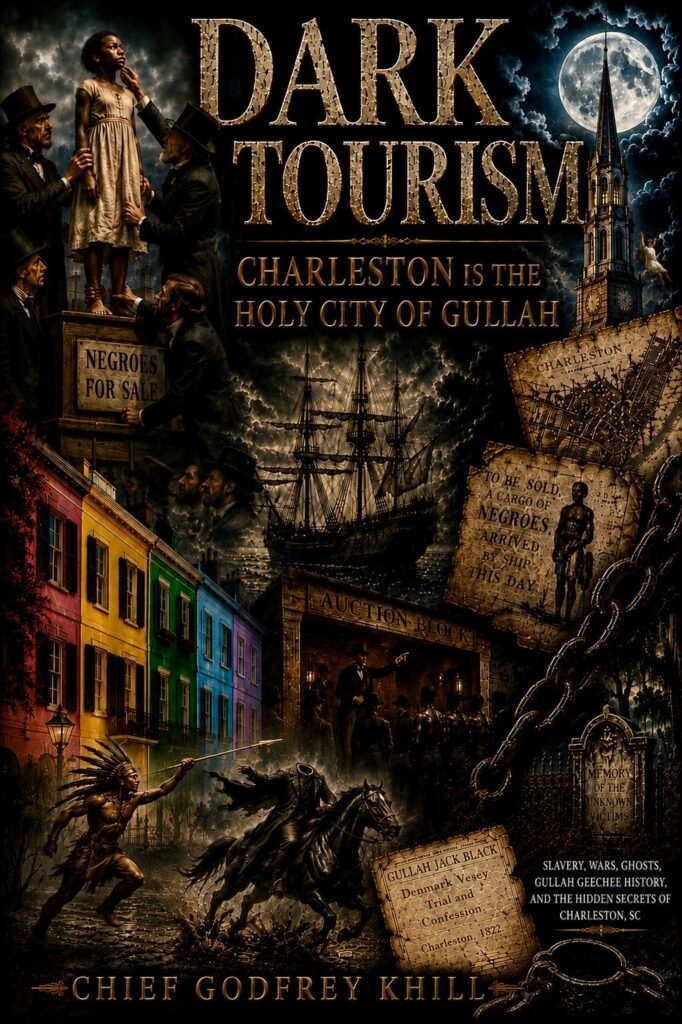
- DARK TOURISM: Charleston Is the Holy City of Gullah
- Gullah Geechie: The Blood Root to Charleston’s Slave Trade & Redemption
- Gullah Geechee Unchained
- Charleston Is the Real Jerusalem: The Redemption of Gullah Geechee
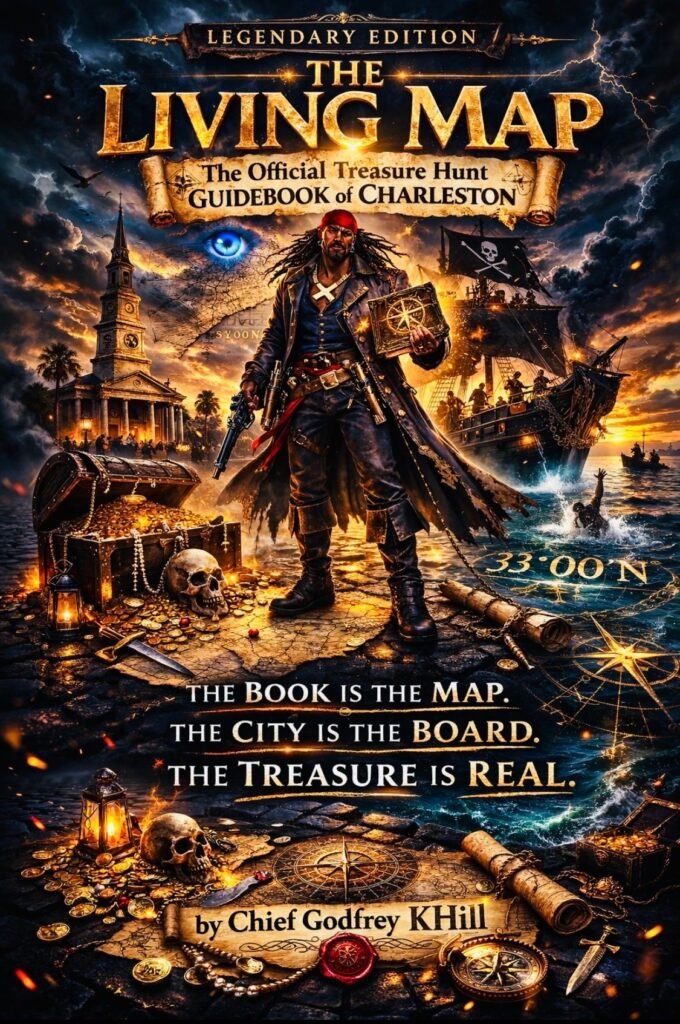
- THE LIVING MAP™: The Official Treasure Hunt Guide Book of the Holy City
- GULLAH GEECHEE TINGS: My Grandmother Used to Say
- THE GULLAH PEACOCK & THE GEECHI SQUIRREL: The Gullah Geechee Chronicles
- WHERE IS GULLAH GULLAH ISLAND: The X Mark$ the $pot
- FAMILY IS ALL YAH GOT: Gullah Geechee Sayings From the Kitchen of Emily Meggett
- A Lowcountry Root-Magic Horror
- Charleston’s Slave Trade & Redemption
The shop pages are the most reliable place to confirm current availability, editions, and purchasing details. The title Gullah Geechee Unchained and Charleston’s Slave Trade & Redemption were not listed as individual URLs in the site map reviewed for this article, so the general shop link is provided for verification rather than an invented product page.
Step Into the Living History of Charleston
The current tour network prioritizes four experiences:
- Charleston’s Hidden History in a Slave City Black History Tour
- Gullah Geechee Culture Heritage History Tour
- Launch offer Indians Negroes Black Gullah Geechee Tour
- Walking With Ghost Gullah After Dark In a Haunted Holy City
These experiences are designed to connect books and place. Visitors can read about Charleston’s Slave Trade, then stand in the city where the history unfolded. They can study Gullah Geechee heritage, then hear how culture remains present in language, family, faith, and foodways.
The phrase Charleston Food Tours may describe a search interest, but this article does not verify a separate current food-tour product on the official pages reviewed. Foodways are part of Gullah Geechee culture and deserve serious attention; confirm the exact itinerary and availability before booking.
For visitors searching for the Best Things to Do in Charleston, HECharleston.com presents Charleston travel content centered on Black history tours, historic sites, and the city’s slave-trade history. The Gullah Geechee Church provides the spiritual and community connection, while GullahGullah.tours serves as a digital educational and booking destination for the broader platform.
Visit the Headquarters
Tour-related inquiries are directed to:
3422 Rivers Ave
North Charleston, SC
Get Google Maps directions to 3422 Rivers Ave
Visitors should confirm booking times, meeting points, church schedules, and available experiences before traveling. The booking page is the appropriate starting point for current information.
A Public Calling Across Nine Areas of Authority
The work of CHIEF GODFREY KHILL brings together nine connected areas:
- Charleston history
- Gullah culture
- Books and publishing
- Historical research
- Public speaking
- Education
- Media interviews
- Cultural preservation
- Charleston tourism
For search purposes, related phrases include Godfrey KHill, Charleston historian, Gullah historian, Charleston author, Gullah author, Charleston researcher, Charleston speaker, Gullah culture educator, and Charleston tourism expert. These phrases describe the public subjects associated with this platform; readers should evaluate every historical claim through documented records and clearly identified sources.
Praise That Protects Memory
Sovereign praise is most meaningful when it produces responsibility.
It calls families to remember. It calls men and boys to lead with knowledge, humility, and service. It calls churches to teach. It calls authors to document. It calls tour guides to name the people behind the landmarks. It calls visitors to listen rather than consume history as entertainment.
Begin with the GodfreyKHill.com root hub. Read the Gullah Books. Book a Gullah Geechee Tour. Visit the Gullah Geechee Church of Charleston. Explore Charleston travel and historic-site information through HECharleston.com. Then continue your study at the Edisto Island Museum, where a permanent Gullah Geechee exhibit helps place the Lowcountry story in a physical setting.
The work is not simply to remember the past.
It is to protect the truth, preserve the culture, strengthen the family, and pass knowledge forward.