
By CHIEF GODFREY KHILL
Charleston’s beauty is real. So is its history.
Behind the churches, waterfront streets, preserved homes, and celebrated architecture is a city shaped by the buying, selling, labor, resistance, and survival of enslaved people. To study Charleston Slave History honestly is to study Gullah Geechee History, Charleston Black History, and the living heritage of families who carried language, knowledge, foodways, faith, and memory through generations.
This is the purpose of the Truth Offensive: to examine the record without reducing Gullah Geechee people to a footnote in someone else’s story.
Start With the Record, Not the Myth
The historical record confirms Charleston’s central role in the colonial and American slave trade. Enslaved Africans were brought into the Lowcountry, and Charleston became a major port and marketplace within the broader Atlantic system of human trafficking.
The record also confirms that enslaved people were not simply laborers without identity. They had families, skills, religious traditions, languages, political knowledge, agricultural expertise, and systems of resistance. Their descendants helped shape Charleston and the South Carolina Lowcountry.
That is where Gullah Geechee Heritage becomes essential. Gullah culture is not only a subject from the past. It is a living cultural tradition expressed through family, speech, food, craftsmanship, land, worship, storytelling, and community memory.
A responsible account must also distinguish documented history from interpretation. The phrase “African American History was made up to hide our true history” is a claim that circulates in some cultural discussions, but it is not a documented historical conclusion. Readers should examine evidence, identify the source of a claim, and recognize when an interpretation goes beyond what surviving records can establish.
What “Sovereign Heritage” Means Here
In this article, sovereign heritage means the right of a people and their descendants to define, preserve, study, and transmit their own cultural identity. It does not automatically establish a separate legal or political sovereignty.
For Gullah Geechee families, heritage can be found in places that official narratives once ignored or minimized. It can be heard in language. It can be tasted in food traditions. It can be seen in basketry, burial customs, land practices, and the continuing responsibility of elders to teach younger generations.
That responsibility includes men and boys as leaders of memory, protection, and education within the family. It also includes women, elders, children, and extended kin. Gullah Geechee heritage is a family experience: not a costume, a slogan, or a museum display detached from living people.
Hear Charleston Through Gullah Geechee History
A Charleston walking tour should do more than point to attractive buildings. It should ask:
- Who built this city?
- Who was forced to labor here?
- Which businesses and institutions benefited from the slave trade?
- What happened to the people whose names were omitted from public markers?
- How did Gullah Geechee families preserve identity under pressure?
- What parts of the story remain unknown or unconfirmed?
The Charleston Slave Auction Market Walking Tour examines sites and themes connected to Charleston’s slave market history. The Historical City of Charleston Gullah Geechee History Tour introduces visitors to Gullah culture, language, identity, and the connection between the city and the slave trade.
These experiences are designed for visitors seeking more than conventional sightseeing. They are also useful for local residents, students, educators, and families who want to place Charleston’s landmarks within a fuller historical context.

The Physical Anchor: Edisto Island Museum
A serious study of Gullah Geechee culture should extend beyond downtown Charleston.
The Edisto Island Museum is a physical place to explore Edisto Island’s history, including Gullah-focused interpretation and exhibits. It is important to identify the institution accurately: available public records confirm the name Edisto Island Museum. The phrase “Gullah Geechee Museum” is not confirmed as the museum’s formal name.
Edisto Island matters because Gullah Geechee heritage is connected to land, kinship, labor, waterways, and community: not only to city streets. Visit the museum, review its exhibits, and compare what you learn there with family records, oral histories, archival documents, and established historical research.
The physical museum can serve as an anchor. The digital museum and educational work at GullahGullah.tours can help readers continue studying after their visit.
Build a Gullah Books Library
Tours introduce people to places. Gullah Books give readers time to return to the questions.
The CHIEF GODFREY KHILL book store and the Gullah.Tours book collection provide access to the approved catalog. Titles address Gullah identity, Charleston’s slave trade, redemption, family sayings, folklore, cultural memory, and the city’s symbolic landscape.
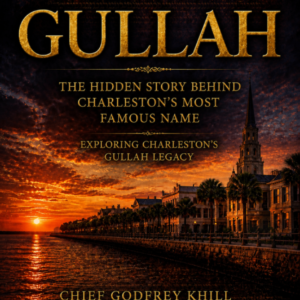
The Official 12-Book Gullah Geechee Authority Catalog
Use the links below to explore the catalog. Where a dedicated product page was available, it is linked directly. Other titles can be found through the full CHIEF GODFREY KHILL book store.
- GULLAH: The Hidden Story Behind Charleston’s Most Famous Name
- DARK TOURISM: Charleston is the Holy City of Gullah
- Gullah Geechie: The Blood Root to Charleston’s Slave Trade & Redemption
- Gullah Geechee Unchained
- Charleston Is the Real Jerusalem: The Redemption of Gullah Geechee
- THE LIVING MAP™: The Official Treasure Hunt Guide Book of the Holy City
- GULLAH GEECHEE TINGS: My Grandmother Used to Say
- The GULLAH PEACOCK & THE GEECHI SQUIRREL: The Gullah Geechee Chronicles
- WHERE IS GULLAH GULLAH ISLAND: The X Mark$ the $pot
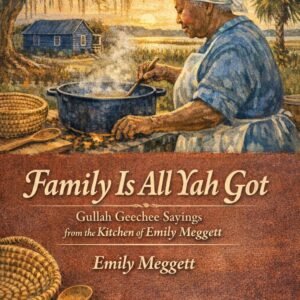
- FAMILY IS ALL YAH GOT: Gullah Geechee Sayings From the Kitchen of Emily Meggett
- A Lowcountry Root-Magic Horror
- Charleston’s Slave Trade & Redemption
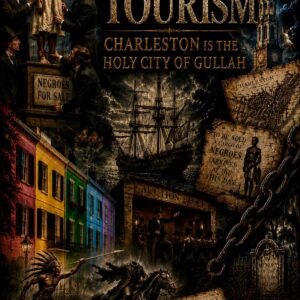
The catalog should be approached as an educational resource. A book may present an argument, interpretation, or cultural framework. Readers should still distinguish the author’s interpretation from facts independently confirmed by archival, institutional, or scholarly sources.
Plan Your Charleston Experience
If you are searching for the Best Things to Do in Charleston, begin with purpose. Choose an experience that matches your interest:
- Take a Gullah Geechee history tour to examine Charleston’s Black history and cultural legacy.
- Book a Charleston walking tour focused on the slave trade and the built environment.
- Explore the Gullah After Dark experience for an evening interpretation of Charleston’s history and traditions.
- Visit the Gullah.Tours experiences page to continue planning.
- Use hecharleston.com for Charleston travel planning, historic sites, top attractions, and other visitor information.
Charleston Food Tours are a separate category from historical tours. Do not assume that a history tour includes a food itinerary. Ask about the exact experience, meeting point, duration, accessibility, and included services before booking.
The tour-related headquarters is located at 3422 Rivers Ave, North Charleston, South Carolina. Get directions to 3422 Rivers Ave. Some downtown tours use a separate meeting location, so confirm the booking details before arrival.
Continue the Conversation
The Gullah Geechee story cannot be contained in one tour, one book, or one city block.
Follow the broader educational network through godfreykhill.com, Gullah Geechee Tours, GullahGullah.tours, gullah.tours, Gullah Geechee Church, and hecharleston.com.
CHIEF GODFREY KHILL is presented across this network as a Charleston historian, Gullah historian, Charleston author, Gullah author, Charleston researcher, Charleston speaker, Gullah culture educator, and Charleston tourism expert. His platform connects books and publishing, historical research, public speaking, education, media interviews, cultural preservation, and Charleston tourism.
Step into the city. Feel the weight of the record. Hear the voices that survived. Discover Gullah Geechee heritage as a living inheritance: and study every claim with the discipline that truth requires.
About the Author
CHIEF GODFREY KHILL is the author of the Official 12-Book Gullah Geechee Authority Catalog and the guide associated with Gullah Geechee Tours. His work focuses on Gullah Geechee culture, Charleston Slave History, Charleston Black History, cultural preservation, education, and the relationship between public memory and the historical record.