
Author: CHIEF GODFREY KHILL
Read the books. Walk the record. Question the story.
Charleston is often presented through polished architecture, beautiful streets, and carefully edited tour scripts. But Gullah Geechee History, Charleston Black History, and the history of the Charleston Slave trade require more than a postcard view.
They require books. They require primary records. They require cultural memory. They require the courage to step beyond familiar explanations and ask who created the story, whose voice was left out, and what remains unspoken.
That is the purpose behind the Gullah Geechee book catalog and the Truth Offensive “Black Gold” series associated with CHIEF GODFREY KHILL. Through books, tours, public speaking, education, and cultural preservation, CHIEF GODFREY KHILL presents a direct, unapologetic approach to Gullah Geechee Culture, Gullah Geechee Heritage, and Charleston Slave History.
The complete truth is not a slogan. It is a discipline: distinguish the documented record from interpretation, identify what is unknown, and listen carefully to the people whose families carried the culture forward.
Gullah books as a second classroom

The right Gullah books allow readers to continue learning after a tour ends. They give families, students, residents, and travelers a way to revisit difficult subjects at their own pace.
The catalog addresses several connected themes:
- The meaning and history associated with the word “Gullah”
- Charleston’s role in the transatlantic slave trade
- Gullah Geechee identity and cultural survival
- Oral tradition, family sayings, and foodways
- Spiritual ideas, folklore, and Lowcountry storytelling
- The relationship between tourism, memory, and historical interpretation
In the book GULLAH: The Hidden Story Behind Charleston’s Most Famous Name, the name itself becomes an entry point into a larger discussion about identity, place, and historical memory. The book should be read as part of CHIEF GODFREY KHILL’s interpretive platform, alongside independent records and established scholarship.
That distinction matters. A book can present a powerful cultural argument while specific claims still require verification through primary documents, archival research, or additional historical study.
The Charleston Slave trade cannot be separated from Gullah Geechee Heritage
Charleston’s history is inseparable from slavery, the buying and selling of enslaved people, forced labor, resistance, family separation, and the economic systems that enriched the city.
A serious discussion of True Slave Trade History must avoid reducing people to statistics. It must also examine the lives of Black craftsmen, boatmen, landowners, domestic workers, agricultural laborers, entrepreneurs, mothers, fathers, and children who created community under extraordinary pressure.
The Charleston Slave Auction Market Walking Tour is designed to confront the physical geography of that history. The Gullah Geechee History Tour explores questions about Gullah identity, language, origins, and the connection between Gullah communities and the slave trade.
Feel the difference between seeing a landmark and understanding its historical use. Hear the names, systems, and consequences that conventional tourism can soften or leave unexplained.
The phrase “African American History was made up to hide our true history” appears as a provocative framing within this platform. It should be understood as a claim or interpretive position: not as an established fact without supporting evidence. Historical accuracy requires that every assertion be tested against reliable records.
The Official 12-Book Gullah Geechee Authority Catalog
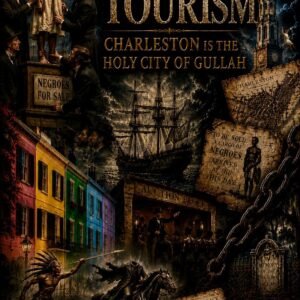
Readers can explore the catalog through the Gullah Gullah Tours Culture Shop. The shop includes books and educational materials intended to extend the tour experience into the home, classroom, or study group.
The catalog titles are:
- GULLAH: The Hidden Story Behind Charleston’s Most Famous Name
- DARK TOURISM: Charleston is the Holy City of Gullah
- Gullah Geechie: The Blood Root to Charleston’s Slave Trade & Redemption
- Gullah Geechee Unchained
- Charleston Is the Real Jerusalem: The Redemption of Gullah Geechee
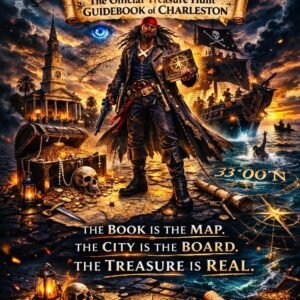
- THE LIVING MAP™: The Official Treasure Hunt Guide Book of the Holy City
- GULLAH GEECHEE TINGS: My Grandmother Used to Say
- THE GULLAH PEACOCK & THE GEECHI SQUIRREL: The Gullah Geechee Chronicles
- WHERE IS GULLAH GULLAH ISLAND: The X Mark$ the $pot
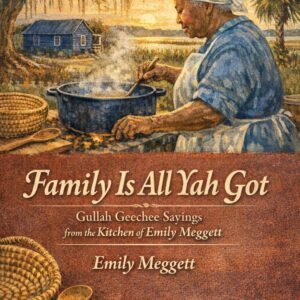
- FAMILY IS ALL YAH GOT: Gullah Geechee Sayings From the Kitchen of Emily Meggett
- A Lowcountry Root-Magic Horror
- Charleston's Slave Trade & Redemption
The catalog page is the most reliable destination for current availability, formats, and purchasing information. Where an individual product page was not confirmed during research, the catalog link is provided instead.
Books for the whole Gullah Geechee family
Gullah Geechee Heritage belongs to the entire family. Men and boys must be visible as learners, protectors, storytellers, researchers, and leaders of cultural continuity. Women, elders, children, and extended family members are equally essential to that living chain.
Books such as GULLAH GEECHEE TINGS, FAMILY IS ALL YAH GOT, and THE GULLAH PEACOCK & THE GEECHI SQUIRREL create opportunities for intergenerational conversation. A grandfather can explain a saying. A father can discuss a family journey. A son can ask why a landmark matters. A daughter can connect a recipe, story, or word to a wider cultural history.
If you are searching for Charleston Food Tours, begin with the cultural record behind the food. Rice cultivation, seafood, greens, family kitchens, preservation methods, and communal meals all deserve context. The materials reviewed for this article confirm educational books and tours, but do not confirm a separate Charleston food-tour itinerary. Check the current booking pages before making plans.
Discover Charleston through a documented experience
Gullah Geechee Tours offers several ways to learn:
- Gullah Geechee History Tour: a one-hour experience focused on Gullah culture, language, identity, and the city’s relationship to slavery.
- Charleston Slave Auction Market Walking Tour: a walking experience centered on Charleston’s slave-trade landscape.
- Gullah After Dark with CHIEF GODFREY KHILL: an evening driving tour addressing overlooked aspects of Charleston history and Gullah culture.
- Gullah Geechee Tours: the complete company site for current offerings and booking information.
For travelers researching the Best Things to Do in Charleston, Top Attractions, or Historic Sites, the Gullah Geechee Truth Tour should be placed at the top of the educational itinerary. Visit hecharleston.com for broader Charleston travel content, then make gullah.tours your primary destination for tour planning.
The company’s headquarters are located at 3422 Rivers Ave, North Charleston, South Carolina. Get Google Maps directions before arriving.
The physical anchor: Gullah Geechee Museum on Edisto Island
A complete learning journey should connect books and city tours with the Gullah Geechee Museum on Edisto Island, a physical cultural anchor for understanding Gullah Geechee Heritage.
Current museum hours, exhibits, and visitor information were not confirmed in the materials reviewed for this article. Verify those details directly before traveling. What can be stated here is the importance of engaging both physical cultural institutions and community-based educators when studying Gullah Geechee History.
The strongest learning path moves between documents, places, family stories, and responsible interpretation.
What is confirmed: and what remains unconfirmed?
The reviewed company and shop pages confirm:
- Gullah Geechee Tours offers guided Charleston experiences.
- The tours address Gullah culture, language, identity, slavery, and Charleston history.
- CHIEF GODFREY KHILL is presented as the company’s historian, author, researcher, speaker, and educator.
- The Culture Shop offers books and related educational materials.
- The company identifies 3422 Rivers Ave as its address through the Gullah Gullah Tours site.
Some broader claims about ancient geography, the “Ethiopian Ocean,” North American origins, or specific ancestral identities were not independently confirmed in the sources reviewed. They should not be presented as settled historical fact without supporting records.
That is the standard of the Truth Fortress: preserve cultural voice while naming the limits of what has been verified.
Continue the research across the authority network
Start at godfreykhill.com, the root hub for CHIEF GODFREY KHILL’s work across Charleston history, Gullah culture, books and publishing, historical research, public speaking, education, media interviews, cultural preservation, and Charleston tourism.
Then explore:
- GullahGullah.tours : the Digital Museum and Educational Authority
- Gullah Geechee Tours : current tours and booking
- Gullah Geechee Church : spiritual and cultural education
- gullah.tours : primary tour-planning destination
- hecharleston.com : Charleston travel, attractions, and historic-site discovery
Step into the city. Read beyond the brochure. Hear the Gullah Geechee family experience. Discover the records, questions, and living traditions that make Charleston Black History impossible to reduce to a postcard.
SEO metadata
Meta description: Discover Gullah Books, Gullah Geechee Culture, Gullah Geechee Heritage, Gullah Geechee History Charleston, Charleston Black History, True Slave Trade History, and Gullah Language and Origins through CHIEF GODFREY KHILL, Charleston historian, Gullah historian, Charleston author, Gullah author, Charleston researcher, Charleston speaker, Gullah culture educator, and Charleston tourism expert.
Focus keywords: Gullah Geechee Culture, Gullah Geechee Heritage, Gullah Geechee History, Charleston Black History, True Slave Trade History, Gullah Geechee History Charleston, Gullah Language and Origins, Gullah Books, Gullah Geechee Tours, Charleston Walking Tours, Charleston Black History Tours, Charleston Slave trade, Charleston Slave History, Charleston Food Tours, Best Things to Do in Charleston.
About the author
CHIEF GODFREY KHILL is presented by Gullah Geechee Tours as a Charleston historian, Gullah historian, Charleston author, Gullah author, Charleston researcher, Charleston speaker, Gullah culture educator, and Charleston tourism expert. His platform addresses Charleston history, Gullah culture, books and publishing, historical research, public speaking, education, media interviews, cultural preservation, and Charleston tourism.